

SIP Cycle Monitoring & Validation
Sterilisation in Place (SIP) is the process by which pharmaceutical manufacturing equipment, vessels, pipework, valves, filters, and filling systems are sterilised using clean steam without disassembly. SIP is a mandatory GMP requirement across biopharmaceutical, parenteral, vaccine, and cell and gene therapy manufacturing, and every SIP cycle must be monitored, controlled, and validated with instruments capable of proving that every point within the sterilised boundary has reached and maintained the required temperature and pressure conditions for the validated hold time.
Successful SIP validation demands simultaneous, time-synchronised measurement of saturated steam pressure, condensate drain temperature, chamber and pipework temperature at the coldest points, differential pressure across sterilising-grade filters, and hold time duration, all captured with traceable, time-stamped data that satisfies 21 CFR Part 11, EU Annex 11, and EU GMP Annex 1 requirements. A single instrument failure, a missed cold spot, or an undocumented pressure excursion during an SIP cycle can invalidate the entire sterilisation event, forcing costly re-sterilisation, batch delays, and potential regulatory non-compliance.
At Stork Solutions, we supply a comprehensive range of hygienic flush-diaphragm pressure transmitters, dual-output pressure and temperature transmitters, precision temperature transmitters, ceramic sensor transmitters, differential pressure transmitters, electronic pressure switches, PID controllers, and multichannel data loggers engineered to meet the exacting measurement, control, and documentation demands of pharmaceutical SIP cycle monitoring and validation.
Product Spotlight for SIP Cycle Monitoring & Validation
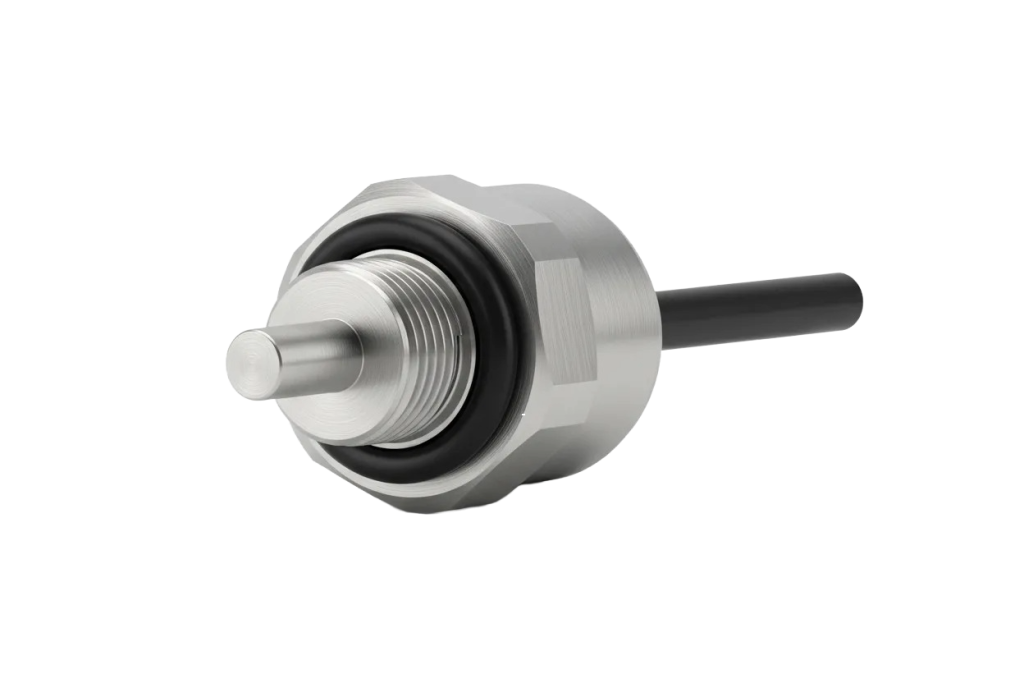
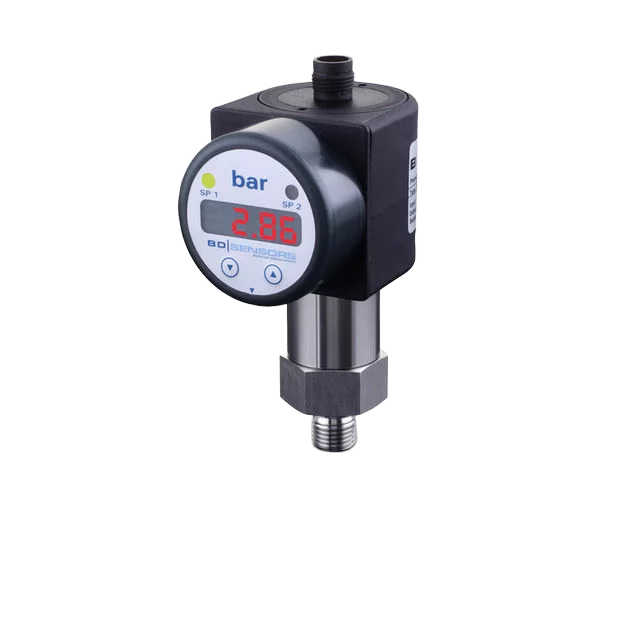
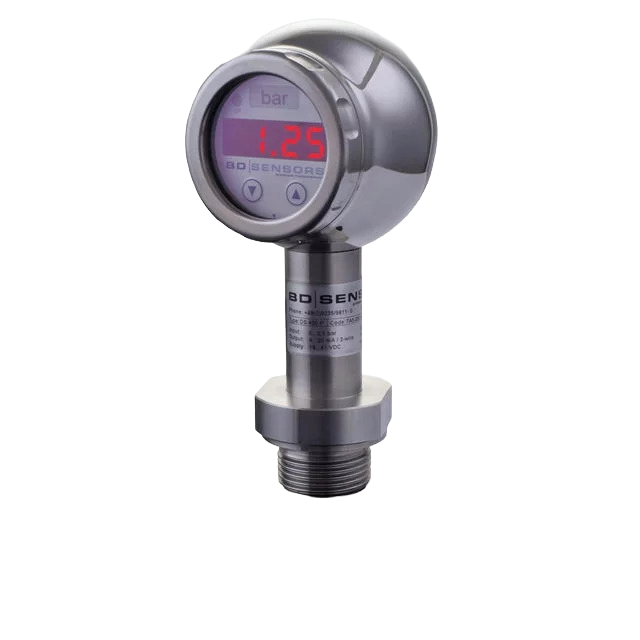
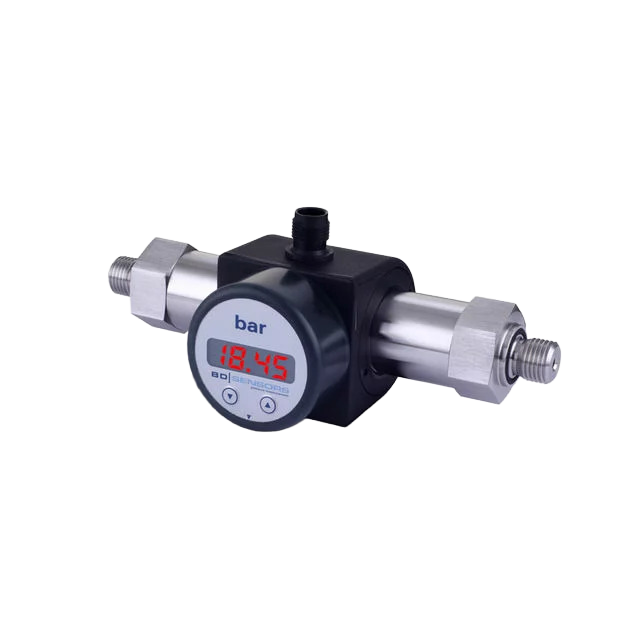
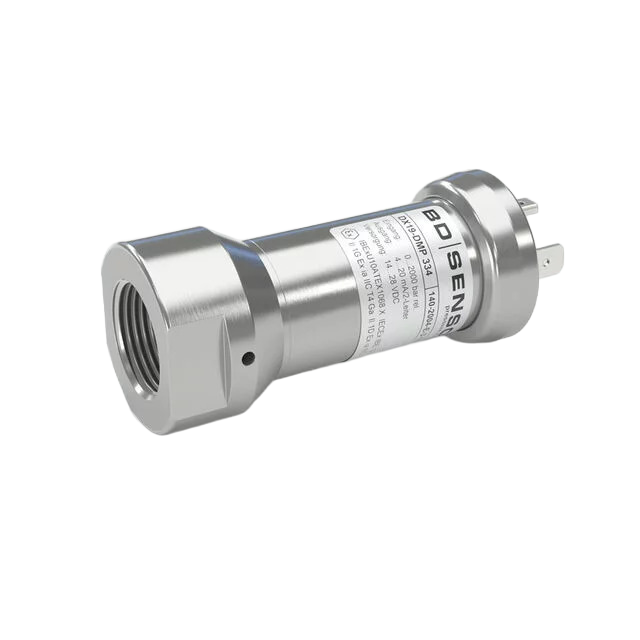
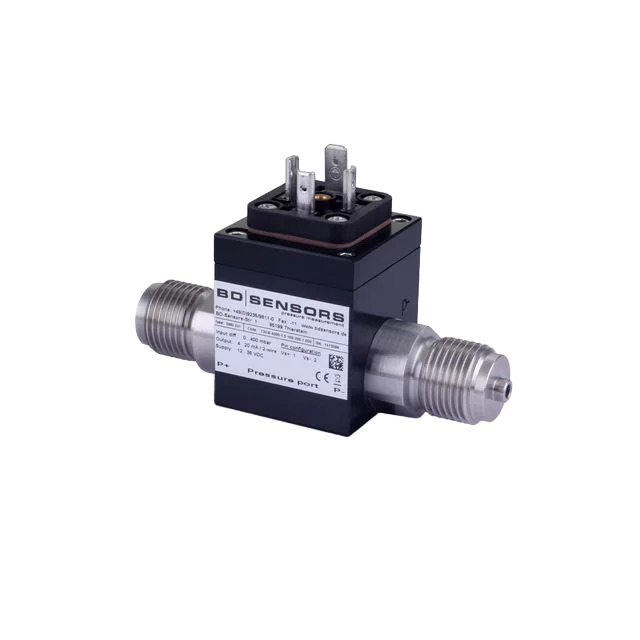
Why Specialist Instrumentation Is Needed for SIP Cycle Monitoring & Validation
SIP cycles subject instruments to some of the most extreme and demanding conditions found anywhere in pharmaceutical manufacturing:
Saturated steam conditions – SIP cycles expose instruments to clean steam at 121-134 degrees C and corresponding saturated steam pressures (typically 1.0-3.0 bar gauge) for extended hold times of 15-60 minutes; instruments must deliver stable, accurate measurement throughout without drift or degradation
Thermal shock and cycling – instruments experience rapid transitions from ambient temperature to saturated steam conditions and back again, often multiple times per day on high-throughput manufacturing lines; thermal shock resistance and long-term thermal cycling stability are essential for reliable SIP validation data
Cold spot identification and monitoring – SIP validation requires temperature measurement at the identified coldest points within the sterilised boundary (dead legs, valve cavities, drain points, filter housings, vessel bottoms) to confirm that every location achieves the minimum sterilisation temperature for the required hold time
Saturated steam quality verification – superheated or wet steam reduces sterilisation efficacy; simultaneous pressure and temperature measurement at the same point allows verification that the steam is saturated by comparing measured values against the steam table relationship
Condensate management monitoring – condensate accumulation creates cold spots and air pockets that prevent steam penetration; pressure and temperature monitoring at condensate drain points confirms effective condensate removal throughout the SIP cycle
Filter integrity during SIP – sterilising-grade filters must survive SIP conditions without loss of integrity; differential pressure monitoring across filter housings during SIP confirms structural integrity and detects filter damage or bypass
Air removal verification – trapped air prevents steam penetration and creates cold spots; pressure and temperature correlation at multiple points confirms complete air displacement before the hold time begins
Automated SIP sequence control – PID controllers regulate steam supply pressure, condensate drain valve sequencing, and hold time management to deliver repeatable, validated SIP cycles without operator intervention
GMP batch documentation – every SIP cycle must produce a complete, time-stamped record of pressure, temperature, and hold time at every validated measurement point; data must be traceable, tamper-evident, and auditable for regulatory inspection under 21 CFR Part 11 and EU Annex 11
F0 value calculation – accumulated lethality (F0) is calculated from time-temperature data at the coldest point; instruments must provide sufficiently high sampling rates and temperature accuracy to support reliable F0 calculation for parametric release
Hazardous atmosphere potential – some pharmaceutical SIP operations are adjacent to or within classified hazardous areas where solvent-containing products are processed, requiring ATEX/IECEx-certified instruments
Hygienic Flush-Diaphragm Pressure Transmitters for SIP Steam Pressure Monitoring
The primary pressure measurement across every SIP system: monitoring clean steam supply pressure, chamber/vessel internal pressure during sterilisation, pipework line pressure at multiple points within the sterilised boundary, and confirming that saturated steam pressure is maintained throughout the validated hold time.
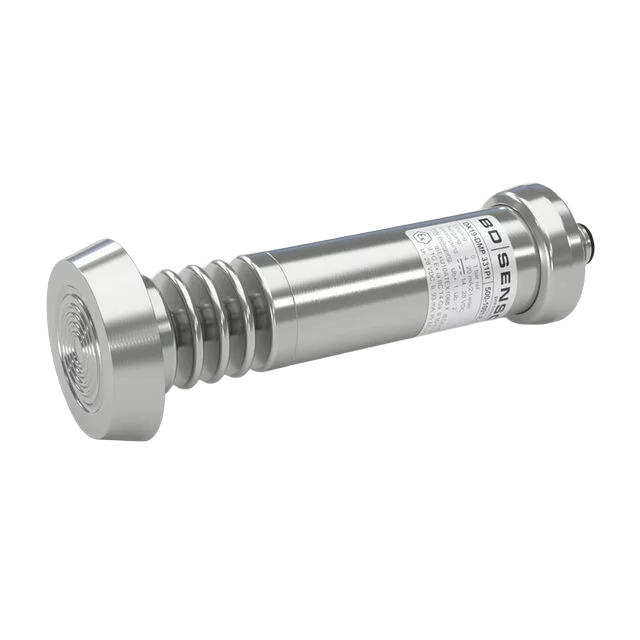
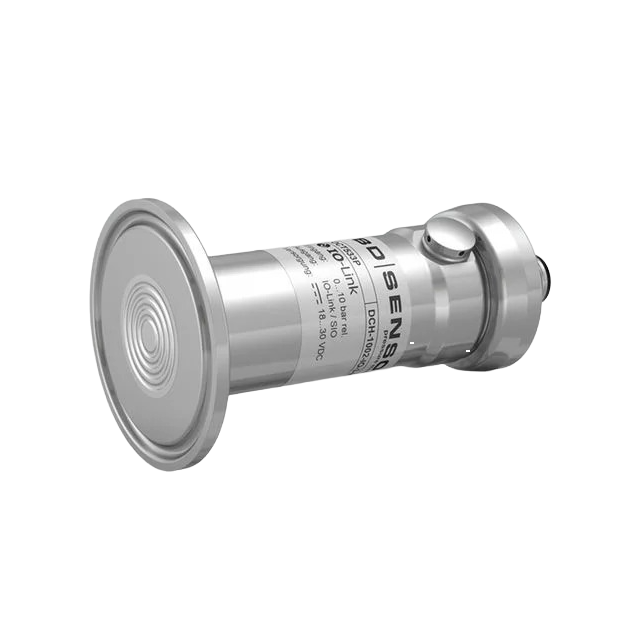
DMP 331 P Industrial Pressure Transmitter – 100 mbar to 40 bar | Piezoresistive stainless steel sensor | Flush diaphragm | 4-20 mA / 0-10 V | CIP/SIP cleaning up to 150 degrees C | Vacuum resistant | IS Ex ia | SIL 2 | Optional Hastelloy or Tantalum diaphragm | Cooling element to 300 degrees C | The primary hygienic transmitter for SIP steam pressure monitoring across vessels, pipework, filter housings, and filling line sterilisation boundaries; rated to withstand repeated SIP cycles without degradation
DMP 331 P i Precision Pressure Transmitter – 400 mbar to 40 bar | 16-bit digital signal processing | Turn-down 1:10 | 0.04% FSO/10K temperature response | CIP/SIP compatible | Communication interface for offset/span/damping | For precision SIP steam pressure measurement where tight temperature coefficient performance is required to maintain measurement accuracy across the full thermal range from ambient to 134 degrees C during SIP cycling
DMP 333P Pressure Transmitter – Flush diaphragm | Cooling element to 200 degrees C | For SIP steam pressure monitoring at high-temperature measurement points where a cooling element extends instrument service life during frequent, high-temperature SIP cycles
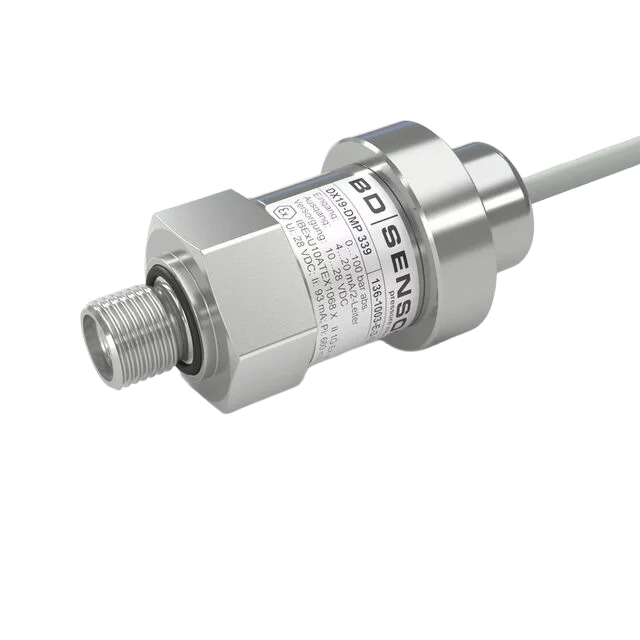
DMP 339P Flush Pressure Transmitter with G1/4 inch port – Compact flush-mount | For SIP pressure measurement at space-constrained locations such as valve cluster manifolds, dead leg monitoring points, and compact filling line sterilisation boundaries where standard instrument footprints cannot be accommodated
Dual-Output Pressure and Temperature Transmitters for Saturated Steam Verification
Simultaneous pressure and temperature measurement at the same process point is the cornerstone of SIP validation. By comparing measured pressure and temperature against the saturated steam table, operators and control systems can confirm that the steam is truly saturated (not superheated or containing trapped air), that the coldest point has reached sterilisation temperature, and that hold time can begin. Dual-output transmitters deliver both measurements from a single process penetration, eliminating the measurement offset errors that arise when separate pressure and temperature instruments are installed at different locations.
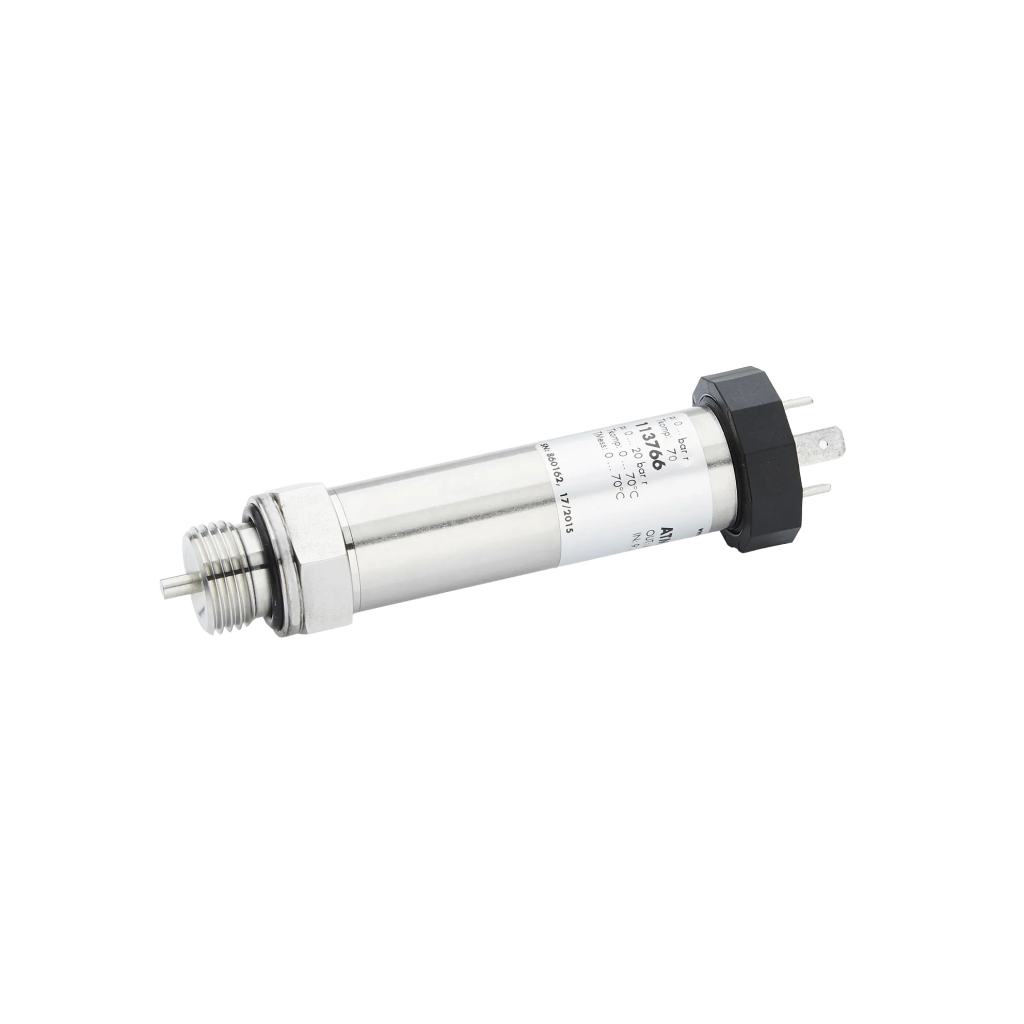
ATM/T.1ST Dual Output Pressure and Temperature Transmitter – Flush stainless steel diaphragm | Integrated temperature probe tip | Dual 4-20 mA outputs (pressure + temperature) | Short response time | 316L stainless steel | The critical instrument for SIP validation: simultaneous P+T measurement from a single process penetration enables real-time saturated steam quality verification, cold spot confirmation, air removal detection, and F0 lethality calculation at every validated SIP measurement point
ATM/T Dual Output Pressure and Temperature Transmitter – Flush diaphragm variant with dual 4-20 mA outputs | For additional P+T SIP validation points across vessels, pipework dead legs, condensate drains, and filter housings within the sterilised boundary
IO-Link Smart Transmitters for Digitally Connected SIP Systems
IO-Link-enabled SIP systems benefit from automated device parameterisation during changeover between different SIP recipes and sterilised boundaries, real-time sensor health diagnostics that confirm instrument readiness before every SIP cycle, centralised device management across multi-equipment SIP infrastructure, and seamless integration with electronic batch record systems:
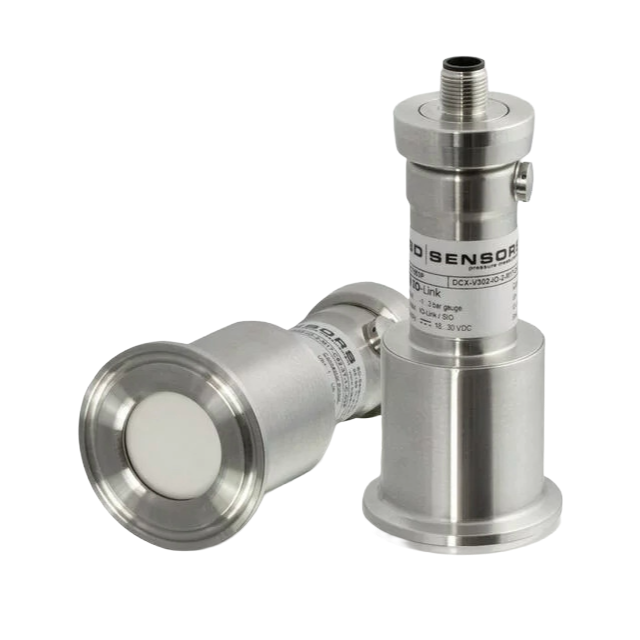
DCT 533 P Industrial Pressure Transmitter with IO-Link – 100 mbar to 40 bar | IO-Link V1.1 | CIP/SIP cleaning up to 150 degrees C | Flush hygienic pressure port | IP 67/IP 69 | Shock and vibration resistant | Cooling element to 300 degrees C | Designed for pharmaceutical environments | The flagship IO-Link transmitter for digitally connected SIP steam pressure monitoring with automated recipe changeover, pre-cycle sensor health verification, and predictive maintenance diagnostics
DCT 553 P Industrial Pressure Transmitter with IO-Link – Capacitive ceramic sensor (99.9% Al2O3) | 40 mbar to 20 bar | IO-Link V1.1 | Dead-space-free | High overpressure capability | For SIP monitoring points where ceramic chemical resistance provides additional assurance against sensor degradation from repeated thermal and chemical cycling, eliminating oil-fill contamination risk
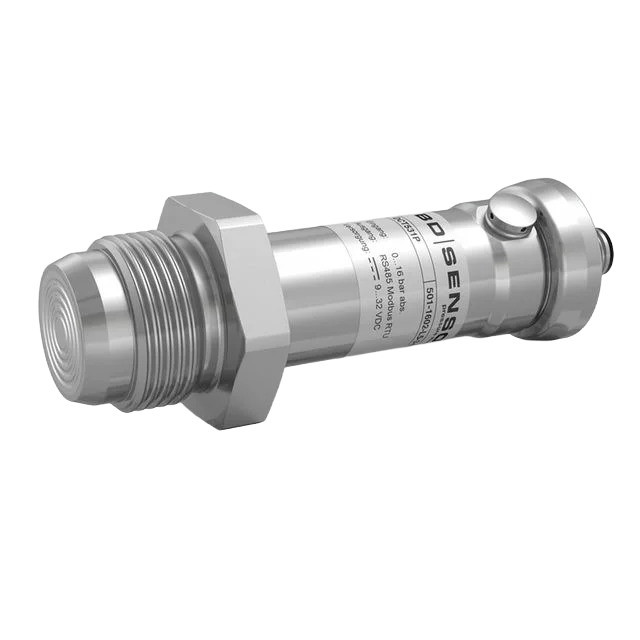
DCT 531 P Industrial Pressure Transmitter with RS485 Modbus RTU – 100 mbar to 40 bar | RS485 Modbus RTU | EHEDG certified | CIP/SIP cleaning up to 150 degrees C | IP 67/IP 69 | Up to 247 devices on a single bus | For multi-drop digital bus architectures across pharmaceutical SIP infrastructure with multiple vessels, filling lines, and filtration skids reporting SIP status to a centralised DCS/SCADA master
Precision Process Transmitters with HART and SIL 2
For SIP systems integrated with safety instrumented functions (SIF) protecting personnel and equipment from steam overpressure, HART-enabled asset management for SIP instrument health monitoring, and GMP-validated sterilisation processes where measurement confidence must support parametric release and regulatory submission:
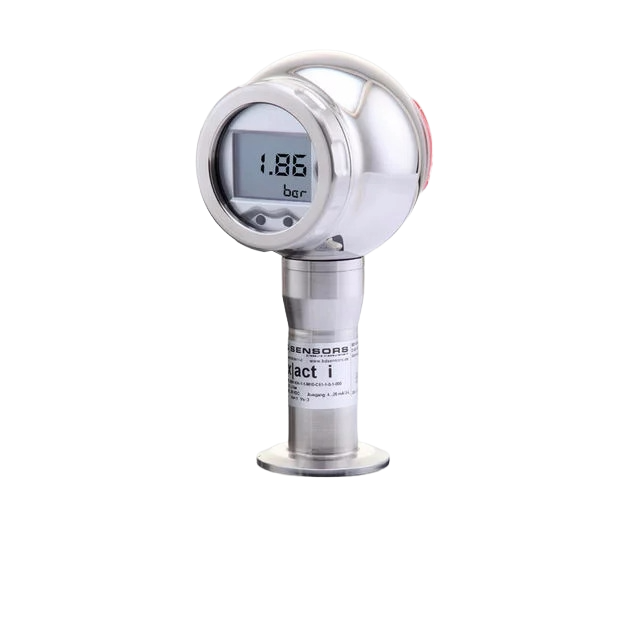
X|act i Precision Pressure Transmitter (SIL 2) – 400 mbar to 40 bar | HART | SIL 2 | Turn-down 1:10 | Flush welded diaphragm | Hygienic connections (Varivent, dairy pipe, Clamp) | ATEX Ex ia | Cooling element to 300 degrees C | Designed for pharmaceutical and biotechnology applications | The premium hygienic transmitter for safety-critical SIP steam pressure monitoring on GMP-validated sterilisation systems with SIL 2 overpressure protection
X|act ci Precision Pressure Transmitter – Capacitive ceramic sensor (99.9% Al2O3) | 160 mbar to 20 bar | HART option | Flush-mounted | Hygienic connections | ATEX Ex ia option | Designed for pharmaceutical industry and biotechnology | For SIP steam pressure monitoring where ceramic sensor technology provides long-term stability and chemical resistance through hundreds of repeated SIP thermal cycles
XMP i Precision Pressure Transmitter with HART and SIL 2 – 400 mbar to 600 bar | HART | SIL 2 | Turn-down 1:10 | For high-pressure clean steam generator pressure monitoring and safety interlock, boiler steam supply pressure, and SIP utility infrastructure where pressures exceed the hygienic transmitter range
DMP 331i / DMP 333i Precision Pressure Transmitter – 400 mbar to 600 bar | 16-bit digital signal processing | Turn-down 1:10 | Communication interface | For precision SIP pressure trending during validation studies, thermal mapping campaigns, and SIP cycle development and optimisation
Ceramic Sensor Transmitters for Repeated SIP Thermal and Chemical Cycling
SIP cycles subject sensor diaphragms to repeated thermal shock between ambient and 134 degrees C, combined with aggressive CIP chemicals during pre-sterilisation cleaning. Ceramic sensing elements (99.9% Al2O3) offer superior long-term thermal cycling stability and inherent chemical resistance with no oil-fill to degrade or contaminate the process:
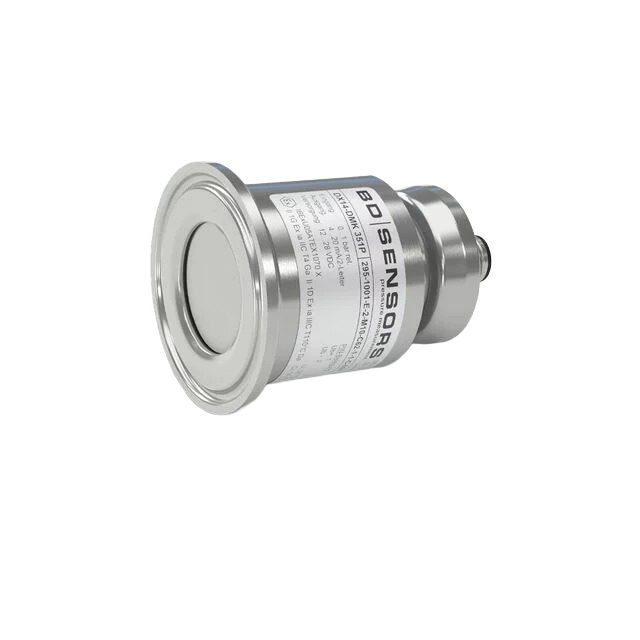
DMK 351 P Pressure Transmitter for the Process Industry – Capacitive ceramic sensor | 40 mbar to 20 bar | Dead-space-free hygienic connections (G1-1/2 inch, dairy pipe, Clamp) | IS Ex ia | For SIP steam pressure monitoring at product-contact points where ceramic sensor technology provides superior long-term stability through hundreds of thermal cycles and eliminates oil-fill contamination risk
DMK 331 Industrial Pressure Transmitter – Capacitive ceramic sensor | 400 mbar to 600 bar | PVDF open port | ATEX Ex ia | SIL 2 | For clean steam generator pressure monitoring, boiler steam supply, and SIP utility infrastructure pressure measurement
Temperature Transmitters for SIP Cold Spot Monitoring and F0 Calculation
Standalone temperature measurement at every identified cold spot within the sterilised boundary is fundamental to SIP validation. Cold spots typically include dead legs, valve cavities, pipework low points, condensate drains, vessel bottoms, and filter housing drain connections. Temperature data from these points is used to confirm sterilisation temperature achievement, calculate accumulated F0 lethality, and determine hold time completion:
TTT Titan Temperature Transmitter – PT100, PT1000, NTC, PTC, or thermocouple input | Robust industrial enclosure | Stable output in demanding environments | For SIP cold spot temperature monitoring at dead legs, valve cavities, condensate drains, vessel bottoms, and filter housings; PT100 input provides the accuracy required for reliable F0 lethality calculation
TTTa Titan Temperature Transmitter – Analogue – Analogue output variant | For conventional 4-20 mA integration into existing pharmaceutical DCS systems monitoring SIP cold spot temperatures across legacy installations
Differential Pressure Transmitters for Filter Integrity During SIP
Sterilising-grade filters must survive SIP conditions without loss of integrity. Differential pressure monitoring across filter housings during SIP confirms that filters are structurally sound under steam exposure and detects filter damage, seal failure, or bypass that could compromise the sterile boundary:
DMD 831 Differential Pressure Transmitter with Display and Contact – 1 bar to 70 bar | Dual piezoresistive stainless steel sensors | 4-digit LED display | PNP alarm contact | For visual delta-P indication across sterilising-grade filter housings during SIP with integrated alarm to detect filter damage or housing seal failure under steam exposure
DMD 331 Differential Pressure Transmitter – 20 mbar to 16 bar | Piezoresistive stainless steel | ATEX Ex ia | 30x static overpressure | For inline sterilising filter delta-P monitoring during SIP cycles on equipment processing solvent-containing pharmaceutical products
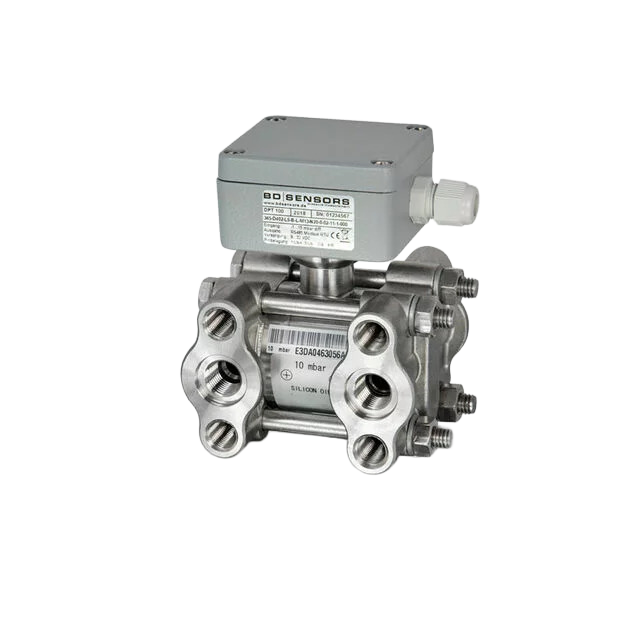
DPT 200 Differential Pressure Transmitter with HART – 1 mbar to 20 bar | Static pressure to 400 bar | HART | 100:1 rangeability | ATEX Ex ia / Ex d | LC display | For HART-integrated SIP filter delta-P trending with DCS/SCADA connectivity and automated batch record capture of filter integrity data during every SIP cycle
DPT 100 Differential Pressure Transmitter – 10 mbar to 20 bar | Static pressure to 400 bar | RS485 Modbus RTU | Fast response time (10 ms) | 0.1% FSO accuracy | For fast-response delta-P detection across sterilising filters during SIP steam-up and cool-down phases where rapid pressure transients must be captured accurately
Electronic Pressure Switches for SIP Safety and Interlock
Automated alarm switching for SIP overpressure protection, steam supply failure detection, condensate drain interlock, hold time initiation verification, and equipment protection during sterilisation cycles:
DS 400 P Intelligent Electronic Pressure Switch – 100 mbar to 40 bar | Hygienic stainless steel | 1 or 2 PNP contacts | 4-20 mA analogue output | 4-digit LED display | Rotatable display module | IS Ex ia | CIP/SIP compatible | The primary hygienic pressure switch for SIP overpressure alarm, steam supply confirmation, and hold time initiation interlock
DS 200 P Electronic Pressure Switch – 100 mbar to 40 bar | 1, 2, or 4 PNP contacts | 4-20 mA / 0-10 V analogue output | 4-digit LED display | IS Ex ia option | CIP/SIP compatible | For multi-contact alarm switching on SIP steam supply, condensate drain valve interlocks, and vacuum break valve control during SIP cool-down
DS 201 P Electronic Pressure Switch – 60-400 bar | Flush stainless steel diaphragm | Cooling element to 300 degrees C | 1, 2, or 4 PNP contacts + analogue output | For high-pressure clean steam generator safety interlock and boiler steam supply overpressure protection on the SIP utility infrastructure
DS 350 P Electronic Pressure Switch with IO-Link – IO-Link interface | Flush diaphragm | For digitally connected SIP alarm switching on IO-Link bus architectures with automated interlock sequencing during SIP steam-up, hold, and cool-down phases
PID Controllers for Automated SIP Cycle Management
Closed-loop control for automated SIP cycle management: regulating clean steam supply pressure to maintain saturated conditions, controlling condensate drain valve sequencing, managing hold time initiation and completion, and coordinating steam-up ramp rate to prevent thermal shock to temperature-sensitive equipment:
PUR-94 Advanced PID Controller – Dual control loops (heating + cooling) | Auto-tuning + Fuzzy Logic | Universal input (0/4-20 mA, 0-10 V, PT100, TC K/S/J/T/N/R/B/E) | REL/OC/analogue outputs | RS-485 Modbus RTU | 24 V transducer supply | LED display | Free S-Config software | Ideal for automated SIP cycle control: steam supply pressure regulation, condensate drain valve sequencing, hold time management, and cool-down ramp rate control from cold spot temperature feedback
PUR-99 Two-Step Process Controller – Combined two-step + PID | Dual heating/cooling loops | Fuzzy Logic | For simpler SIP thermal management such as steam-up/cool-down ramp control and condensate drain temperature threshold switching
Digital Pressure Gauges for SIP Commissioning and Revalidation
Portable and fixed-mount battery-powered gauges for SIP system commissioning, thermal mapping studies, revalidation campaigns, and ad-hoc SIP verification during maintenance and change control activities:
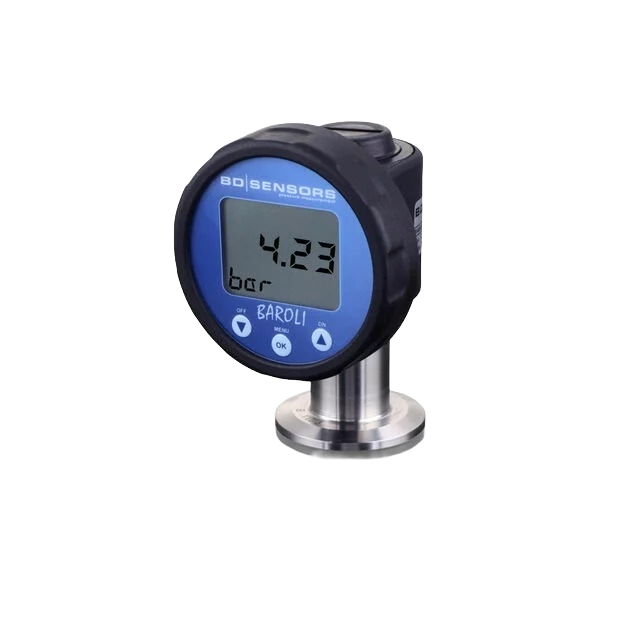
BAROLI 02 P Battery Powered Digital Pressure Gauge – 100 mbar to 40 bar | Flush stainless steel diaphragm | FDA-approved food-compatible materials | Rotatable display | Min/max function | For hygienic SIP pressure verification during commissioning, thermal mapping, and revalidation campaigns
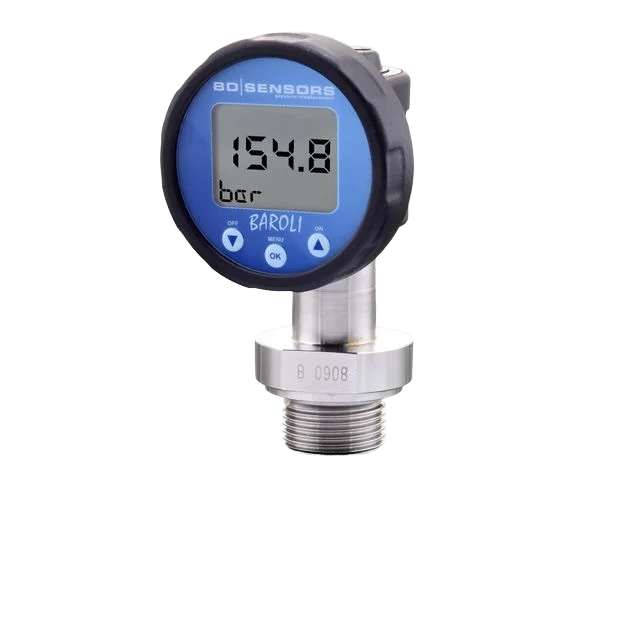
BAROLI 05 P Battery Powered Digital Pressure Gauge – 60-400 bar | Flush welded stainless steel diaphragm | FDA-approved oil filling | For high-pressure clean steam generator and boiler steam supply verification during SIP system commissioning
DL 01 Battery Powered Precision Digital Gauge for Leak Testing – 100 mbar to 400 bar | Integrated data logger (1 s to 99 days) | USB 2.0 | ATEX Zone 0/1 option | For SIP system pressure hold testing during commissioning, post-maintenance requalification, and change control verification to confirm sterilised boundary integrity before returning equipment to validated service
SIP Cycle Monitoring & Validation - Instrumentation Selection Guide
| Measurement Need | Recommended Product(s) | Key Feature |
|---|---|---|
| SIP steam pressure (vessel/pipework, CIP/SIP rated) | DMP 331 P, DMP 331 P i | Flush, CIP/SIP 150 degrees C, pharma |
| SIP pressure at high-temp points (cooling element) | DMP 333P | Flush, cooling element to 200 degrees C |
| SIP pressure at compact locations (dead legs/valves) | DMP 339P | Compact flush G1/4 inch |
| Simultaneous P+T (saturated steam verification, F0) | ATM/T.1ST, ATM/T | Dual 4-20 mA, flush, fast response |
| SIP pressure (IO-Link, digital diagnostics) | DCT 533 P | IO-Link V1.1, CIP/SIP 150 degrees C |
| SIP pressure (IO-Link, ceramic, thermal cycling) | DCT 553 P | Ceramic, IO-Link, dead-space-free |
| Multi-equipment SIP bus (RS485 Modbus, EHEDG) | DCT 531 P | EHEDG, CIP/SIP, Modbus |
| Precision SIP pressure (HART, SIL 2, GMP) | X|act i, X|act ci, XMP i | HART, SIL 2, pharma/biotech |
| SIP validation trending / cycle development | DMP 331i / 333i | 16-bit DSP, 1:10 turn-down |
| Ceramic (thermal cycle stability, no oil-fill) | DMK 351 P, DMK 331 | Ceramic, PVDF, chemical resistant |
| Cold spot temperature (dead legs, drains, F0) | TTT, TTTa | PT100/TC, robust, industrial |
| Filter delta-P during SIP (display + alarm) | DMD 831 | Delta-P, LED display, PNP alarm |
| Filter delta-P during SIP (ATEX, solvents) | DMD 331 | Piezoresistive SS, ATEX |
| Filter delta-P (HART, batch recording) | DPT 200 | HART, 100:1 rangeability |
| Filter delta-P (fast response, transients) | DPT 100 | 10 ms response, RS485, 0.1% FSO |
| SIP overpressure alarm (hygienic) | DS 400 P, DS 200 P | LED, PNP, CIP/SIP |
| Clean steam generator safety interlock | DS 201 P | Flush, 300 degrees C, multi-contact |
| SIP alarm switch (IO-Link) | DS 350 P | IO-Link, flush diaphragm |
| Automated SIP cycle control (P+T PID) | PUR-94 | Dual-loop, auto-tune, Fuzzy Logic |
| Simple SIP thermal management | PUR-99 | Two-step + PID, heating/cooling |
| Multi-point SIP validation logging | CMC-N16 | 48 inputs, PID, SCADA, Ethernet |
| SIP commissioning verification (hygienic) | BAROLI 02 P, BAROLI 05 P | Portable, FDA, flush, battery |
| SIP boundary pressure hold testing | DL 01 | Data logger, USB, ATEX |