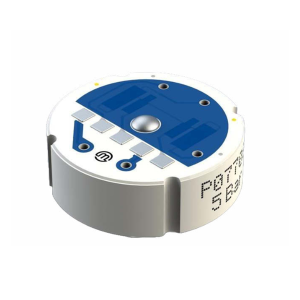
Introducing our refined pressure sensors and sensing elements, the core components of our efficient pressure sensing solutions. If your project demands a compact design without room for complex connectors and pressure ports, we’ve got you covered. Our solutions streamline space, enhance efficiency, and reduce cost, leveraging the integral parts of our renowned pressure transducers and transmitters. Our skilled team, armed with extensive experience and credentials, is ready to help you incorporate these sensors into your product, manifold, or housing. This straightforward integration process promises a seamless fit and optimal functionality. Experience the perfect blend of advanced technology and smart design with our pressure sensing solutions, made just for you.
A pressure sensor measures the force exerted by a liquid or gas and converts it into an electrical signal, so you can monitor and control pressure with confidence. In practice, pressure sensors are used across industrial systems where reliable measurement supports safer operation, better process control, and earlier detection of issues such as leaks or blockages. If you would like a fuller overview of sensing principles and where each sensor type fits, our guide on what pressure sensors are goes into more detail.
How do pressure sensors work?
Most pressure sensors use a sensing element, typically a diaphragm or membrane, that deforms when pressure is applied. That deformation is then converted into an electrical signal using a measurement method such as piezoresistive or capacitive sensing, before being conditioned into a usable output for instrumentation, data acquisition, or control systems. Our article on how pressure sensors work explains the key components and signal processing steps in a clear, practical way.
Choosing the right pressure sensor for your application
The right choice usually comes down to matching the sensor to your system requirements and installation constraints. When selecting a pressure sensor, it helps to consider:
The pressure range, including overpressure events
Whether you need gauge, absolute, or differential reference pressure
Media compatibility and wetted materials
Accuracy, stability, and temperature behaviour
Mounting style and available space, including flush diaphragm requirements
The signal format needed for your system, including digital or USB connectivity
If you are comparing different approaches to building pressure measurement into a product or assembly, our pressure measurement range is a useful starting point. For designs where the sensor needs to integrate into your own manifold, housing, or product architecture, our OEM pressure solutions service is often the most straightforward route.
Pressure sensor applications
Pressure sensors are used wherever pressure data drives monitoring, safety, or automated control. Common examples include industrial process equipment, hydraulics and pneumatics, filtration monitoring, and test benches. You can explore typical use cases and industry examples in our guide to pressure sensors applications and usage.
Where the measurement is based on the difference between two points, such as tracking pressure drop across a filter or verifying flow conditions, differential pressure transmitters can be a better fit than a single point sensor.
Related pressure measurement products
Depending on how you want to display, transmit, or log pressure, you may also want to consider adjacent product categories. For example, if you need bus based outputs for modern electronics, our range of digital pressure sensors may suit your design, while applications that require a local readout often pair well with digital pressure gauges. If you are evaluating sensor formats and output types for integration, the pressure transducers range is another helpful comparison point.
Please fill in the form and send through your enquiry. If you are interested in multiple products then please add the details into the message section.