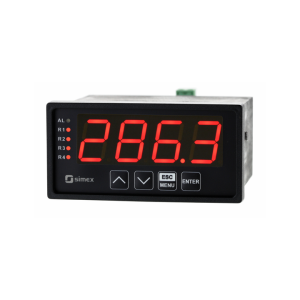
Controllers take inputs from your sensors and send a control signal to your equipment based on the measured value and desired value. We offer basic ON-OFF controllers and advanced PID controllers able to efficiently control your systems.
Controllers sit between your sensors and your equipment. They take an input signal from the sensor, compare the measured value to a desired value (setpoint), then send a control output to maintain stable operation. Within the wider instrumentation portfolio, Stork offers both straightforward ON OFF control and more advanced PID control for processes where tighter regulation and reduced overshoot are important.
ON OFF vs PID control
Depending on the application, you may only need basic switching control, for example turning a heater or pump on and off around a setpoint. Where your system has thermal inertia, flow variation, or requires closer control, PID controllers are typically used to manage the output more smoothly and efficiently.
For temperature focused applications, this commonly means holding a stable temperature in a tank, chamber, or process line. For pressure, level, or flow related control loops, it may involve maintaining a target process value based on transmitter feedback. If you are specifying the wider measurement chain, the sensor side often starts in the pressure measurement, level measurement, or temperature measurement sections.
PID controllers in the Stork range
Stork’s controller range includes PID models with features aimed at simplifying commissioning and improving stability:
The PUR-49 D PID controller with dual LED display is positioned for precision control with a clear dual display and support for versatile inputs, making it practical for general purpose process control.
The PUR-94 advanced PID controller is built for more demanding control requirements, including dual loop control to support heating and cooling strategies in one unit.
Not every panel requires closed loop control. In some systems you may simply want a reliable local display, bargraph indication, and scaled presentation of a transmitter signal. The SRL-49 process meter with bargraph is an example of a display focused instrument for monitoring applications where operators need quick visual feedback.
If you are building a full panel solution, it can also be useful to review the broader instrumentation range, including indicators, controllers, and logging options designed to work cleanly with sensors and transmitters across different applications.
Choosing the right controller
Selection typically comes down to:
The type of input you need to accept from your sensor or transmitter
Whether the process can tolerate ON OFF control or needs PID for stability
Whether you need heating only, cooling only, or combined heating and cooling control
Whether auto tune or fuzzy logic will reduce commissioning time and improve loop performance
Display requirements and operator visibility in the panel
If you tell me what you are controlling, for example temperature in a vessel, pressure in a line, or level in a tank, I can suggest the most natural internal links to include from the relevant sensor pages so the user journey flows from measurement through to control.
Sign Up For Our Newsletter!
Send through your product enquiry
Thank you for visiting Stork Solutions.
Please fill in the form and send through your enquiry. If you are interested in multiple products then please add the details into the message section.