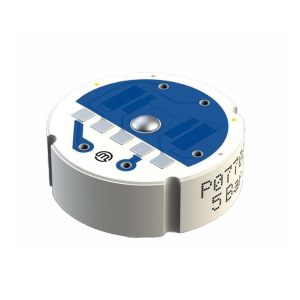
Ceramic pressure sensors are used to integrate pressure sensing into manufacturing equipment or directly into pressure sensors. They are generally well suited for aggressive applications and can be battery powered as they require minimal power to operate.
View our full range of ceramic pressure sensors below or contact us for advice on your application.
At the core of a ceramic pressure sensor is a ceramic diaphragm that deflects under applied pressure. This deflection causes a measurable change in an electrical property, such as resistance or capacitance, which is then converted into an electrical signal proportional to the pressure.
There are two primary types of ceramic pressure sensors based on their sensing principles:
Thick-Film Resistive Sensors: These use a ceramic diaphragm with a thick-film resistive circuit printed onto it. When pressure is applied, the diaphragm flexes, altering the resistance of the circuit. This change is measured and correlated to the pressure.
Capacitive Sensors: These consist of two ceramic plates forming a capacitor. Pressure-induced deformation of the diaphragm changes the distance between the plates, thereby altering the capacitance. The change in capacitance is measured and converted into a pressure reading.
Advantages of a Ceramic Pressure Sensor
Chemical Resistance: Ceramics are inert to many aggressive chemicals, allowing these sensors to be used in corrosive environments without additional protective coatings.
Mechanical Strength: Ceramic materials offer high mechanical strength, enabling the sensors to withstand high pressures and overpressure conditions without damage.
Thermal Stability: They exhibit minimal thermal expansion, providing accurate measurements over a wide temperature range.
Long-Term Stability: Ceramic sensors have excellent stability over time, reducing the need for frequent recalibration.
No Fill Fluids: Unlike some metal diaphragm sensors, ceramic sensors typically do not require fill fluids, eliminating risks associated with fluid leaks and contamination.
Cost-Effectiveness: The manufacturing processes for ceramics allow for mass production at relatively low costs, especially for high-volume applications.
Ceramic Pressure Sensors Applications
Ceramic pressure sensors are used in various sectors due to their durability and reliability:
Automotive Industry: For monitoring oil, fuel, and air pressures within engines and transmission systems.
Industrial Process Control: In chemical plants, water treatment facilities, and food processing, where resistance to corrosive substances is essential.
Medical Devices: For applications like blood pressure monitoring and respiratory equipment.
Environmental Monitoring: Used in equipment measuring atmospheric pressure, water levels, and other environmental parameters.
Consumer Appliances: Found in washing machines and dishwashers to control water levels and pressures.
Some Key Considerations
Ceramic pressure sensors offer a combination of durability, chemical resistance, and stability, making them a reliable choice for accurate pressure measurement in a broad range of applications. Their ability to function effectively in harsh environments without degradation ensures long-term performance and reduces maintenance needs. As industries continue to demand robust and precise pressure sensing solutions, ceramic pressure sensors remain a vital component in meeting these technological challenges.
✕
Sign Up For Our Newsletter!
Send through your product enquiry
Thank you for visiting Stork Solutions.
Please fill in the form and send through your enquiry. If you are interested in multiple products then please add the details into the message section.