

Batch Reactor Filling & Discharge Control
Batch processing remains the dominant production method across specialty chemicals, fine chemicals, agrochemicals, pharmaceutical intermediates, adhesives, coatings, polymer formulations, dyes, pigments, and performance materials. Every batch cycle begins with reactor filling (charging raw materials, solvents, catalysts, and reagents into the reactor vessel in the correct sequence, quantity, and rate) and ends with reactor discharge (transferring the finished product, intermediate, or reaction mass out of the reactor to the next processing stage, whether that is a downstream vessel, filtration skid, distillation column, crystalliser, dryer, or packaging line). Between charging and discharge, the reactor contents may undergo heating, cooling, pressurisation, vacuum application, reflux, gas sparging, and multiple staged additions of further reactants, catalysts, or quench agents, each of which changes the vessel pressure, level, temperature, and viscosity profile.
Pressure instrumentation is central to every phase of the batch reactor cycle. During filling, pressure transmitters confirm vessel head-space pressure for safe charging, monitor inert gas blanket pressure to prevent air ingress into oxygen-sensitive or flammable reactor contents, measure hydrostatic pressure for gravimetric level and batch quantity determination, and provide the feedback signal for automated dosing valve control. During reaction, pressure monitoring tracks reaction progress (gas evolution, vapour pressure changes, exotherm-driven pressure rise), detects runaway reaction onset, and feeds the safety instrumented system (SIS) for high-pressure trip and emergency relief activation. During discharge, pressure transmitters monitor pump suction and discharge pressure, detect line blockage or filter blinding, confirm vessel emptying, and control discharge rate through valve modulation.
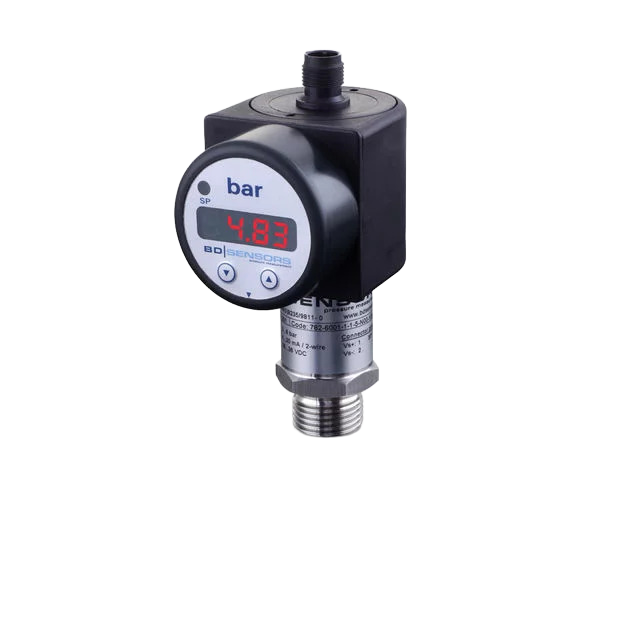
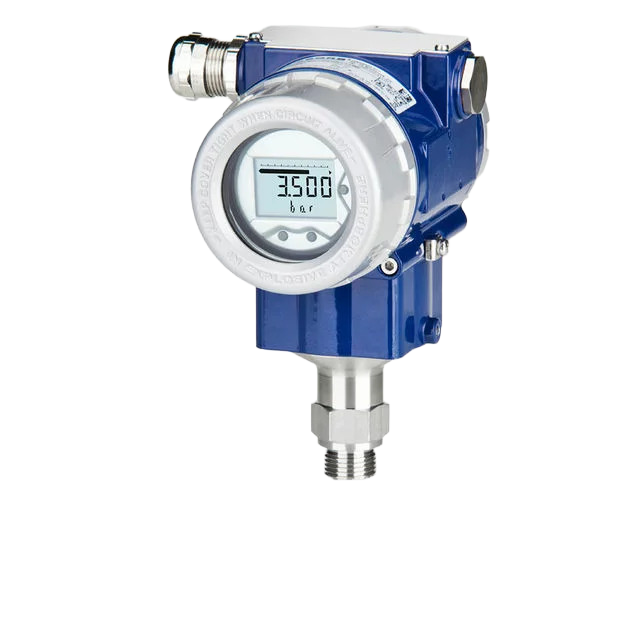
At Stork Solutions, we supply a comprehensive range of ATEX/IECEx-certified pressure transmitters, flush-diaphragm transmitters for viscous and crystallising reactor products, ceramic sensor transmitters for corrosive batch media, differential pressure transmitters for reactor level and filter monitoring, electronic pressure switches for batch alarm and interlock, dual-output pressure and temperature transmitters, IO-Link smart transmitters, PID controllers, and multichannel data loggers engineered for every stage of the batch reactor filling and discharge cycle.
Product Spotlight for Batch Reactor Filling & Discharge Control
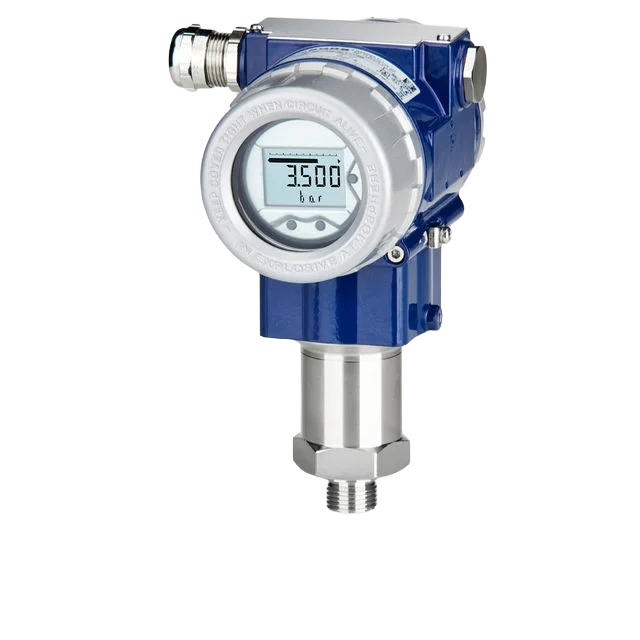
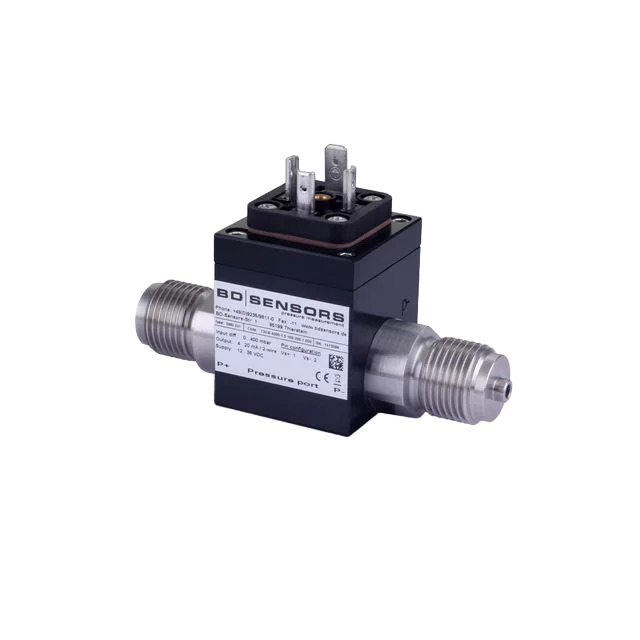
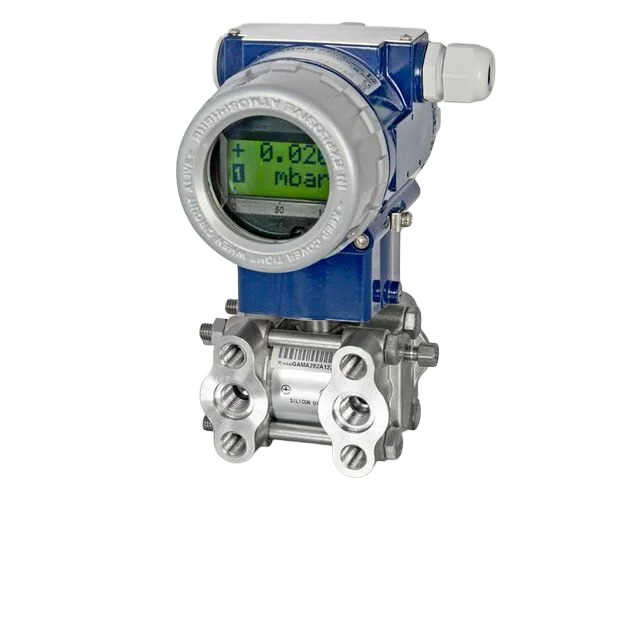
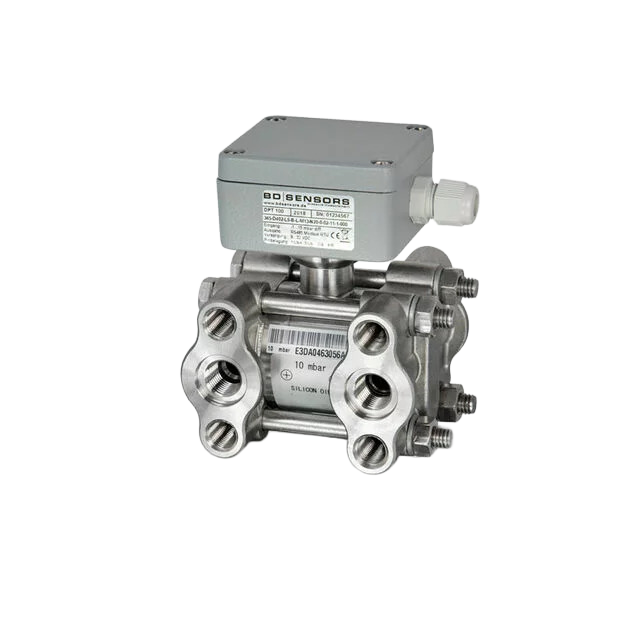
Why Batch Reactor Operations Demand Specialist Pressure Instrumentation
Batch reactors present a measurement environment fundamentally different from continuous process plants. The instrumentation must cope with conditions that change dramatically within a single batch cycle:
Rapidly changing process conditions – a single batch cycle may transition from atmospheric pressure charging through pressurised reaction at elevated temperature to vacuum stripping and finally pressurised discharge, all within hours; transmitters must deliver accurate measurement across this entire operating envelope without reconfiguration
Multiple media in a single vessel – the reactor contents evolve throughout the batch: starting as a low-viscosity liquid charge, progressing through a reacting mass with evolving viscosity, gas evolution, and solid formation, and ending as a potentially high-viscosity product, slurry, or paste; flush-diaphragm construction is essential to prevent fouling and blockage across these changing conditions
Corrosive and reactive media – batch reactors routinely handle concentrated acids, caustic solutions, reactive monomers, oxidising agents, halogenated solvents, and mixed chemical streams that attack conventional stainless steel diaphragms; ceramic and chemically resistant wetted materials provide the durability needed across multi-year service life
Precise dosing and quantity control – batch product quality depends on charging the correct quantities of each component in the correct order at the correct rate; pressure-based level measurement (hydrostatic head) provides continuous, real-time batch quantity data for automated recipe management and dosing control
Exothermic reaction detection – uncontrolled exothermic reactions generate rapid pressure rise from vapour generation and gas evolution; fast-responding pressure transmitters provide the earliest possible indication of runaway onset, feeding the SIS to initiate quench addition, emergency cooling, or controlled venting before the relief system lifts
Inert gas blanketing – many batch reactions require continuous nitrogen or inert gas blanketing to exclude oxygen from flammable or oxidation-sensitive reactor contents; blanket gas pressure must be monitored and controlled throughout filling, reaction, and discharge to maintain the protective atmosphere
Vacuum operations – vacuum stripping, solvent removal under reduced pressure, vacuum drying, and vacuum transfer require transmitters with excellent low-pressure accuracy, resolution, and long-term stability at pressures well below atmospheric
Batch-to-batch cleaning – multi-product batch reactors are cleaned between batches (CIP/SIP or manual cleaning); instruments must withstand cleaning chemicals, elevated cleaning temperatures, and repeated thermal cycling without accuracy degradation
ATEX classification – batch reactor areas processing flammable solvents, volatile intermediates, and combustible dusts are classified ATEX Zone 1 or Zone 2; all instrumentation must carry appropriate ATEX/IECEx certification
Full batch traceability – GMP, ISO 9001, COMAH, Seveso III, and customer quality specifications require complete, time-stamped records of every charging step, reaction parameter, and discharge event for each batch produced
Reactor Vessel Pressure Monitoring During Filling, Reaction, and Discharge
The primary pressure measurement on the batch reactor vessel: head-space pressure monitoring throughout all phases of the batch cycle from initial charging through reaction to final discharge and vessel preparation for the next batch:
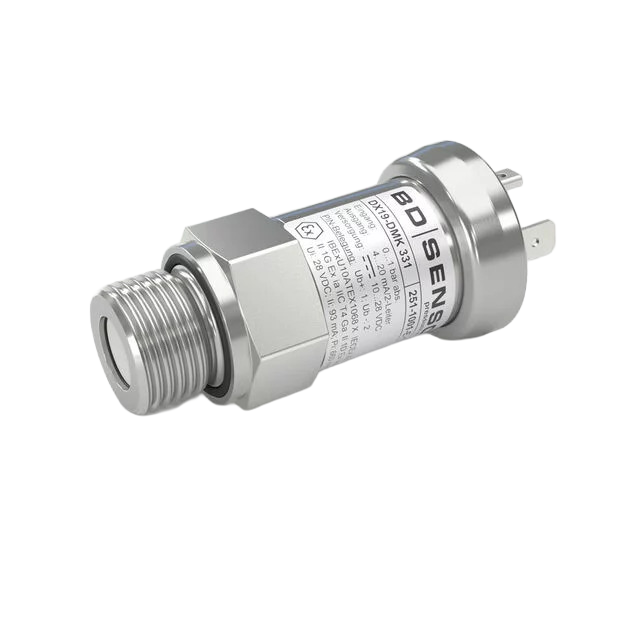
DMP 331 Industrial Pressure Transmitter for Low Pressure – 100 mbar to 60 bar | Piezoresistive stainless steel sensor | 4-20 mA / 0-10 V | ATEX Ex ia | SIL 2 | The general-purpose ATEX transmitter for batch reactor head-space pressure monitoring across the full batch cycle; SIL 2 certification supports high-pressure trip, runaway detection interlock, and emergency relief activation through the plant SIS; proven long-term stability minimises calibration drift between scheduled verification intervals across continuous multi-batch production campaigns
DMP 331 P Industrial Pressure Transmitter – 100 mbar to 40 bar | Flush diaphragm | CIP/SIP 150 degrees C | Vacuum resistant | IS Ex ia | SIL 2 | Optional Hastelloy or Tantalum diaphragm | Cooling element to 300 degrees C | The essential transmitter for batch reactors handling viscous products, polymer solutions, crystallising salt melts, slurries, pastes, and media with suspended solids that would block conventional pressure ports; Hastelloy and Tantalum options provide long-term compatibility with the most aggressive batch chemistries including mixed acid reactions, chlorination, nitration, and sulphonation; cooling element extends service to high-temperature reactor nozzles on heated batch vessels
DMP 331 P i Precision Pressure Transmitter – 400 mbar to 40 bar | 16-bit digital signal processing | Turn-down 1:10 | 0.04% FSO/10K temperature response | For precision reactor pressure measurement where tight temperature coefficient performance maintains accuracy despite the significant temperature excursions within a single batch cycle (ambient during charging, elevated during reaction, cooled during crystallisation or quench, reheated during discharge)
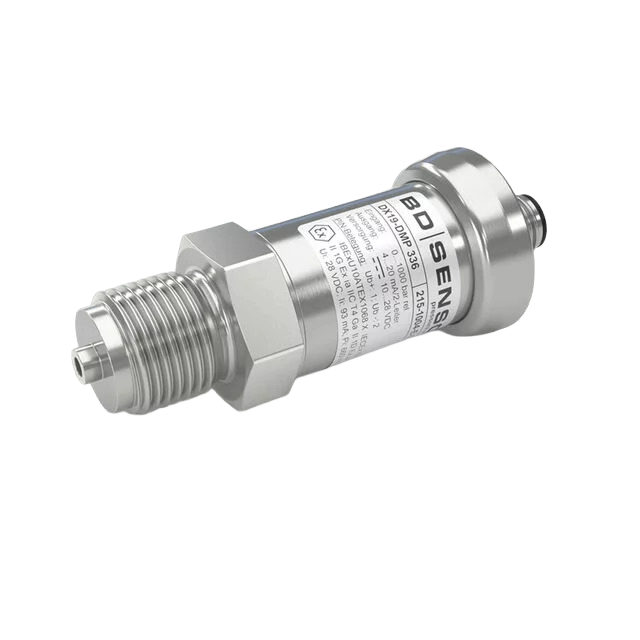
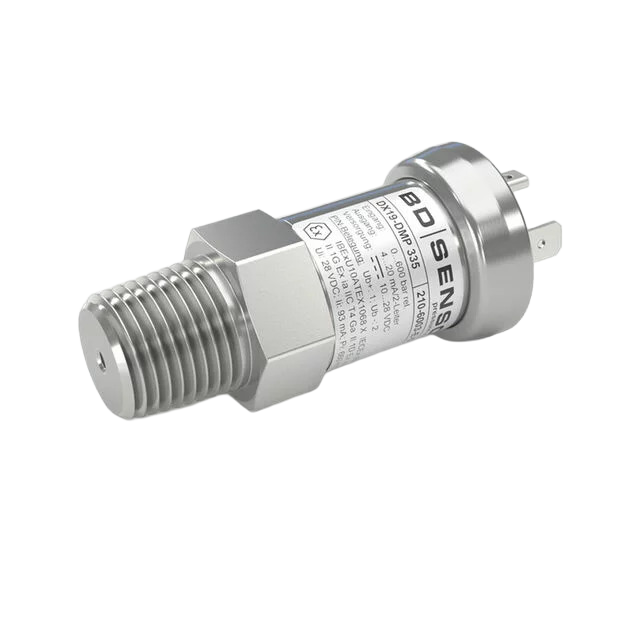
DMP 335 Industrial Pressure Transmitter – 10 bar to 600 bar | Welded stainless steel sensor (no fill fluid, no elastomeric seals) | ATEX Ex ia | Suitable for oxygen applications | Insensitive to pressure peaks | For pressurised batch reactors where oil-fill elimination reduces contamination risk, and for reactor vessels subject to rapid pressure transients from exothermic reaction events, emergency vent activation, or rapid gas injection during staged additions
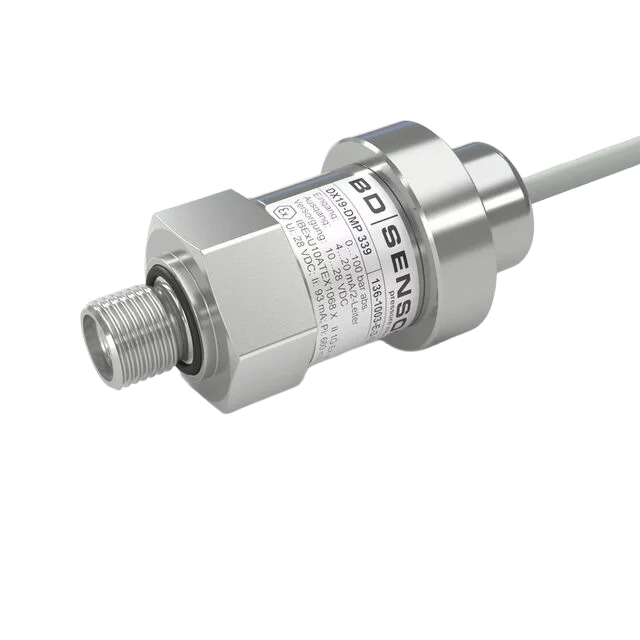
DMP 339 Industrial Pressure Transmitter – Compact industrial design | ATEX Ex ia | For auxiliary batch system pressure monitoring including solvent feed vessels, catalyst preparation tanks, reagent day tanks, quench agent reservoirs, and utility systems (nitrogen, compressed air, steam) serving the batch reactor
DMP 339P Flush Pressure Transmitter with G1/4 inch port – Compact flush-mount | For pressure measurement at compact reactor nozzles, sampling points, small-bore addition lines, and space-constrained locations on reactor auxiliaries and skid-mounted batch systems
Vacuum and Low-Pressure Monitoring for Vacuum Stripping, Drying, and Transfer
Batch reactor vacuum operations including vacuum stripping of solvents, vacuum distillation of intermediates, vacuum drying of reaction products, vacuum transfer of raw materials into the reactor, and reduced-pressure crystallisation require transmitters optimised for accurate, stable, and responsive measurement at pressures well below atmospheric:
DMP 343 Industrial Pressure Transmitter – 10 mbar to 1,000 mbar | Excellent linearity | Minimal thermal effect | Superior long-term stability | ATEX Ex ia | The primary transmitter for batch reactor vacuum operations; 10 mbar low-end capability covers deep vacuum stripping and drying applications; excellent linearity and minimal thermal effect ensure accurate vacuum control at the low absolute pressures where small measurement errors significantly affect solvent removal rate, drying endpoint determination, and product quality
DMK 351 Pressure Transmitter – Capacitive ceramic sensor (99.9% Al2O3) | 40 mbar to 20 bar | High overpressure capability | ATEX Ex ia (gas and dust) | For vacuum monitoring on batch reactors processing corrosive media where the ceramic sensor provides both excellent low-pressure measurement capability and inherent chemical resistance to corrosive vapours and condensates evolving from the reactor during vacuum operations
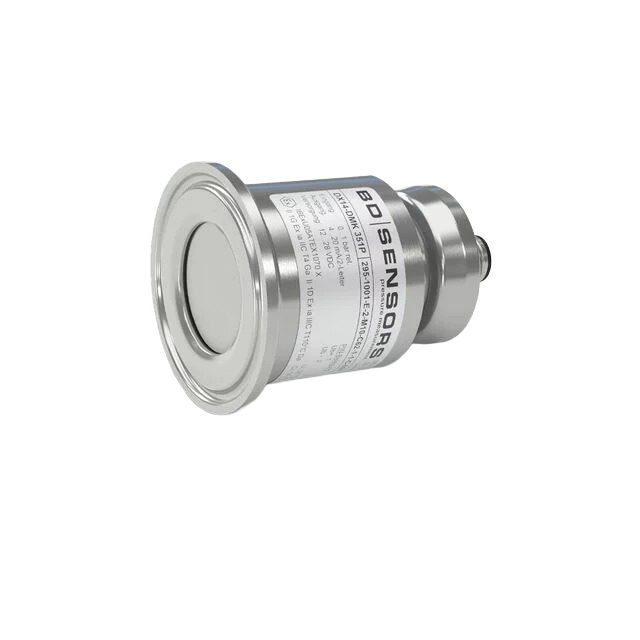
DMK 351 P Pressure Transmitter for the Process Industry – Capacitive ceramic sensor | 40 mbar to 20 bar | Dead-space-free hygienic connections | IS Ex ia | For vacuum monitoring on batch reactors where viscous, fouling, or crystallising reactor contents under vacuum would block conventional ports; flush-diaphragm ceramic construction prevents blockage while handling the chemical attack that destroys metal diaphragm sensors
Ceramic Sensor Transmitters for Corrosive Batch Chemistries
Batch reactors in specialty and fine chemical manufacturing routinely handle concentrated mineral acids, mixed acid systems, organic acids, caustic alkalis, halogenated solvents, reactive monomers, and other chemically aggressive media that corrode conventional stainless steel oil-filled sensors:
DMK 331 Industrial Pressure Transmitter – Capacitive ceramic sensor (99.9% Al2O3) | 400 mbar to 600 bar | G1/2 inch flush port for pasty/polluted media | Open port PVDF for aggressive media | ATEX Ex ia | SIL 2 | The primary ceramic transmitter for corrosive batch reactor pressure monitoring; PVDF wetted port variant provides verified compatibility with hydrochloric acid, sulphuric acid, nitric acid, phosphoric acid, sodium hydroxide, and a broad range of organic solvents and intermediates; SIL 2 certification supports safety-critical reactor overpressure protection and runaway detection interlock on corrosive batch processes
DMK 331 P Industrial Pressure Transmitter – Capacitive ceramic sensor | Flush diaphragm | ATEX Ex ia | For flush-mounted reactor pressure measurement where corrosive, fouling, or polymerising reactor contents require both ceramic chemical resistance and flush-diaphragm construction to prevent port blockage during extended batch reaction cycles
XMP ci Process Pressure Transmitter with HART – Capacitive ceramic sensor (99.9% Al2O3) | 160 mbar to 20 bar | HART | Two-chamber aluminium die-cast or stainless steel field housing | Intrinsic safety (ia) and flameproof (d) options | Turn-down 1:5 | For HART-integrated corrosive batch reactor pressure monitoring with DCS recipe management integration, predictive sensor diagnostics, and centralised instrument health monitoring across multi-reactor batch plants
X|act ci Precision Pressure Transmitter – Capacitive ceramic sensor (99.9% Al2O3) | 160 mbar to 20 bar | HART option | Flush-mounted | ATEX Ex ia option | For precision corrosive batch reactor pressure measurement where ceramic sensor stability supports extended recalibration intervals across multi-product batch campaigns producing different corrosive chemistries in the same reactor
Hydrostatic Level and Batch Quantity Determination
Pressure-based hydrostatic level measurement in batch reactors provides continuous, real-time data for automated recipe management: confirming the quantity of each raw material charged, tracking reactor fill level during staged additions, detecting overfill conditions, verifying correct batch size before reaction initiation, and confirming reactor emptying during discharge:
DPT 200 Differential Pressure Transmitter with HART – 1 mbar to 20 bar | Static pressure to 400 bar | HART | 100:1 rangeability | ATEX Ex ia / Ex d | LC display | For reactor level measurement via hydrostatic head across the full batch cycle; 100:1 rangeability covers the entire level range from empty reactor verification through full-charge confirmation in a single device; 1 mbar sensitivity detects small additions (catalyst shots, initiator charges, reagent top-ups) with high resolution; HART connectivity enables DCS-integrated batch quantity totalisation, recipe step confirmation, and automated dosing valve sequencing
DPT 100 Differential Pressure Transmitter – 10 mbar to 20 bar | Static pressure to 400 bar | RS485 Modbus RTU | Fast response time (10 ms) | 0.1% FSO accuracy | For fast-response reactor level measurement during rapid filling and high-rate discharge operations where 10 ms response captures level changes in real time; Modbus connectivity supports multi-reactor level monitoring on a digital bus architecture
DMD 831 Differential Pressure Transmitter with Display and Contact – 1 bar to 70 bar | Dual piezoresistive stainless steel sensors | 4-digit LED display | PNP alarm contact | For reactor level monitoring with integrated LED display providing local visual indication for batch operators during manual charging operations and PNP alarm contact triggering high-level warning before overfill
DMD 331 Differential Pressure Transmitter – 20 mbar to 16 bar | Piezoresistive stainless steel | ATEX Ex ia | 30x static overpressure | For reactor level and batch quantity measurement in ATEX-classified batch reactor areas; 30x static overpressure capability protects the instrument during reactor pressurisation cycles and pressure excursions
High-Pressure Transmitters for Pressurised Batch Reactors
Batch hydrogenation, high-pressure polymerisation, autoclave reactions, supercritical fluid processing, and pressurised gas-liquid reactions operate at elevated pressures requiring transmitters engineered for sustained high-pressure service with proven resistance to dynamic pressure cycling inherent in batch operations (repeated pressurisation/depressurisation every cycle):
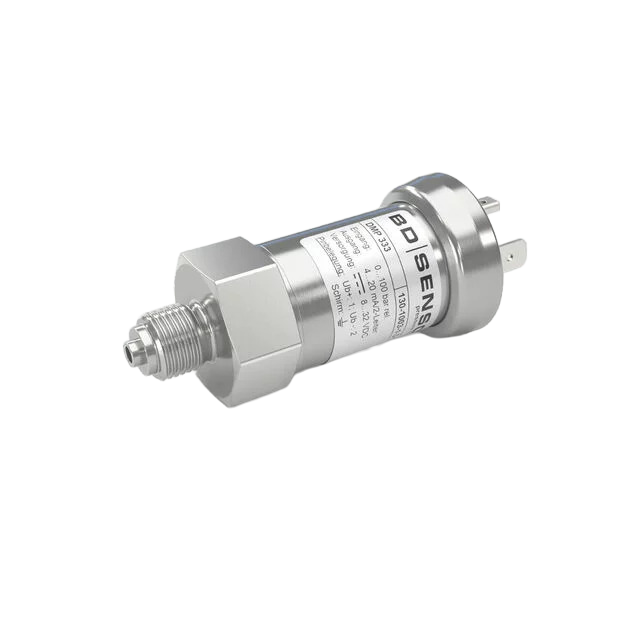
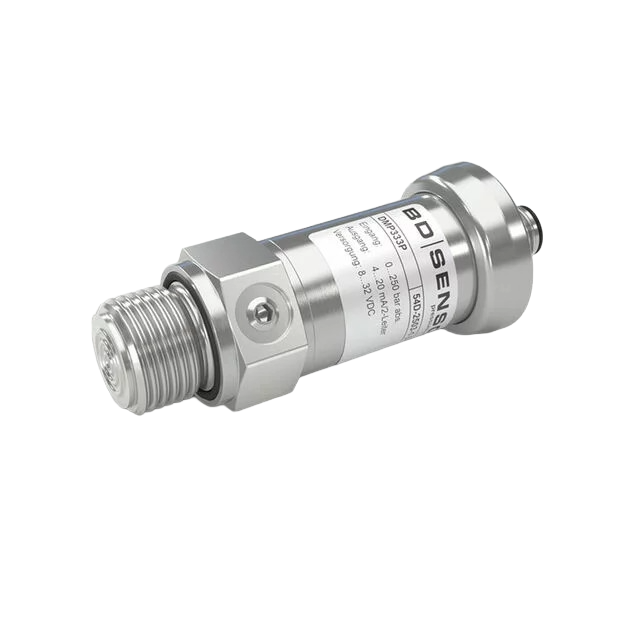
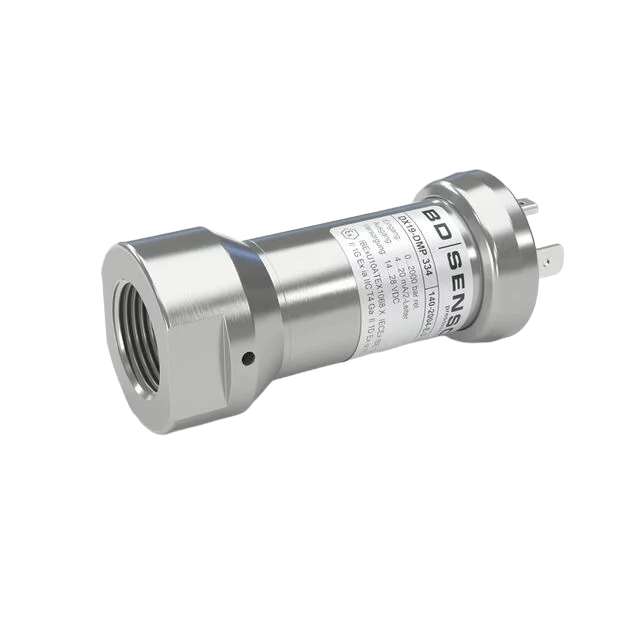
DMP 333 Industrial Pressure Transmitter for High Pressure – 100 bar to 600 bar | Piezoresistive stainless steel | ATEX Ex ia | SIL 2 | Excellent long-term stability under high dynamic pressure loads | Insensitive to pressure peaks | For pressurised batch reactor monitoring including hydrogenation, high-pressure polymerisation, and autoclave reactions; long-term stability under repeated pressurisation/depressurisation cycling (hundreds of cycles per year) ensures reliable measurement throughout the reactor service life; SIL 2 certification supports safety-critical high-pressure batch reactor trip and ESD functions
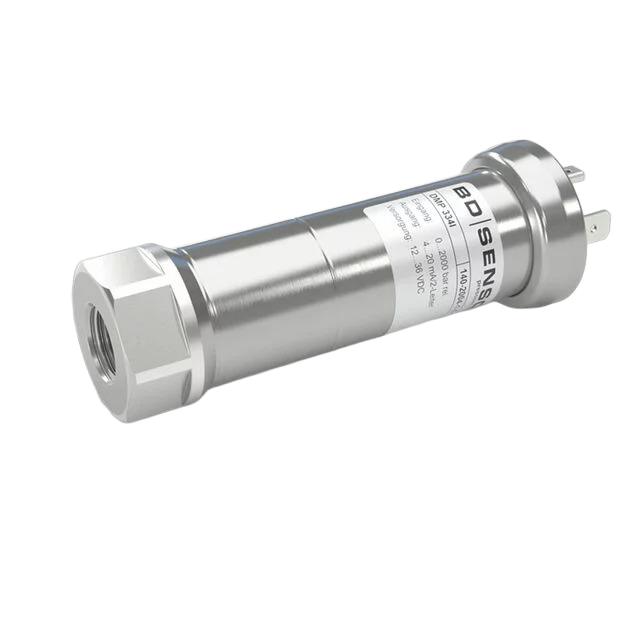
DMP 334 Industrial Pressure Transmitter for High Pressure – 600 bar to 2,200 bar | Thin-film sensor welded directly to pressure port | ATEX Ex ia | For ultra-high-pressure batch reactors operating above 600 bar including high-pressure synthesis, supercritical fluid reactions, and specialist polymerisation processes
DMP 334 i Precision Pressure Transmitter for High Pressure – High-pressure range | 16-bit digital signal processing | Turn-down 1:10 | Active correction of non-linearity and thermal error | For precision high-pressure batch reactor control where accurate pressure measurement supports reaction kinetics optimisation, gas consumption tracking (hydrogen uptake in hydrogenation), and endpoint determination based on pressure plateau detection
SIL 2 and HART Transmitters for Reactor Safety and DCS Integration
Batch reactor safety instrumented systems require SIL 2 rated pressure transmitters for high-pressure trip, runaway reaction detection, emergency vent initiation, reactor overpressure protection, and automated emergency shutdown. HART connectivity enables simultaneous safety monitoring and DCS-integrated batch recipe management from a single instrument:
X|act i Precision Pressure Transmitter (SIL 2) – 400 mbar to 40 bar | HART | SIL 2 | Turn-down 1:10 | Flush welded diaphragm | ATEX Ex ia | Cooling element to 300 degrees C | For SIL 2 batch reactor overpressure protection, runaway detection, and emergency relief activation; flush welded diaphragm handles viscous and fouling reactor contents without blockage; HART supports simultaneous safety function and DCS asset management without compromising safety integrity; cooling element enables direct mounting on high-temperature reactor nozzles without remote seals
XMP i Precision Pressure Transmitter with HART and SIL 2 – 400 mbar to 600 bar | HART | SIL 2 | Turn-down 1:10 | For SIL 2 integration across the full pressure range from atmospheric batch reactors through pressurised autoclaves and high-pressure hydrogenation vessels; single product family covers the complete reactor pressure spectrum; ESD trip, high-pressure interlock, and automated quench initiation with SIL 2 integrity
DMP 331i / DMP 333i Precision Pressure Transmitter – 400 mbar to 600 bar | 16-bit digital signal processing | Turn-down 1:10 | Thermal error as low as 0.02% FSO/10K | For precision batch reactor pressure trending where the lowest possible thermal error maintains accurate pressure measurement across the wide temperature excursions within each batch cycle, supporting reaction kinetics monitoring, gas uptake tracking, and batch endpoint determination
IO-Link and Digital Bus Transmitters for Multi-Reactor Batch Plants
Multi-reactor batch plants, modular batch skid systems, and campaign-driven production facilities benefit from digitalised pressure monitoring with automated device parameterisation for product changeover, real-time sensor health verification before each batch, centralised device management, and predictive maintenance across reactor fleets:
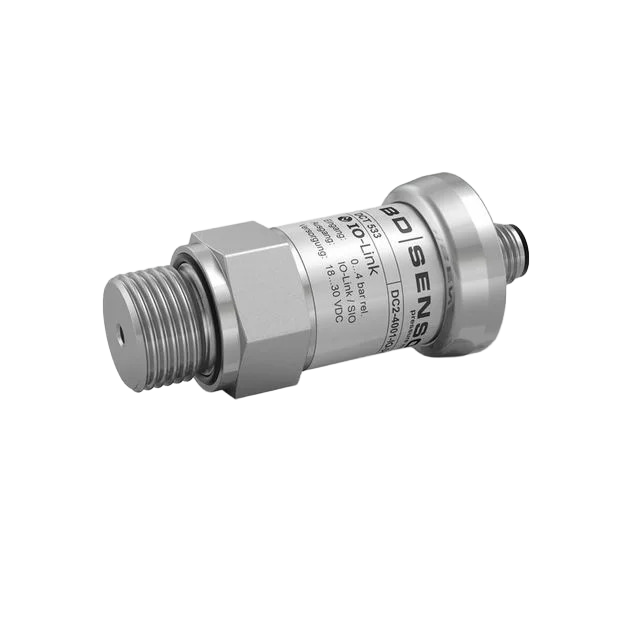
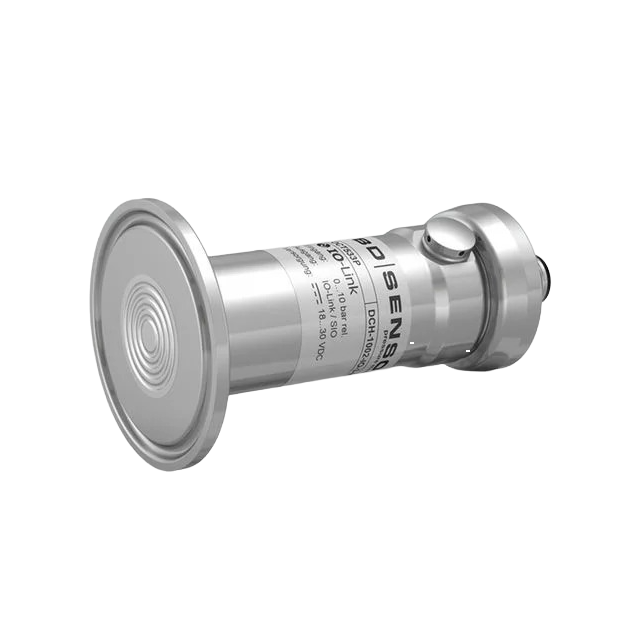
DCT 533 P Industrial Pressure Transmitter with IO-Link – 100 mbar to 40 bar | IO-Link V1.1 | CIP/SIP cleaning up to 150 degrees C | Flush hygienic pressure port | IP 67/IP 69 | Cooling element to 300 degrees C | For IO-Link-connected batch reactor monitoring where automated device parameterisation supports rapid product changeover between different batch chemistries on multi-product reactors; sensor health diagnostics confirm measurement readiness before each batch is initiated; flush construction handles viscous reactor contents and inter-batch CIP cleaning
DCT 553 P Industrial Pressure Transmitter with IO-Link – Capacitive ceramic sensor (99.9% Al2O3) | 40 mbar to 20 bar | IO-Link V1.1 | Dead-space-free | High overpressure capability | For IO-Link batch reactor monitoring where ceramic media resistance provides compatibility with corrosive batch chemistries and IO-Link enables centralised device management across multi-reactor campaign production
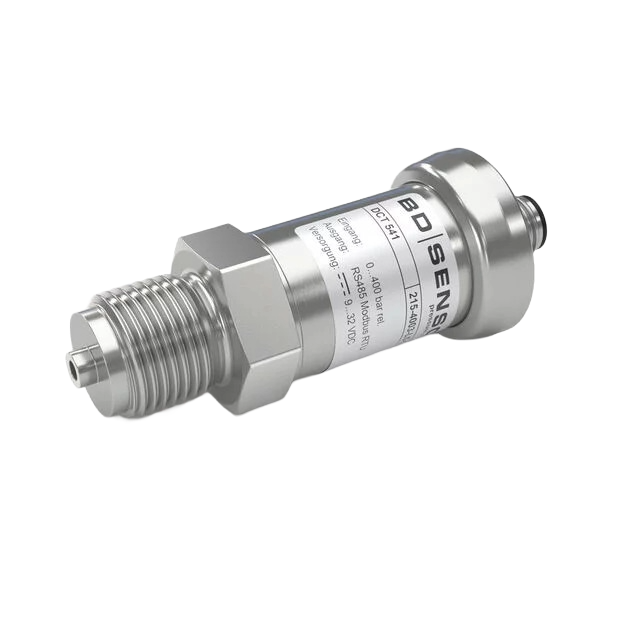
DCT 531 P Industrial Pressure Transmitter with RS485 Modbus RTU – 100 mbar to 40 bar | RS485 Modbus RTU | EHEDG certified | CIP/SIP cleaning up to 150 degrees C | IP 67/IP 69 | Up to 247 devices on a single bus | For multi-reactor Modbus bus architectures across large batch chemical plants where dozens of reactors, feed vessels, receivers, and auxiliaries require coordinated digital pressure monitoring from a centralised batch management DCS/SCADA
Correlated Pressure and Temperature for Reaction Monitoring
Simultaneous pressure and temperature measurement from a single reactor nozzle provides correlated P+T data essential for reaction progress tracking (pressure-temperature trajectory analysis), exotherm detection (divergence between expected and actual P+T profiles), batch endpoint determination, and safety system verification:
ATM/T.1ST Dual Output Pressure and Temperature Transmitter – Flush stainless steel diaphragm | Integrated temperature probe tip | Dual 4-20 mA outputs (pressure + temperature) | Short response time | 316L stainless steel | For simultaneous batch reactor pressure and temperature measurement enabling real-time reaction monitoring through correlated P+T trajectory analysis; divergence between the expected and actual pressure-temperature profile provides early warning of abnormal reaction behaviour, side-reaction initiation, or runaway onset before conventional single-variable alarms activate; reduces reactor nozzle count by combining two measurements in a single vessel penetration
ATM/T Dual Output Pressure and Temperature Transmitter – Flush diaphragm variant with dual 4-20 mA outputs | For additional P+T measurement on reactor feed preheaters, discharge coolers, reflux condensers, solvent recovery circuits, and downstream vessels receiving batch reactor product
Electronic Pressure Switches for Batch Alarm, Interlock, and Sequencing
Automated switching outputs for batch reactor safety interlocks, recipe step sequencing, overfill protection, high-pressure alarm, vacuum break alarm, discharge pump protection, and batch completion confirmation:
DS 200 P Electronic Pressure Switch – 100 mbar to 40 bar | 1, 2, or 4 PNP contacts | 4-20 mA / 0-10 V analogue output | 4-digit LED display | IS Ex ia option | For multi-level batch reactor alarm switching: independent contacts for high-pressure warning, high-high-pressure trip, vacuum break alarm, and batch step completion confirmation; integrated LED display provides local reactor pressure indication for batch operators during charging, sampling, and manual intervention
DS 201 P Electronic Pressure Switch – 60-400 bar | Flush stainless steel diaphragm | Cooling element to 300 degrees C | 1, 2, or 4 PNP contacts + analogue output | For high-pressure batch reactor overpressure alarm and trip switching on hydrogenation, autoclave, and pressurised polymerisation reactors; cooling element enables direct mounting on high-temperature reactor nozzles
DS 400 P Intelligent Electronic Pressure Switch – 100 mbar to 40 bar | Hygienic stainless steel | 1 or 2 PNP contacts | 4-20 mA analogue output | 4-digit LED display | IS Ex ia | For batch reactor pressure excursion alarm switching with clear local LED display for operator visibility during reactor charging, reagent additions, and manual discharge operations
DS 350 P Electronic Pressure Switch with IO-Link – IO-Link interface | Flush diaphragm | For IO-Link-connected batch reactor alarm switching with centralised alarm management, automated alarm threshold adjustment during product changeover on multi-product batch reactors, and real-time switch health diagnostics confirming interlock readiness before each batch
Batch Reactor Filling & Discharge Control - Instrumentation Selection Guide
| Measurement Need | Recommended Product(s) | Key Feature |
|---|---|---|
| Reactor head-space pressure (ATEX, SIL 2) | DMP 331 | ATEX Ex ia, SIL 2, proven stability |
| Reactor with viscous/fouling media (flush) | DMP 331 P | Flush, SIL 2, Hastelloy/Tantalum, 300 degrees C |
| Precision reactor pressure (low temp coeff) | DMP 331 P i | 16-bit DSP, 1:10 turn-down |
| Pressurised reactor, no oil-fill | DMP 335 | Welded SS, spike insensitive, oxygen safe |
| Feed vessel / catalyst / utility auxiliary | DMP 339, DMP 339P | Compact, ATEX, flush |
| Vacuum stripping / drying / transfer | DMP 343 | 10 mbar, ATEX, excellent linearity |
| Corrosive batch media (ceramic, PVDF, SIL 2) | DMK 331 | Ceramic, PVDF, ATEX, SIL 2 |
| Corrosive + fouling reactor (ceramic flush) | DMK 331 P | Ceramic, flush, ATEX |
| Vacuum + corrosive (ceramic) | DMK 351, DMK 351 P | Ceramic, high overpressure, flush |
| Corrosive batch reactor (ceramic, HART) | XMP ci, X|act ci | Ceramic, HART, ATEX |
| Reactor level / batch quantity (HART, 100:1) | DPT 200 | HART, 1 mbar, 100:1 rangeability |
| Reactor level (fast response, Modbus) | DPT 100 | 10 ms, RS485, 0.1% FSO |
| Reactor level (display + high-level alarm) | DMD 831 | LED display, PNP alarm |
| Reactor level in ATEX areas | DMD 331 | ATEX Ex ia, 30x overpressure |
| Pressurised batch reactor (100-600 bar) | DMP 333 | ATEX, SIL 2, cycle-resistant |
| Ultra-high-pressure reactor (600-2,200 bar) | DMP 334, DMP 334 i | Welded thin-film, precision |
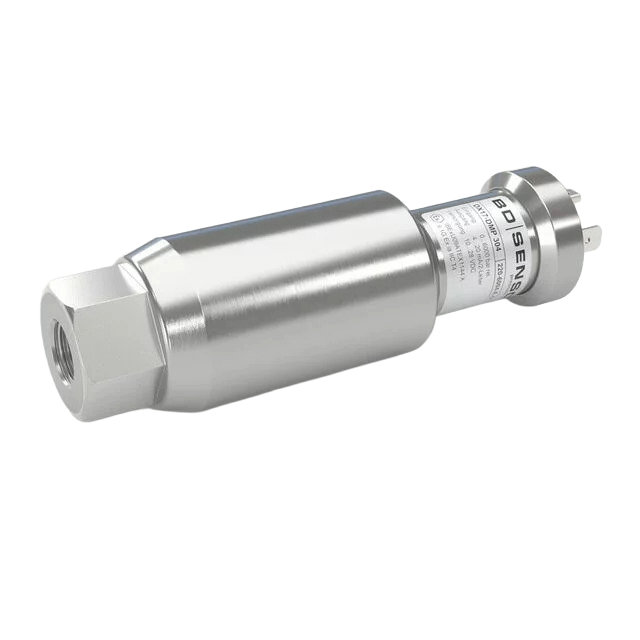
| Ultra-high-pressure dosing (to 6,000 bar) | DMP 304 | ATEX, 0.25% FSO |
| SIL 2 reactor SIS, HART, flush | X|act i | HART, SIL 2, 300 degrees C cooling |
| SIL 2 reactor SIS, HART, wide range | XMP i | HART, SIL 2, 400 mbar-600 bar |
| Precision reactor trending / endpoint | DMP 331i / 333i | 0.02% FSO/10K, 1:10 turn-down |
| IO-Link, flush, multi-product changeover | DCT 533 P | IO-Link, CIP/SIP 150 degrees C |
| IO-Link, ceramic, corrosive batch | DCT 553 P | Ceramic, IO-Link, dead-space-free |
| Multi-reactor Modbus bus | DCT 531 P | EHEDG, Modbus, 247 devices |
| Correlated P+T (reaction trajectory) | ATM/T.1ST, ATM/T | Dual 4-20 mA, flush |
| Multi-contact reactor alarm (ATEX) | DS 200 P | 1-4 PNP, analogue, LED, ATEX |
| High-pressure reactor alarm/trip | DS 201 P | 60-400 bar, 300 degrees C |
| Reactor alarm with display | DS 400 P | LED, PNP, Ex ia |
| IO-Link reactor alarm switching | DS 350 P | IO-Link, flush |
| Reactor / jacket / feed temperature | TTT, TTTa | PT100/TC, robust |
| Batch pressure/temperature PID control | PUR-94 | Dual-loop, Fuzzy Logic, Modbus |
| Simple valve / pump switching | PUR-99 | Two-step + PID |
| Multi-point batch documentation | CMC-N16 | 48 inputs, SCADA, Ethernet |
| Reactor pressure verification | BAROLI 02 P, BAROLI 05 P | Portable, flush, battery |
| Reactor pressure hold / leak test | DL 01 | Data logger, ATEX, USB |