

CIP / SIP Cycle Monitoring
Clean-In-Place (CIP) and Sterilise-In-Place (SIP) are the automated cleaning and sterilisation processes that underpin hygiene assurance in food & beverage, dairy, brewery, pharmaceutical, biotechnology, and cosmetics manufacturing. Without physically dismantling pipework, vessels, heat exchangers, or filling lines, CIP/SIP systems circulate cleaning agents (caustic soda, acid, rinse water, sanitiser) and live steam at precisely controlled temperatures, pressures, flow rates, and durations to remove product residues, biofilm, and microorganisms — then verify that the equipment is safe to return to production.
Accurate, repeatable instrumentation is the backbone of every validated CIP/SIP cycle. Pressure transmitters confirm that spray devices are operating correctly and flow paths are unobstructed; temperature transmitters verify thermal hold during sterilisation; differential pressure instruments monitor filter condition within the CIP circuit; level sensors track chemical tank inventories; PID controllers regulate heating and cooling phases; and data loggers capture the time-stamped evidence that regulatory auditors require.
At Stork Solutions, we supply a comprehensive range of hygienic flush-diaphragm pressure transmitters, ceramic sensor transmitters, electronic pressure switches, dual-output pressure & temperature transmitters, PID controllers, and multichannel data loggers — all purpose-designed for the aggressive cleaning chemicals, steam temperatures, rapid thermal cycling, and strict hygienic design standards that CIP/SIP systems demand.
Product Spotlight for CIP / SIP Cycle Monitoring
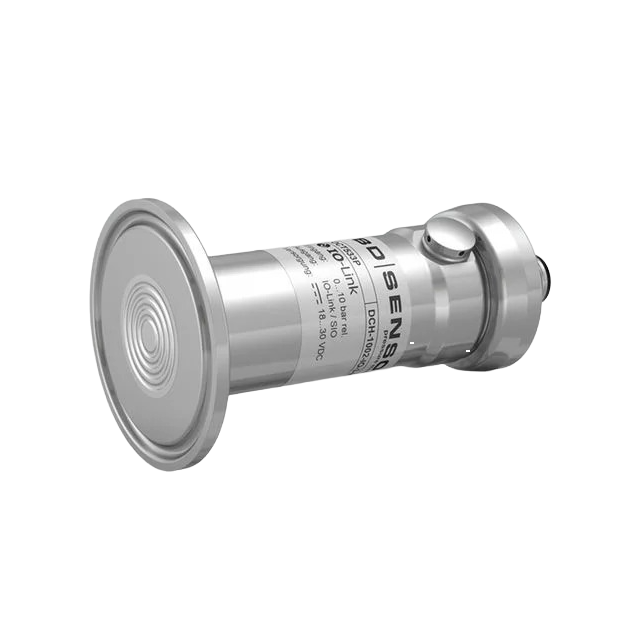
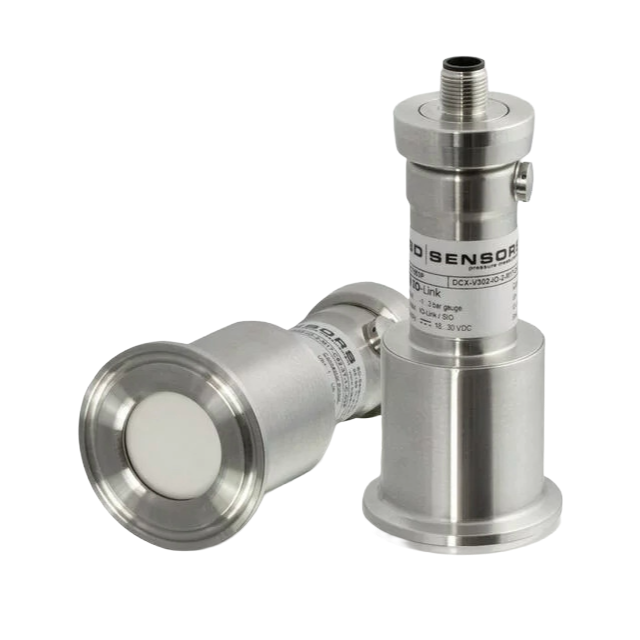
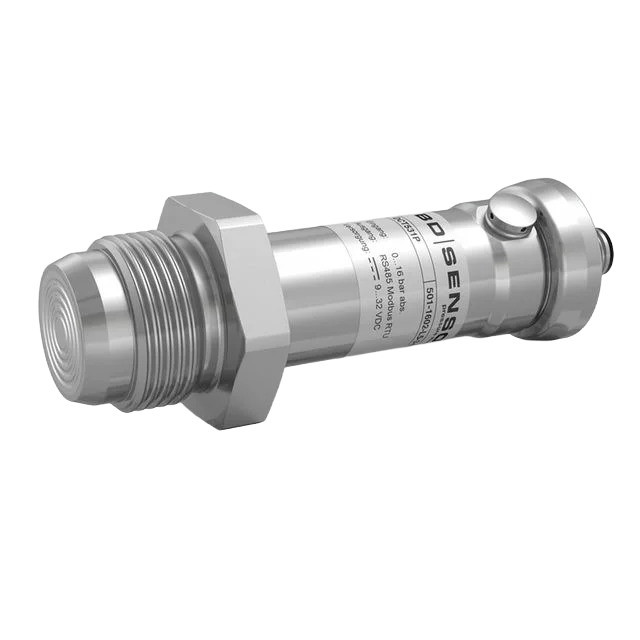
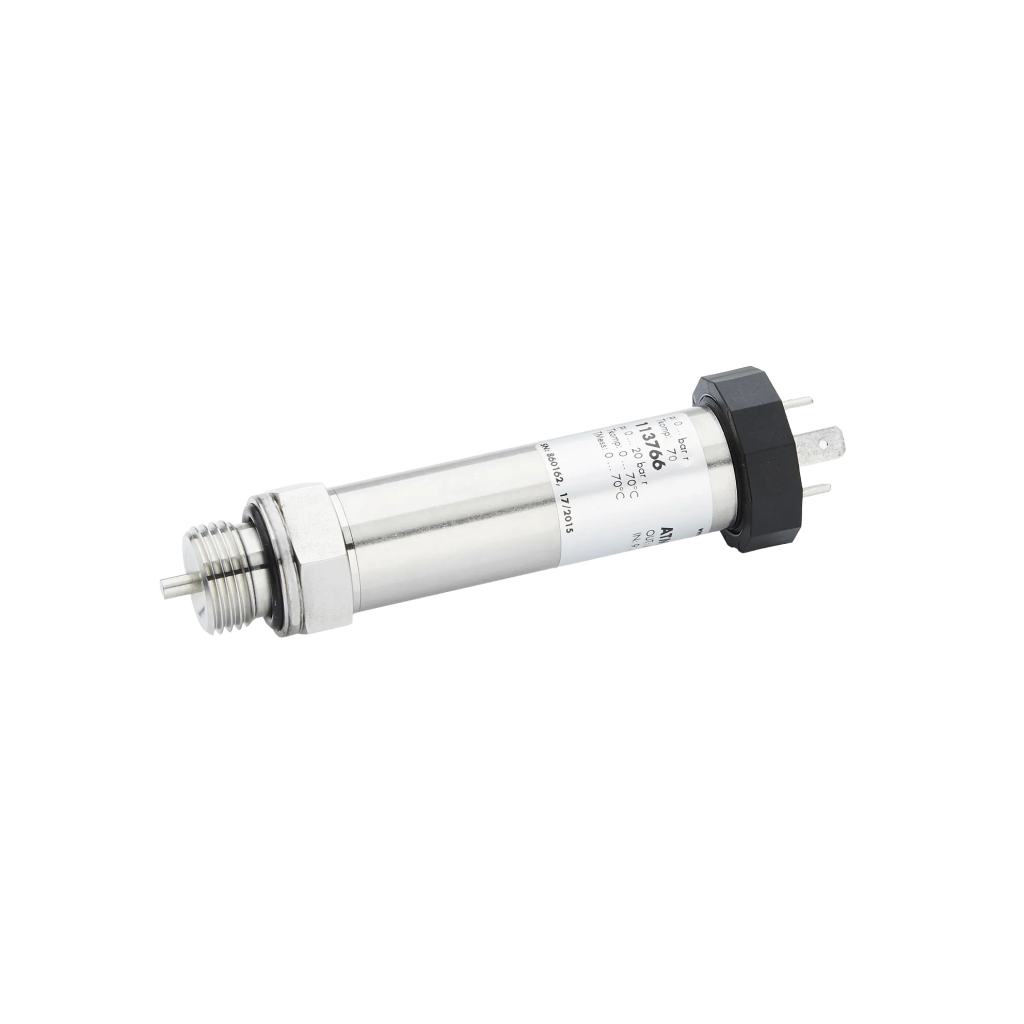
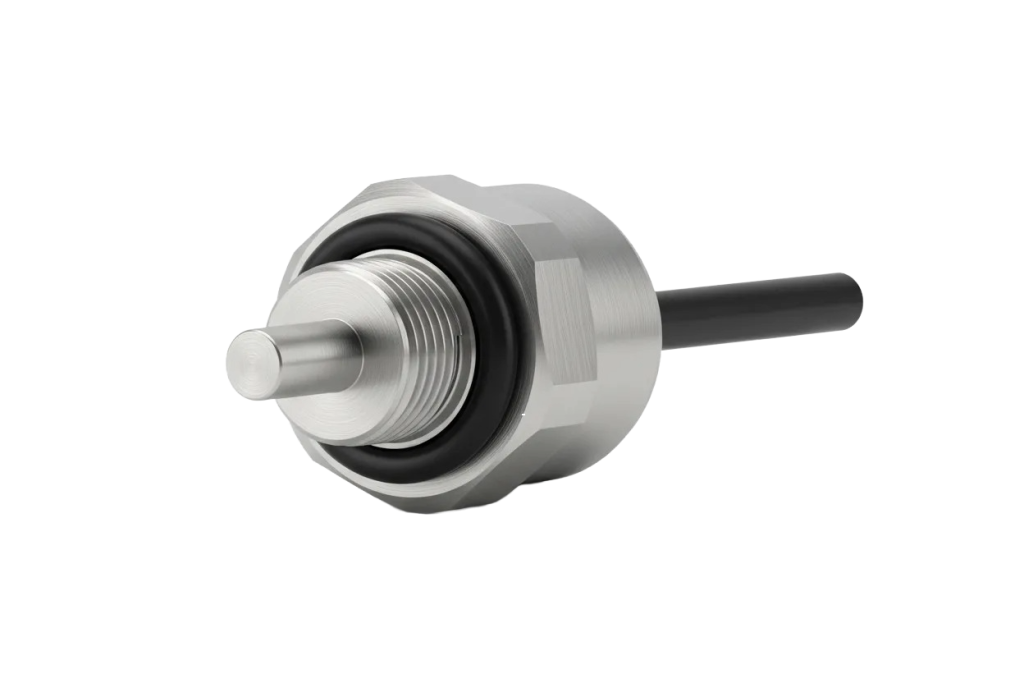
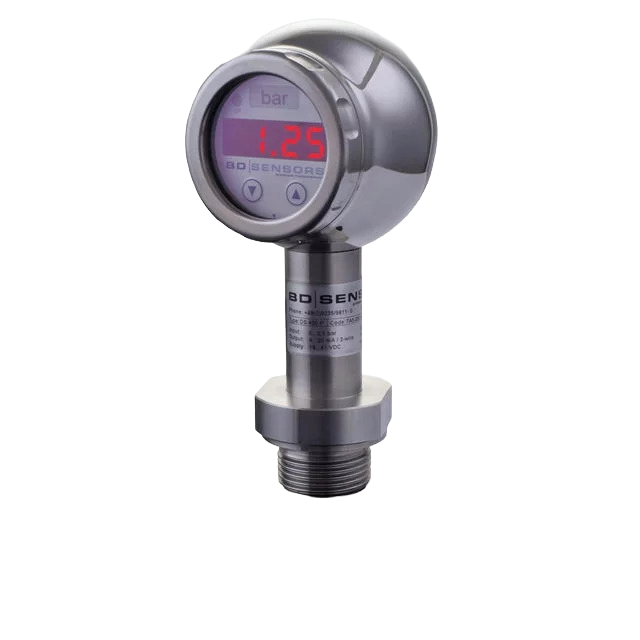
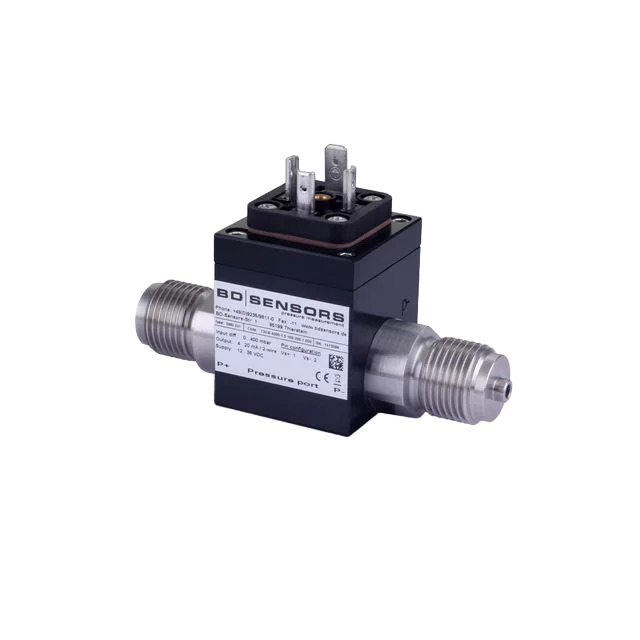
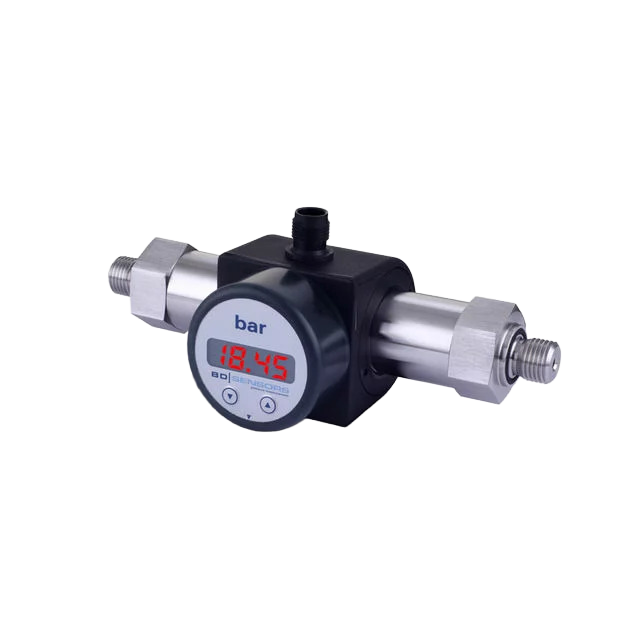
Why Specialist Instrumentation Is Needed for CIP / SIP Cycles
CIP/SIP environments subject instruments to a uniquely demanding combination of conditions that general-purpose sensors cannot reliably survive:
Aggressive cleaning chemicals — caustic soda (NaOH) at 1–4%, nitric/phosphoric acid, peracetic acid, chlorinated alkaline detergents, and sanitisers attack standard sensor materials, seals, and oil-fills
Steam sterilisation temperatures — SIP cycles typically reach 121–134 °C under pressure; CIP hot-rinse phases reach 80–95 °C, demanding instruments rated for repeated thermal cycling to ≥ 150 °C
Rapid thermal shock — transitions from ambient to steam temperature and back within minutes impose severe mechanical stress on sensor diaphragms and housings
Dead-space-free hygiene — any crevice, pocket, or recess in the pressure port can harbour product residue or bacteria, compromising the very cleaning process the instrument is monitoring
Regulatory validation — FDA 21 CFR Part 11, EU GMP Annex 1, EHEDG, and 3-A standards require instruments that support traceable calibration, data logging, and documented cleaning validation
Hazardous atmosphere classification — pharmaceutical solvent cleaning and brewery CO₂ environments may require ATEX/IECEx-certified instruments
Digital traceability — modern CIP/SIP systems require HART®, IO-Link, or RS485 Modbus RTU connectivity for automated cycle logging, alarm management, and integration with SCADA/MES/batch systems
Multi-parameter monitoring — a single CIP/SIP cycle requires simultaneous pressure, temperature, ΔP, level, and flow verification at multiple points, demanding instruments that integrate seamlessly into multichannel control architectures
Purpose-designed hygienic instruments with flush diaphragms, CIP/SIP-rated materials, appropriate certifications, and digital communication protocols ensure that every cycle is measured, controlled, and documented to the standards that food safety and pharmaceutical regulators demand.
Hygienic Flush-Diaphragm Pressure Transmitters — CIP/SIP Rated
The primary pressure measurement in any CIP/SIP system: monitoring spray-ball supply pressure, vessel pressure during wash/rinse/sanitise phases, and confirming that flow paths are pressurised correctly. These transmitters feature flush stainless steel diaphragms with no dead space, CIP/SIP cleaning ratings to 150 °C (300 °C with cooling element), and hygienic process connections.
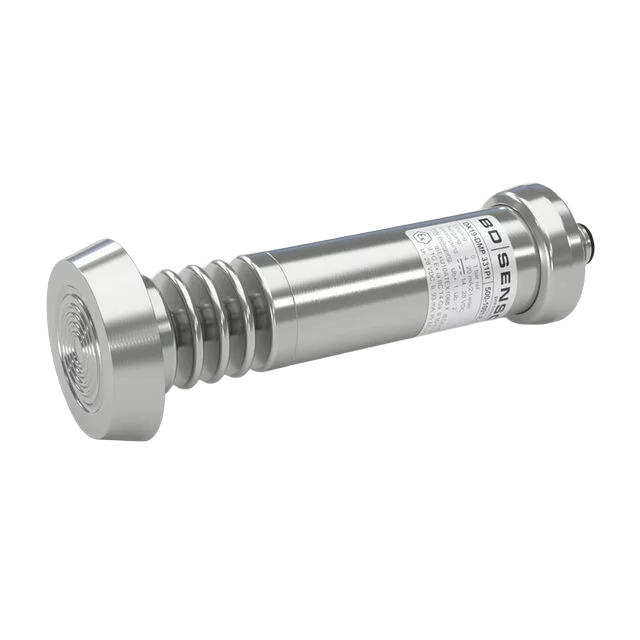
DMP 331 P Industrial Pressure Transmitter — 100 mbar to 40 bar | Piezoresistive stainless steel sensor | Flush diaphragm | 4–20 mA / 0–10 V | Vacuum resistant | IS Ex ia | SIL 2 | Optional Hastelloy® / Tantalum diaphragm | Cooling element to 300 °C | The workhorse hygienic transmitter for CIP/SIP supply pressure, vessel pressure, and return-line monitoring
DMP 331 P i Precision Pressure Transmitter — 400 mbar to 40 bar | 16-bit digital signal processing | Turn-down 1:10 | Pasteurisation, carbonation, filtration, fermentation, filling | For precision CIP/SIP cycle pressure trending, pharmaceutical sterile process validation, and batch record data
DMP 333P Pressure Transmitter — Flush diaphragm | Cooling element to 200 °C | Viscous and pasty media | For CIP/SIP monitoring on lines handling high-viscosity products (sauces, creams, pastes) where residue removal verification is critical
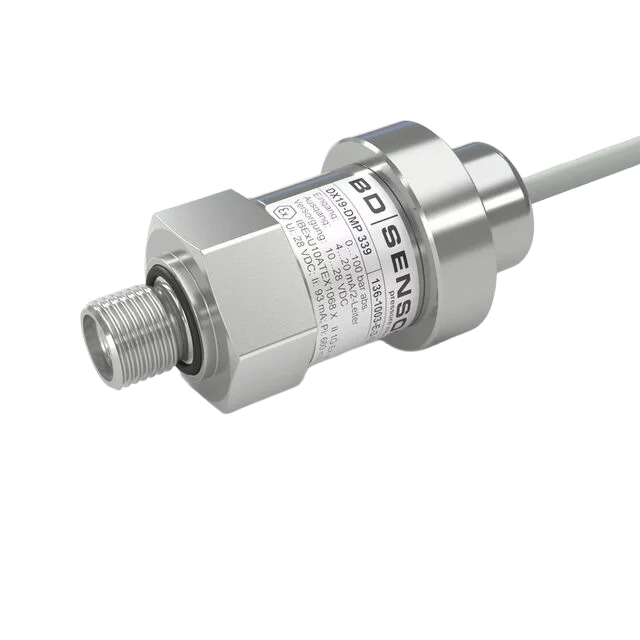
DMP 339P Flush Pressure Transmitter with G¼″ port — Compact flush-mount | For tight installation on CIP spray-ball manifolds, valve clusters, and modular skid pipework where space is limited
IO-Link Smart Transmitters for Digital CIP/SIP Management
Modern CIP/SIP systems adopting Industry 4.0 strategies benefit from IO-Link’s digital diagnostics, automated parameterisation, device identification, and predictive maintenance — enabling faster commissioning of new CIP circuits and centralised management across multiple cleaning zones.
DCT 533 P Industrial Pressure Transmitter with IO-Link — 100 mbar to 40 bar | IO-Link V1.1 | Flush hygienic pressure port | Low surface roughness diaphragm | IP 67/IP 69 | Shock & vibration resistant | Cooling element to 300 °C | The flagship IO-Link transmitter for digitally connected CIP/SIP cycle monitoring
DCT 553 P Industrial Pressure Transmitter with IO-Link — Capacitive ceramic sensor (99.9% Al₂O₃) | 40 mbar to 20 bar | IO-Link V1.1 | Dead-space-free | High overpressure capability | For CIP/SIP monitoring on lines handling aggressive cleaning chemicals where ceramic chemical resistance eliminates oil-fill contamination risk
DCT 531 P Industrial Pressure Transmitter with RS485 Modbus RTU — 100 mbar to 40 bar | RS485 Modbus RTU | EHEDG certified | IP 67/IP 69 | For multi-drop digital bus CIP/SIP architectures where multiple transmitters on a cleaning circuit report to a single PLC/SCADA master
Precision Process Transmitters with HART® & SIL 2
For CIP/SIP systems integrated with safety instrumented functions (SIF), pharmaceutical batch control systems, and HART®-enabled asset management:
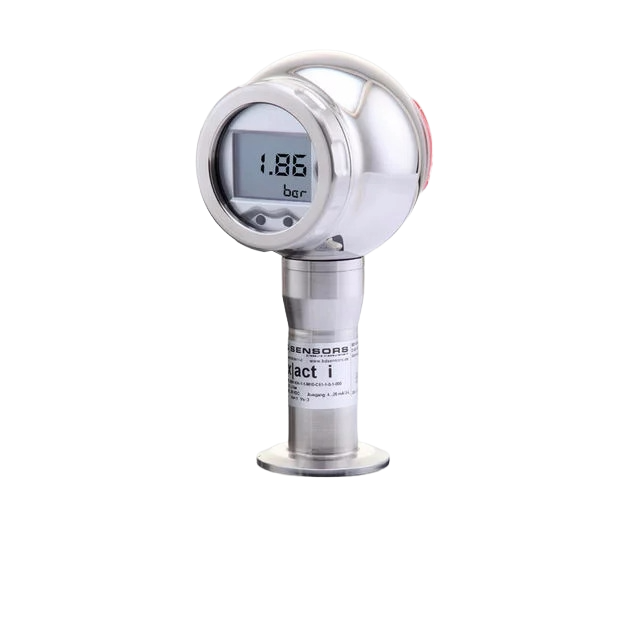
X|act i Precision Pressure Transmitter (SIL 2) — 400 mbar to 40 bar | HART® | SIL 2 | Turn-down 1:10 | Flush welded diaphragm | Hygienic connections (Varivent®, dairy pipe, Clamp) | ATEX Ex ia | Cooling element to 300 °C | The premium hygienic transmitter for safety-critical pharmaceutical CIP/SIP validation
X|act ci Precision Pressure Transmitter — Capacitive ceramic sensor (99.9% Al₂O₃) | 160 mbar to 20 bar | HART® option | Flush-mounted | Hygienic connections | ATEX Ex ia option | For CIP/SIP monitoring where ceramic chemical resistance to caustic/acid cleaning agents is essential and oil-fill contamination must be eliminated
XMP i Precision Pressure Transmitter with HART® and SIL 2 — 400 mbar to 600 bar | HART® | SIL 2 | Turn-down 1:10 | Internal or flush welded diaphragm | Optional Hastelloy® / Tantalum | ATEX Ex ia / Ex d | Cooling element to 300 °C | For high-pressure CIP/SIP systems in oil & gas, chemical, and petrochemical facilities where process pressures exceed food/pharma ranges
DMP 331i / DMP 333i Precision Pressure Transmitter — 400 mbar to 600 bar | 16-bit digital signal processing | Turn-down 1:10 | Communication interface | For precision CIP/SIP phase pressure trending, laboratory validation rigs, and quality control applications
Ceramic Sensor Transmitters for Aggressive CIP Chemical Resistance
CIP cleaning agents — particularly hot caustic soda, nitric acid, phosphoric acid, and peracetic acid — can attack metallic diaphragm seals and oil-fill fluids over time. Ceramic sensing elements (99.9% Al₂O₃) provide inherent chemical resistance with no oil-fill contamination risk:
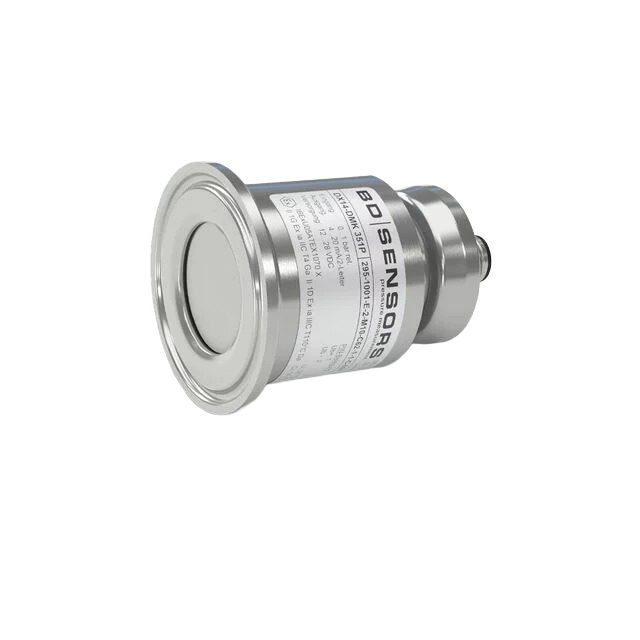
DMK 351 P Pressure Transmitter for the Process Industry — Capacitive ceramic sensor | 40 mbar to 20 bar | Dead-space-free hygienic connections (G1½″, dairy pipe, Clamp) | IS Ex ia | For CIP/SIP acid and caustic rinse phase monitoring in dairy, beverage, and pharmaceutical production
DMK 331 Industrial Pressure Transmitter — Capacitive ceramic sensor | 400 mbar to 600 bar | PVDF open port | ATEX Ex ia | SIL 2 | For CIP chemical supply tank pressure and aggressive cleaning circuit monitoring
Differential Pressure Transmitters for CIP Circuit Filter & Flow Monitoring
Differential pressure measurement within CIP circuits monitors filter condition on CIP return lines, detects blockages in spray-ball headers, verifies flow through complex pipework manifolds, and confirms heat exchanger performance:
DMD 831 Differential Pressure Transmitter with Display and Contact — 1 bar to 70 bar | Dual piezoresistive stainless steel sensors | 4-digit LED display | PNP alarm contact | For visual ΔP indication on CIP return-line filters with integrated blockage alarm
DMD 331 Differential Pressure Transmitter — 20 mbar to 16 bar | Piezoresistive stainless steel | ATEX Ex ia | 30× static overpressure | For inline filter ΔP monitoring within CIP circuits and spray-ball supply/return pressure drop verification
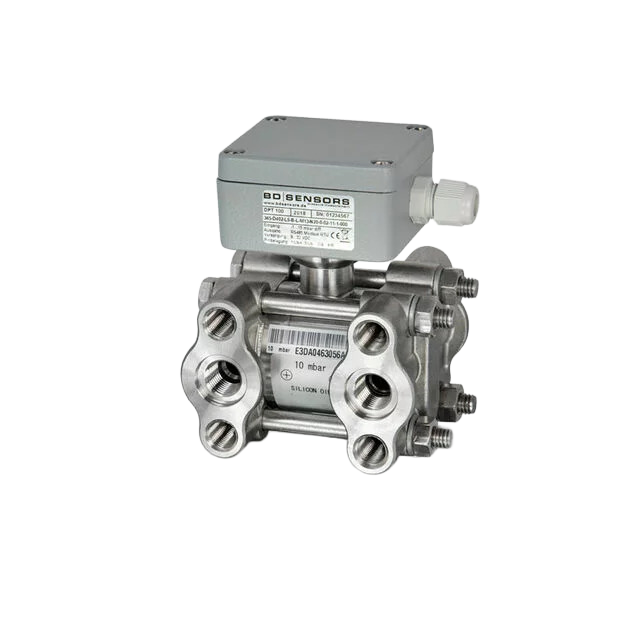
DPT 200 Differential Pressure Transmitter with HART® — 1 mbar to 20 bar | Static pressure to 400 bar | HART® | 100:1 rangeability | ATEX Ex ia / Ex d | LC display | For HART®-integrated CIP/SIP differential pressure monitoring with safety system connectivity
Electronic Pressure Switches for CIP/SIP Alarm & Interlock
Automated alarm switching for CIP/SIP cycle phase transitions, low-pressure/high-pressure interlocks, pump protection, valve sequencing confirmation, and safety shutdowns:
DS 400 P Intelligent Electronic Pressure Switch — 100 mbar to 40 bar | Hygienic stainless steel | 1 or 2 PNP contacts | 4–20 mA analogue output | 4-digit LED display | Rotatable display module | IS Ex ia | The primary hygienic pressure switch for CIP/SIP cycle alarm management
DS 201 P Electronic Pressure Switch — 60–400 bar | Flush stainless steel diaphragm | Cooling element to 300 °C | 1, 2, or 4 PNP contacts + analogue output | For high-temperature SIP steam pressure switching and high-pressure CIP pump interlock on membrane cleaning systems
DS 350 P Electronic Pressure Switch with IO-Link — IO-Link interface | Flush diaphragm | For digitally connected CIP/SIP alarm switching on IO-Link bus architectures with automated phase transition control
Dual-Output Pressure & Temperature Transmitters for Combined CIP/SIP Verification
CIP/SIP cycle validation requires simultaneous pressure and temperature measurement at the same process point — confirming that both the correct pressure and the correct thermal hold temperature are achieved. A dual-output transmitter eliminates the need for separate instruments and reduces process connections:
ATM/T.1ST Dual Output Pressure and Temperature Transmitter — Flush stainless steel diaphragm | Integrated temperature probe tip for media-close temperature measurement | Dual 4–20 mA outputs (pressure + temperature) | Short response time | Modular design | Electronic compensation | Stainless steel 316L / 1.4435 | Viton seals | For simultaneous CIP/SIP pressure and temperature verification at a single process point — spray-ball headers, vessel drain points, heat exchanger outlets, and SIP steam supply lines
Temperature Transmitters for SIP Thermal Hold Verification
SIP cycles require documented proof that the target sterilisation temperature (typically 121 °C for pharmaceutical, 134 °C for prion decontamination) has been maintained for the required duration at every critical control point:
TTT Titan Temperature Transmitter — PT100, PT1000, NTC, PTC, or thermocouple input | Robust industrial enclosure | Stable output in demanding environments | For SIP thermal hold verification at vessel jackets, steam supply lines, and heat exchanger outlets
TTTa Titan Temperature Transmitter — Analogue — Analogue output variant | For conventional 4–20 mA integration into existing CIP/SIP control systems
Level Transmitters for CIP Chemical Tank Monitoring
Hydrostatic level monitoring for caustic tanks, acid tanks, rinse water vessels, sanitiser dosing tanks, and recovered CIP solution storage:
LMK 351 Screw-In Level Transmitter — Capacitive ceramic sensor (99.9% Al₂O₃) | 40 mbar to 20 bar | PVDF port for aggressive media | Flush-mounted | IS Ex ia | For caustic soda and acid CIP tank level monitoring where ceramic chemical resistance is essential
LMK 331 Screw-In Level Transmitter — 400 mbar to 60 bar | Semi-flush sensor | SIL 2 | For CIP chemical tank level with safety instrumented function
LMP 331 Screw-In Level Transmitter — 100 mbar to 40 bar | 0.1% FSO accuracy option | SIL 2 | G¾″ flush port | For precision rinse water tank and recovered solution tank level monitoring