

Ocean Research Data Collection
Ocean research spans an extraordinary range of disciplines and environments, from tidal monitoring in shallow estuaries to pressure and temperature profiling in the deep ocean, from long-term environmental observatories recording data autonomously for years to high-resolution sampling campaigns aboard research vessels. Every branch of marine science, whether physical oceanography, marine biology, coastal geomorphology, climate research, fisheries science, or ocean engineering, depends on accurate, reliable pressure, temperature, and level data collected from instruments that can survive prolonged immersion in seawater, operate on minimal power, and integrate with the data acquisition systems that researchers use in the field and the laboratory.
Stork Solutions supplies a comprehensive portfolio of instruments engineered for the demands of ocean research data collection. Dedicated subsea pressure and temperature transmitters built from Duplex stainless steel, marine bronze, and titanium with wet-mateable connectors provide measurement capability from the surface to 4,000 m depth. SDI-12 digital submersible level and temperature transmitters deliver ultra-low-power operation for battery and solar-powered coastal observatories and remote telemetry stations. Marine-approved level probes with classification society certification support research aboard vessels and fixed offshore platforms. High-resolution USB pressure sensors and portable data loggers enable laboratory calibration, shipboard data capture, and field verification. Modbus RTU digital bus sensors allow multi-sensor arrays to share a single communication trunk, reducing cabling complexity on moorings, buoys, and seabed frames.
Whether deploying instruments on a research vessel CTD rosette, a coastal tide gauge station, a deep-ocean mooring, a coral reef monitoring buoy, an estuary flow study, or a wave energy test site, Stork provides the sensing hardware that marine scientists need to collect the data that drives understanding of the ocean.
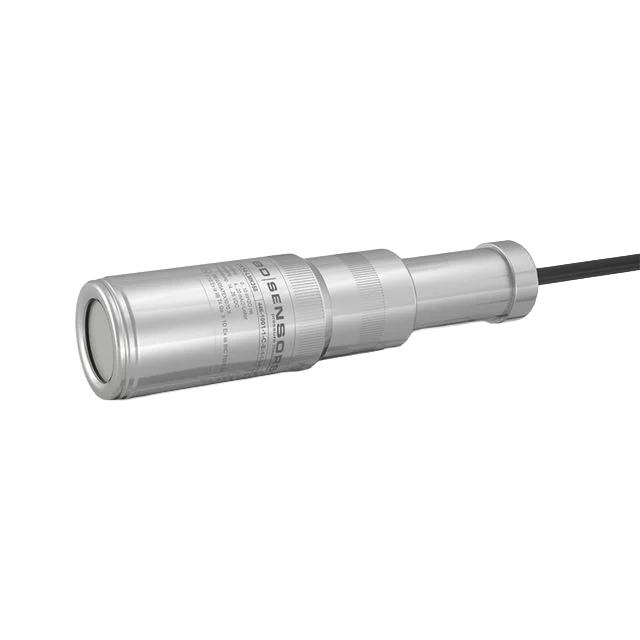
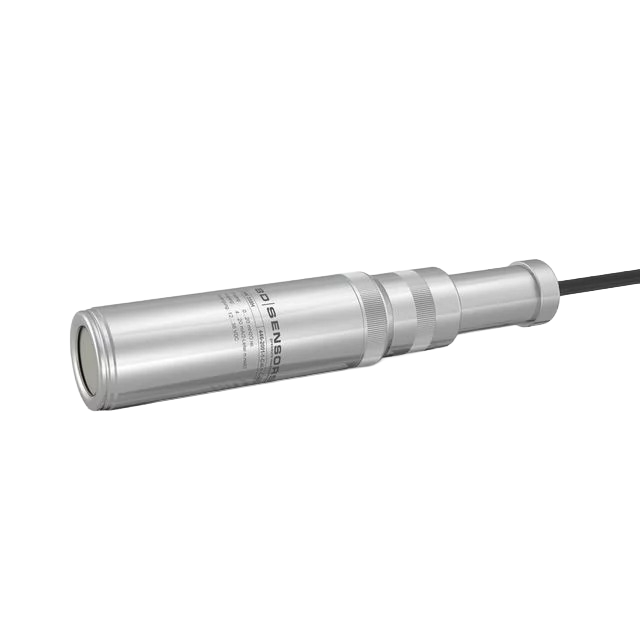
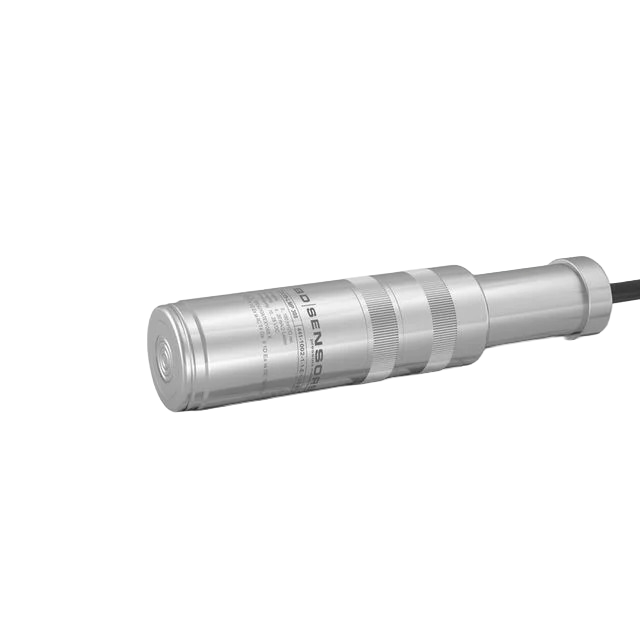
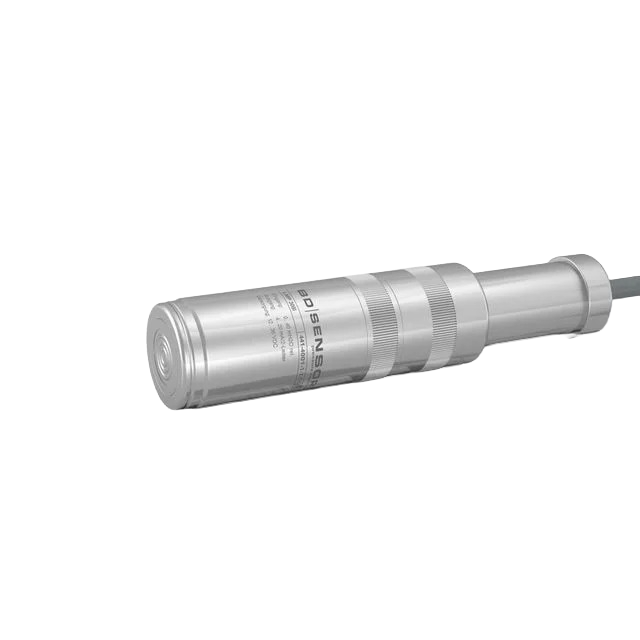
Product Spotlight for Ocean Research Data Collection
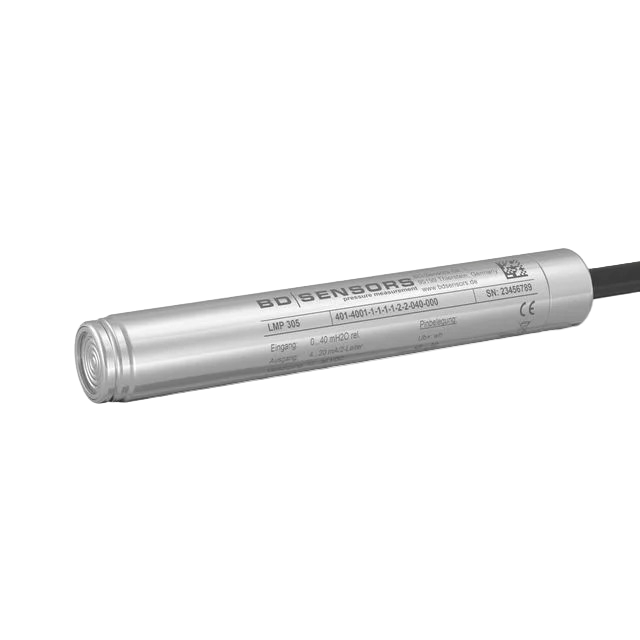
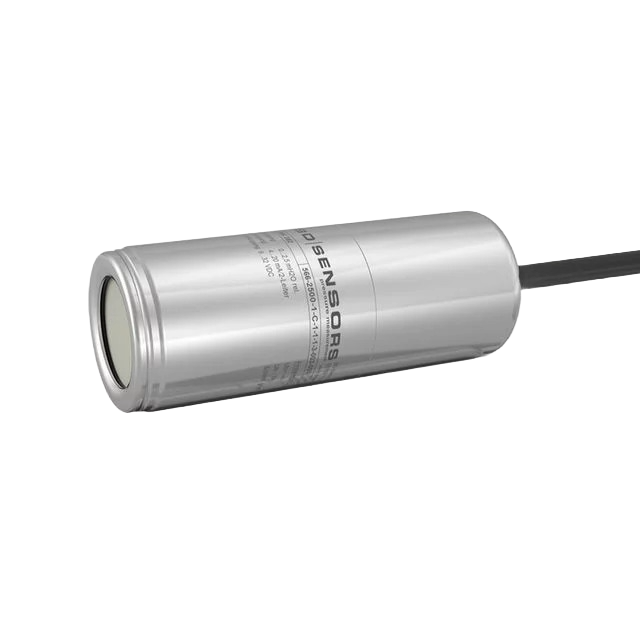
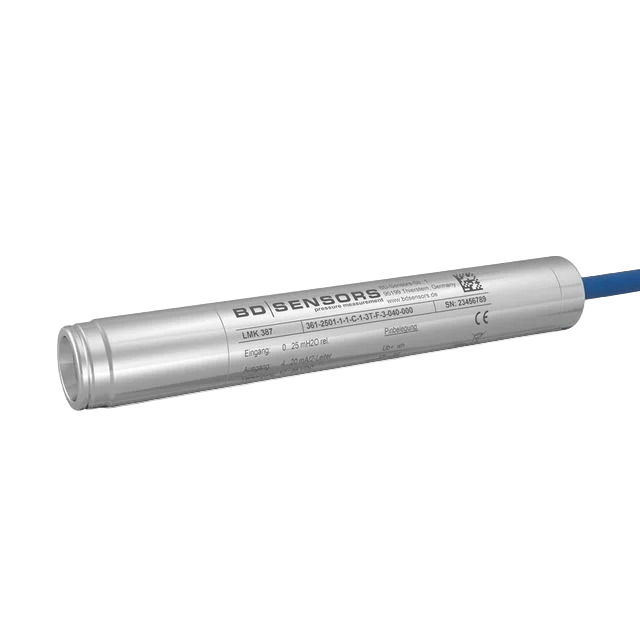
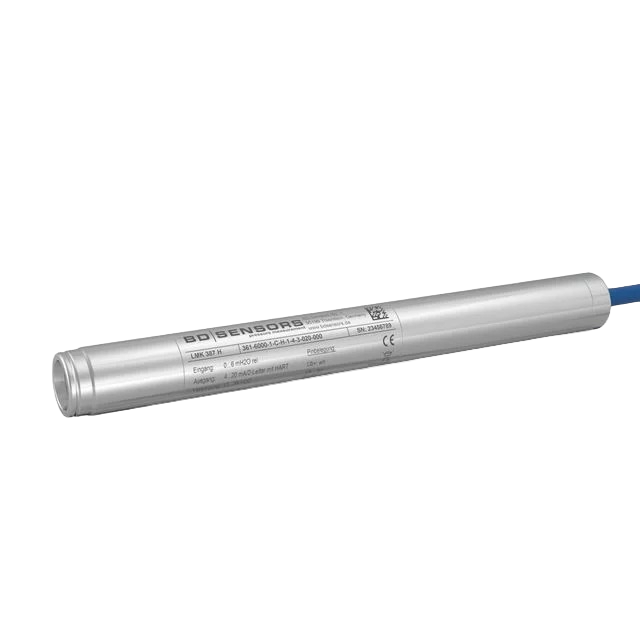
Why Ocean Research Data Collection Demands Specialist Instrumentation
Ocean research places a distinct combination of demands on measurement instruments that separates them from standard industrial or even offshore oil and gas applications:
Extended unattended deployment – Ocean observatories and moored instruments may operate continuously for months or years without recovery for maintenance. Sensors must exhibit exceptional long-term stability, minimal drift, and resistance to biofouling and corrosion over the full deployment period
Ultra-low power consumption – Remote coastal stations, moored buoys, and seabed landers are typically powered by batteries or small solar panels. Every microamp matters. Instruments with SDI-12 digital output draw less than 250 µA in idle mode, enabling multi-year operation on modest power budgets
Seawater corrosion – Permanent immersion in seawater is the most aggressive corrosion environment for metallic instruments. Marine bronze, Duplex stainless steel, titanium, and Monel alloy 400 are required depending on depth, temperature, and deployment duration
Depth range – Research deployments span from centimetres of tidal range in estuaries to full ocean depth exceeding 4,000 m. Instruments must be available in pressure ranges and housings that match the specific depth envelope
Data integration – Researchers use diverse data acquisition systems including SDI-12 data loggers, Modbus RTU controllers, HART asset management, USB laptop interfaces, and shipboard DAS. Instruments must offer the correct digital or analogue output protocol for seamless integration
Multi-parameter arrays – Oceanographic monitoring typically requires simultaneous pressure (depth), temperature, and sometimes level measurement from co-located sensors. Digital bus protocols (SDI-12, Modbus RTU) allow multiple sensors on a single communication trunk, simplifying mooring and buoy wiring
Calibration traceability – Scientific data quality requires instruments with documented calibration, traceable accuracy specifications, and the ability to verify performance against portable reference standards in the field
Hostile handling environments – Instruments are deployed and recovered from research vessels in heavy seas, handled by deck cranes and winches, and transported to remote field sites. Robust construction, overmoulded cable assemblies, and IP68 sealing are essential
Subsea Pressure and Temperature Transmitters for Deep-Ocean Research
For deep-water deployments on CTD frames, moored profilers, seabed landers, autonomous underwater vehicles (AUVs), ocean gliders, and deep-ocean observatories, the SSPT and SSTT provide measurement capability rated to 4,000 m with wet-mateable connectors for subsea deployment and recovery.
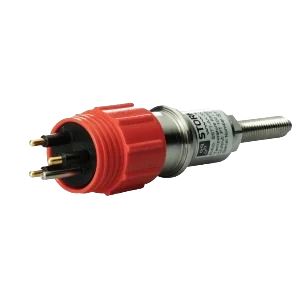
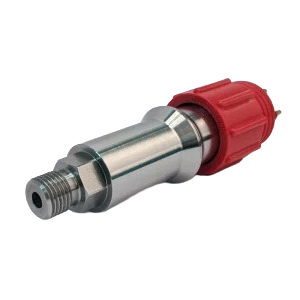
SSPT Subsea Pressure Transmitter – Ceramic (96% Al2O3) piezo-resistive sensing element, 1 to 400 bar, accuracy less than 0.25% FS (optional less than 0.10% FS), Duplex stainless steel / marine bronze / titanium housing, wet-mateable connectors rated to 4,000 m. Stork explicitly references subsea and underwater environments. In ocean research, the SSPT provides:
Depth profiling – Hydrostatic pressure is the primary method for determining depth in oceanographic work. The SSPT provides the pressure signal that CTD systems, ocean gliders, and profiling floats convert to depth, forming the vertical axis of every oceanographic profile.
Bottom pressure recording – Deployed on seabed landers and tsunami detection systems, the SSPT records long-term bottom pressure variations that indicate tidal cycles, storm surges, tsunamis, ocean circulation changes, and tectonic activity. The optional 0.10% FS accuracy supports the precision required for detecting subtle pressure changes.
Mooring tension and buoyancy monitoring – Pressure sensors on deep-ocean moorings confirm instrument depth, detect mooring line failures, and verify that subsurface floats maintain correct buoyancy and depth positioning throughout multi-month deployments.
SSTT Subsea Temperature Transmitter – Class A PT100 sensing element, accuracy less than 0.5°C (optional less than 0.25°C), 2/3/4-pin wet-mateable connectors, submersion to 3,000 m, Duplex stainless steel / marine bronze / titanium, optional protruding probe in various lengths. Stork explicitly lists subsea environments and references marine science applications. In ocean research, the SSTT provides:
Deep-ocean temperature profiling – Paired with the SSPT on CTD frames and profiling instruments, the SSTT provides the temperature axis of depth-temperature profiles used to characterise water masses, track ocean circulation, and monitor climate-driven warming trends in deep water.
Seabed observatory temperature – Deployed on seabed frames at hydrothermal vents, cold seeps, and methane release sites, the SSTT records temperature variations that indicate geological activity, fluid flow changes, and ecosystem response.
Biological habitat monitoring – Temperature is a controlling variable for marine species distribution. The SSTT monitors habitat temperature on coral reef frameworks, deep-water coral mounds, and benthic observatory sites.
SDI-12 Pressure and Temperature Transmitters for Remote Marine Stations
For research stations where pressure measurement (rather than submersible level) is the primary requirement, and for installations where power budget is the critical constraint.
TPT-SDI Pressure Transmitter with SDI-12 – 0.5 to 600 bar, SDI-12 Version 1.4, accuracy less than ±0.25% FS (optional less than ±0.10% FS), 96% Al2O3 ceramic sensor, 303/316 stainless steel, less than 250 µA idle / less than 4 mA active, integrated lightning protection (gas discharge tube), M12 4-pin / cable / DIN 43650. Stork explicitly lists environmental monitoring, research and academia, and long-duration field studies as applications. In ocean research, the TPT-SDI provides:
Barometric correction – Shore-based barometric pressure reference for correcting vented and absolute submersible level sensors deployed in tidal and coastal monitoring stations. The ultra-low power draw matches the power budget of the solar or battery-powered data loggers used at remote coastal sites.
Pipeline and structure pressure logging – For ocean engineering research monitoring pressure on subsea cables, marine renewable energy devices, and coastal defence structures where SDI-12 loggers are the standard data acquisition platform.
Multi-sensor SDI-12 networks – Combined with SLS-D level sensors and STT-28 temperature sensors on a single SDI-12 bus, the TPT-SDI contributes atmospheric pressure data to a multi-parameter coastal observatory without requiring a separate data channel.
STT-28 SDI-12 Submersible Temperature Transmitter – NTC thermistor, SDI-12 communication, stainless steel or marine bronze housing, IP68 fully submersible, standard version or 10 mm thin-walled rapid-response probe, rescalable via USB-SDI12-PRO. Stork explicitly lists harbour seawater monitoring, estuary temperature analysis, environmental monitoring, marine biology studies, and tsunami monitoring as applications. In ocean research, the STT-28 provides:
Long-term seawater temperature logging – Deployed in harbours, estuaries, and coastal waters for continuous temperature recording to study seasonal cycles, marine heatwave events, and climate trends. Marine bronze housing resists chloride corrosion for multi-year deployment.
Marine biological habitat monitoring – Recording water temperature at coral reef, seagrass bed, and shellfish aquaculture sites where temperature drives species growth, reproduction, and survival. The thin-walled rapid-response probe captures temperature transients during tidal flushing and upwelling events.
Estuary and river mixing studies – Multiple STT-28 sensors deployed at different depths and locations along an estuary to map the thermal structure of freshwater-saltwater mixing zones.
Analogue Submersible Temperature Transmitters for Seawater and Deep-Water Research
For applications requiring analogue 4-20 mA output, compatibility with existing analogue data acquisition, or specialist housing materials for extreme corrosion environments.
STT-26 Submersible Temperature Transmitter – PT100 Class B resistance thermometer, 4-20 mA 2-wire, stainless steel / marine bronze / Monel alloy 400 housing options, IP68, tested to 100 m depth (10 bar), USB-configurable temperature range. In ocean research, the STT-26 provides three material variants matched to specific marine environments:
STT-26-SP (316 stainless steel) – For freshwater, brackish, and clean seawater applications including river monitoring stations, freshwater lake profiling, and harbour temperature measurement.
STT-26-MT (CA104 marine bronze) – For general seawater immersion including coastal observatories, moored buoy temperature arrays, and long-term harbour temperature monitoring. Marine bronze provides lifetime corrosion resistance in seawater.
STT-26-NT (Monel alloy 400) – For corrosive deep-water environments, cold seawater, and chemically aggressive conditions including monitoring at cold seeps, hydrothermal vent fields, and deep-water sites where 316 stainless steel or bronze would corrode. Monel retains strength and corrosion resistance at low deep-ocean temperatures.
Marine-Approved Level Transmitters for Research Vessel and Offshore Station Deployment
Marine type-approved instruments for permanent installation on research vessels and fixed marine research platforms where classification society certification is required.
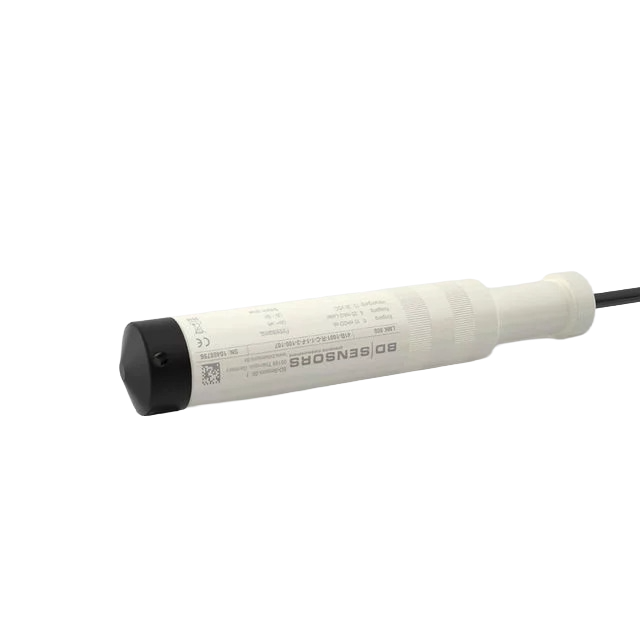
LMK 458 Level Transmitter for Marine and Offshore – 40 cmH2O to 200 mH2O, capacitive ceramic sensor, CuNiFe seawater-resistant housing, LR/DNV/ABS/CCS certified, ATEX Ex ia option. For research vessel sea chest level monitoring, ballast tank management, and permanent coastal station deployment where marine type-approval is a regulatory requirement.
LMK 458 H Level Transmitter with HART for Marine and Offshore – As LMK 458 with HART communication. HART enables remote configuration and diagnostics from the vessel bridge or research station control room, reducing the need to access tank or deployment spaces during research campaigns.
LMK 487 Level Transmitter for Marine and Offshore 22 mm – 22 mm diameter, 1 to 100 mH2O, 99.9% Al2O3 ceramic, LR/DNV-GL certified, titanium housing option, ATEX Ex ia, optional Pt 100 temperature element. The 22 mm diameter allows deployment through narrow-bore monitoring wells, sounding pipes, and conduit tubes commonly used in coastal and estuarine research infrastructure. Titanium option provides enhanced durability for permanent seawater installations. Integrated Pt 100 delivers simultaneous level and temperature data.
Submersible Level Probes for Shallow Water and Coastal Research
Industrial submersible probes for research deployments that do not require marine type-approval, including temporary field studies, coastal lagoon monitoring, mangrove and salt marsh surveys, and aquaculture research.
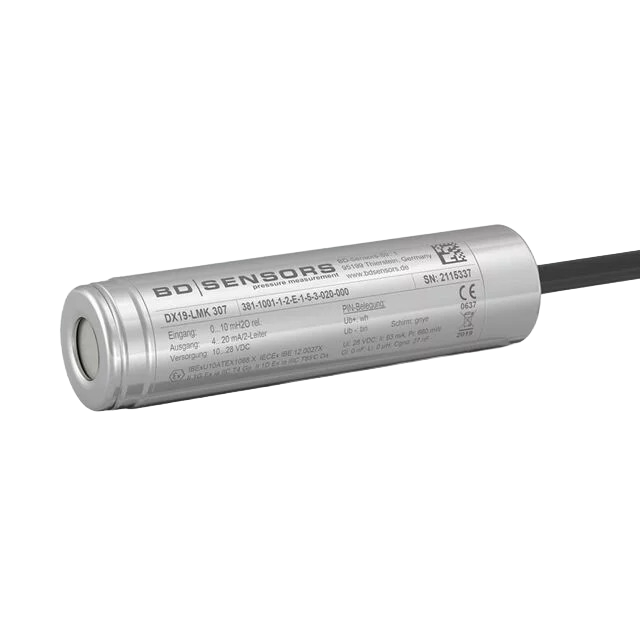
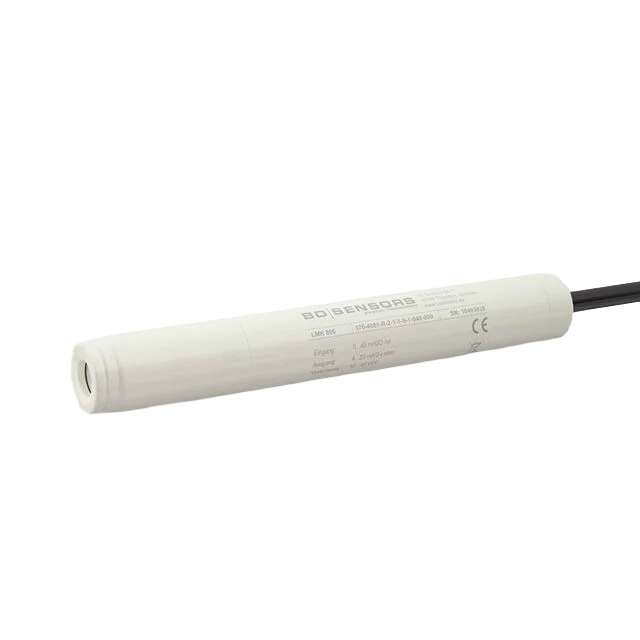
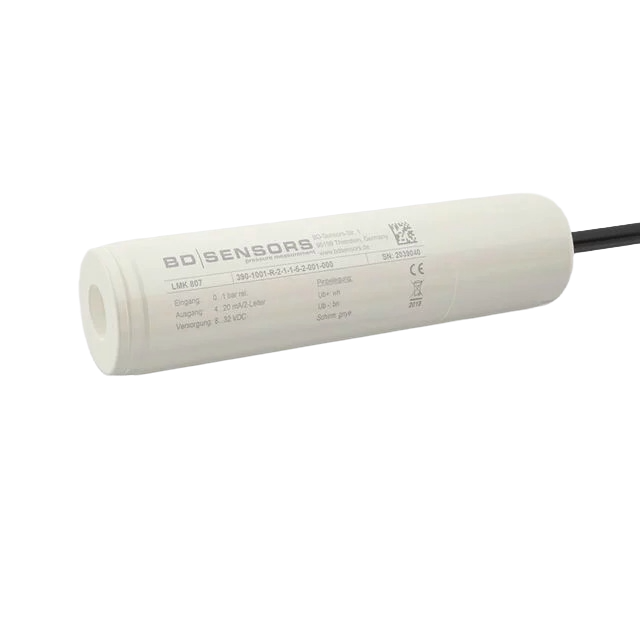
LMK 307 Stainless Steel Level Transmitter – 27 mm diameter, 4 to 250 mH2O, flush-mounted ceramic sensor, 2-wire 4-20 mA / 3-wire 0-10 V, ATEX Ex ia, SIL 2. Robust submersible level probe for short to medium-term research deployments in coastal lagoons, wetlands, and harbour monitoring stations.
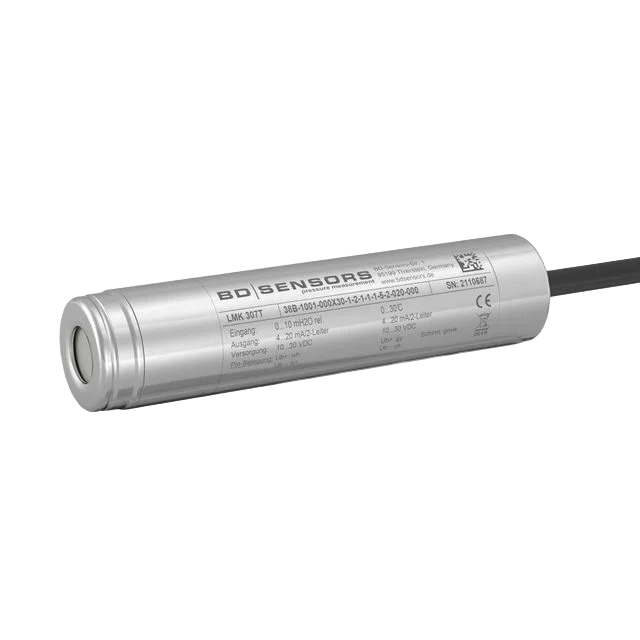
LMK 307 T Level and Temperature Transmitter – As LMK 307 with integrated temperature measurement. Dual level and temperature from a single probe for research applications where co-located data reduces deployment complexity and cost, such as salt marsh inundation studies and mangrove ecosystem monitoring.
LMK 382 Stainless Steel Level Transmitter – 39.5 mm diameter, 40 cmH2O to 200 mH2O, 99.9% Al2O3 ceramic diaphragm, ATEX Ex ia, optional Pt 100 temperature element. The flush ceramic diaphragm resists biological fouling from marine growth, sediment, and organic deposits that accumulate on sensors during extended coastal and estuarine deployments. Optional Pt 100 provides co-located temperature.
LMK 387 Stainless Steel Level Transmitter – 22 mm diameter, 1 to 100 mH2O, 99.9% Al2O3 ceramic, titanium housing option, ATEX Ex ia, DVGW/KTW, optional Pt 100. Compact 22 mm diameter for deployment through narrow monitoring wells and tubes at beach profile stations, coastal groundwater monitoring boreholes, and confined research installations.
Modbus RTU Digital Bus Sensors for Multi-Sensor Research Arrays
Modbus RTU enables multi-drop digital communication on a single RS485 trunk, allowing arrays of pressure and level sensors to be individually addressed. This reduces cabling complexity on research moorings, buoys, and seabed frames where multiple sensors are deployed at different depths or locations.
DCL 531 Stainless Steel Probe with RS485 Modbus RTU – 26.5 mm diameter, 1 to 250 mH2O, RS485 Modbus RTU, 500 Hz measuring rate, IP68. Multi-drop Modbus allows multiple DCL 531 probes at different depths on a single mooring line to share one RS485 trunk, building a vertical water level/pressure profile with minimal cabling. The 500 Hz sample rate supports wave measurement and dynamic water level studies.
DCT 531 i Precision Pressure Transmitter with RS485 Modbus RTU – 100 mbar to 400 bar, RS485 Modbus RTU, +/- 0.10% FSO, IP67. For precision pressure monitoring on research infrastructure where multiple sensors feed a single Modbus data acquisition system, such as wave energy device monitoring, marine renewable energy test rigs, and coastal defence pressure arrays.
Dual-Output Pressure and Temperature Transmitters for Combined Oceanographic Parameters
Capturing pressure and temperature from a single sensor simplifies deployment, saves power, and ensures perfectly time-synchronised data pairs, which is particularly valuable for density calculations and CTD-style profiling.
ATM/T Dual Output Pressure and Temperature Transmitter – Simultaneous pressure and temperature output from a single instrument. For compact research deployments on buoys, drifters, and small platforms where space and channels are limited. Provides the pressure-temperature pair needed for seawater density calculations without deploying two separate sensors.
USB Pressure Sensors and Interface Devices for Laboratory and Shipboard Data Capture
For laboratory calibration, shipboard data acquisition, and research station desk-based data capture, USB-connected pressure sensors provide direct digital connection to laptops and PCs without requiring external power supplies or signal conditioning.
UPS-GP General Purpose Pressure Sensor with USB Interface – USB-powered, direct laptop connection, general-purpose pressure ranges. For laboratory bench testing, research vessel cabin pressure verification, instrument calibration, and teaching laboratory demonstrations where researchers need quick, direct pressure data capture to a PC.
UPS-HSR USB Pressure Sensor with High Sample Rate Logging – USB-powered, high sample rate logging capability. For capturing rapid pressure transients in laboratory experiments, wave tank testing, fluid dynamics research, and high-frequency sampling applications where standard logging rates are insufficient.
UID-HSR USB Interface Device, High Sample Rate – USB interface device for high sample rate data acquisition from compatible sensors. Bridges field sensors to laptop-based data acquisition for shipboard and laboratory use.
USB-SDI12-PRO USB Powered SDI-12 Interface – USB-powered SDI-12 interface for configuring, calibrating, and logging data from SDI-12 sensors (SLS-D, TPT-SDI, STT-28) directly from a laptop. Essential for pre-deployment configuration, post-recovery data download, and laboratory verification of SDI-12 sensor performance.