

Pressure Monitoring for Cargo Operations
Safe, efficient cargo handling is the commercial heartbeat of every vessel. Whether loading crude oil at a single-point mooring, discharging LNG at a regasification terminal, transferring dry bulk through pneumatic systems, or managing ballast to maintain stability during port operations, every phase depends on accurate, reliable pressure and level measurement.
Stork Solutions supplies a dedicated range of marine-approved pressure transmitters, hydrostatic level probes, differential pressure sensors, and electronic pressure switches engineered specifically for the maritime environment. Every instrument in our cargo operations portfolio carries classification society approvals from Lloyd’s Register (LR), Det Norske Veritas (DNV), the American Bureau of Shipping (ABS), and/or the China Classification Society (CCS), with options for ATEX/IECEx intrinsic safety for tanker and gas carrier service.
Built from corrosion-resistant materials including 316L stainless steel, CuNiFe (copper-nickel-iron alloy resistant to seawater), titanium, and 99.9% Al₂O₃ ceramic, our sensors are designed to withstand the salt spray, vibration, temperature cycling, and aggressive media that define life at sea.
Product Spotlight for Pressure Monitoring for Cargo Operations
Why Cargo Operations Demand Marine-Grade Instrumentation
Cargo operations impose a unique combination of requirements that standard industrial instrumentation cannot meet:
Classification society type-approval — Pressure and level instruments installed on classed vessels must carry LR, DNV, ABS, or CCS certification. Non-approved instruments cannot be used in safety-critical cargo systems
Seawater and salt atmosphere exposure — Deck-mounted and tank-installed sensors face continuous salt spray, condensation, and in some cases direct seawater contact (ballast tanks, sea chests). Standard stainless steel pits rapidly in chloride-rich environments — CuNiFe and titanium housings are essential
Hazardous area compliance — Tankers, gas carriers, and chemical tankers classify cargo tank spaces, pump rooms, and cofferdams as ATEX/IECEx Zone 1 or Zone 0 hazardous areas. All electrical equipment must be intrinsically safe (Ex ia) or otherwise protected
Wide range of cargo media — A single vessel may carry crude oil, refined products, chemicals, LNG, LPG, edible oils, or ballast water. Sensors must be compatible with aggressive, viscous, and cryogenic media without contaminating cargo
Loading rate and overfill protection — High loading rates (up to 20,000 m³/h on VLCCs) demand fast, accurate pressure feedback to prevent tank overfill, pipeline overpressure, and manifold flange failure
Stability and trim management — Uneven cargo distribution causes list, trim by head or stern, and structural stress. Real-time ballast and cargo tank level data is essential for stability calculations during all phases of loading and discharge
Anti-heeling during crane and cargo operations — Container vessels and heavy-lift ships use anti-heeling systems that pump ballast between port and starboard tanks in response to real-time pressure/level signals
Vibration and shock — Engine vibration, wave slamming, and cargo handling equipment generate mechanical stress that standard sensors cannot withstand. Marine-tested instruments are qualified to DNV vibration Class B
Marine-Approved Pressure Transmitters for Cargo Pipeline & Manifold Monitoring
These transmitters monitor pipeline pressure during loading and discharge operations, manifold header pressure, cargo pump discharge, and cargo heating/cooling system pressure.
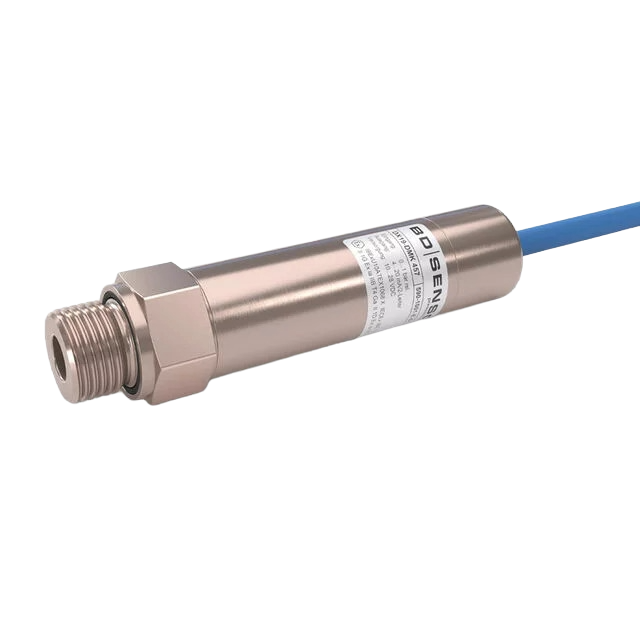
DMK 457 Pressure Transmitter for Shipbuilding and Offshore — Capacitive ceramic sensor, 400 mbar–600 bar, CuNiFe seawater-resistant pressure port, LR/DNV/ABS/CCS certified, optional ATEX Ex ia. The ceramic sensor’s inherent resistance to corrosive cargo residues and seawater makes it the primary recommendation for cargo line pressure monitoring. Also suitable for oxygen service.
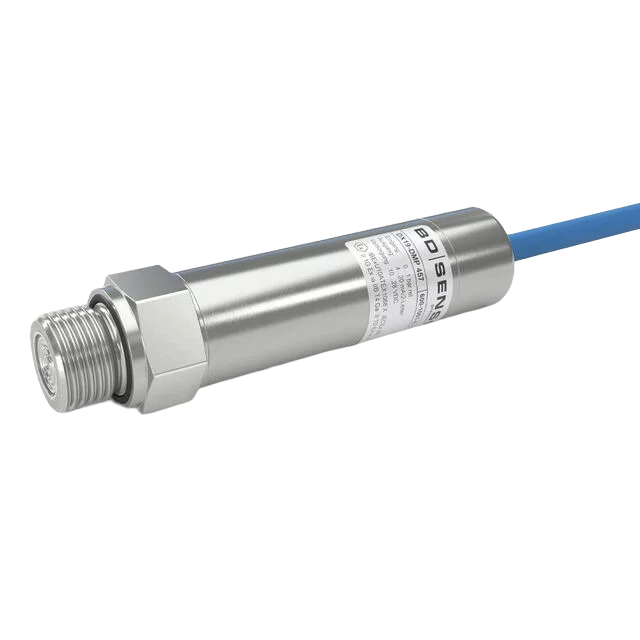
DMP 457 Pressure Transmitter for Shipbuilding and Offshore — Piezoresistive 316L sensor, 100 mbar–600 bar, flush G 1/2″ pressure port, LR/DNV·GL/ABS/CCS certified, optional ATEX Ex ia, welded pressure port option. The flush port prevents cargo residue build-up in viscous product lines (heavy fuel oil, crude, edible oils).
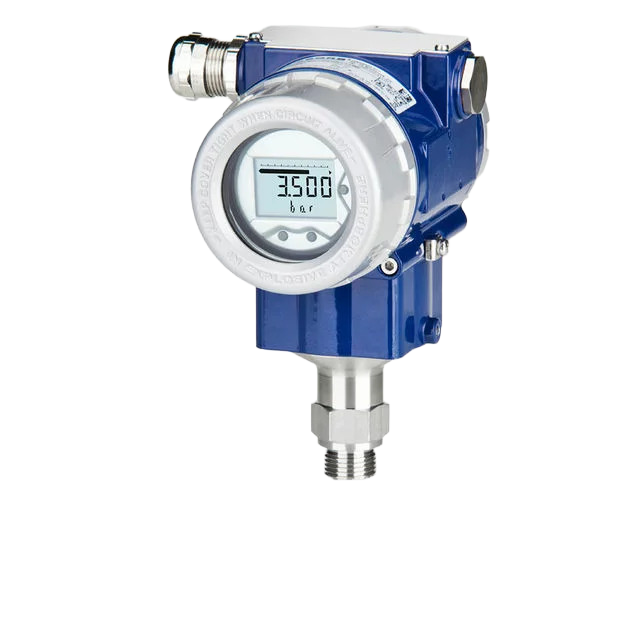
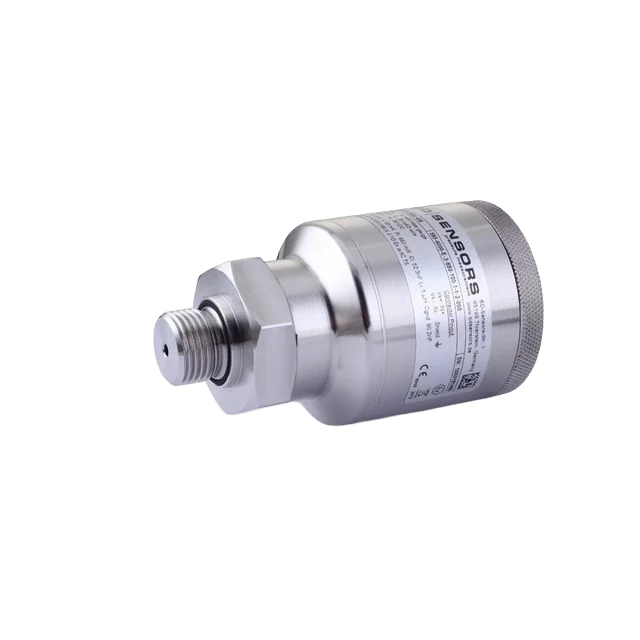
DMK 456 Pressure Transmitter with Stainless Steel Field Housing — Capacitive ceramic sensor, 40 mbar–20 bar, stainless steel field housing, IP67, ATEX Ex ia (T6), LR/DNV/ABS/CCS certified, CuNiFe pressure port option. Designed for monitoring pressure during loading and unloading, ship draught and trim, anti-heeling systems, ballast and storage tank level, and internal pressure in liquid gas cargo tanks. The most directly cargo-relevant transmitter in the Stork range.
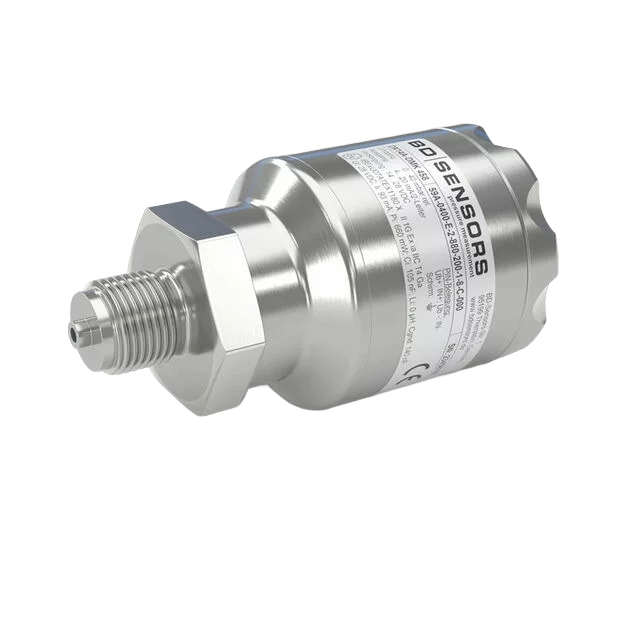
DMK 458 Pressure Transmitter for Marine and Offshore — Capacitive ceramic sensor (optional 99.9% Al₂O₃), 40 mbar–20 bar, CuNiFe seawater-resistant pressure port, LR/DNV/ABS/CCS certified, ATEX Ex ia option, flush versions available. Suited to loading and unloading pressure monitoring, ship draught and trim, anti-heeling systems, and ballast and storage tank level measurement. The flush version handles viscous and challenging cargo media. Low-range capability (from 40 mbar) suits low-pressure cargo vapour systems and inert gas distribution.
Hydrostatic Level Transmitters for Cargo & Ballast Tank Management
Accurate hydrostatic level measurement in cargo tanks, ballast tanks, and service tanks is fundamental to safe cargo operations, vessel stability calculations, and regulatory compliance.
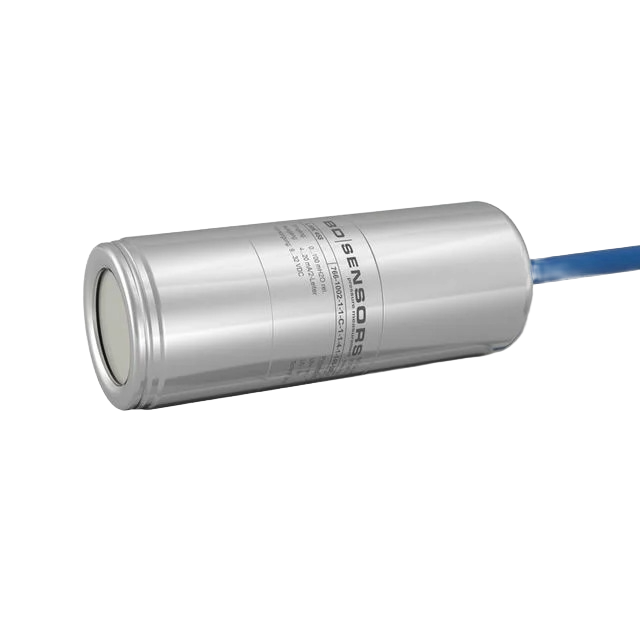
LMK 458 Level Transmitter for Marine and Offshore — Hydrostatic probe, 40 cmH₂O–200 mH₂O, 39.5 mm diameter, capacitive ceramic sensor (optional 99.9% Al₂O₃), LR/DNV/ABS/CCS certified, ATEX Ex ia, housing options in stainless steel and CuNiFe, screw-in and flange versions, operating temperature to 125 °C. The 39.5 mm diameter fits standard marine tank access points. CuNiFe housing provides seawater resistance for ballast service.
LMK 458 H Level Transmitter with HART® for Marine and Offshore — As LMK 458 with added HART® communication for remote configuration of offset, span, and damping. LR/DNV/CCS/ABS certified, ATEX Ex ia option, 39.5 mm diameter, 60 cmH₂O–200 mH₂O. HART® enables integration with vessel management systems (VMS) and cargo control rooms for remote tank level reading and diagnostics.
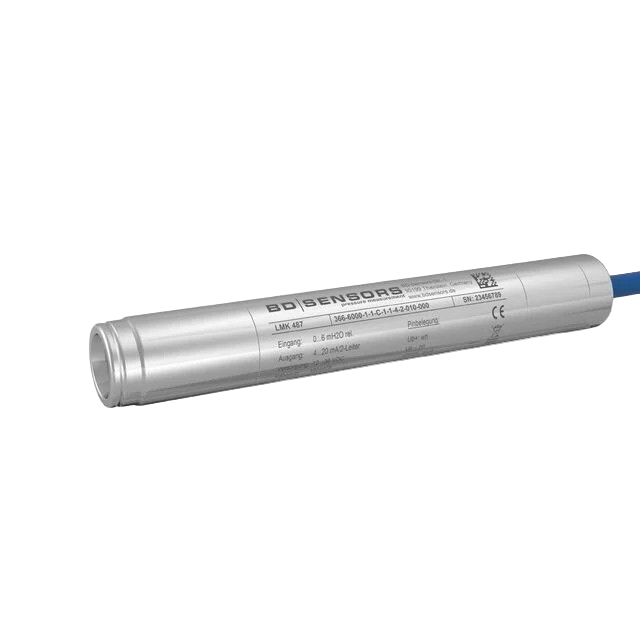
LMK 487 Level Transmitter for Marine and Offshore 22 mm — Ultra-compact 22 mm diameter hydrostatic probe, 1–100 mH₂O, 99.9% Al₂O₃ ceramic diaphragm, LR/DNV·GL certified, titanium housing option, ATEX Ex ia, optional Pt 100 temperature element. The 22 mm diameter allows installation in 1″ pipes — ideal for retrofit into existing tank sounding pipe infrastructure without structural modification.
Pressure Transmitters for Liquid Gas Cargo (LNG, LPG, Chemical Gas Carriers)
Gas carriers require pressure monitoring of cargo tank vapour space, re-liquefaction systems, cargo compressor discharge, and boil-off gas management.
DMK 456 Pressure Transmitter with Stainless Steel Field Housing — (also listed above) The stainless steel field housing and ATEX Ex ia (T6) rating are essential for LNG/LPG cargo tank vapour pressure monitoring. Suitable for aggressive gases and fluids.
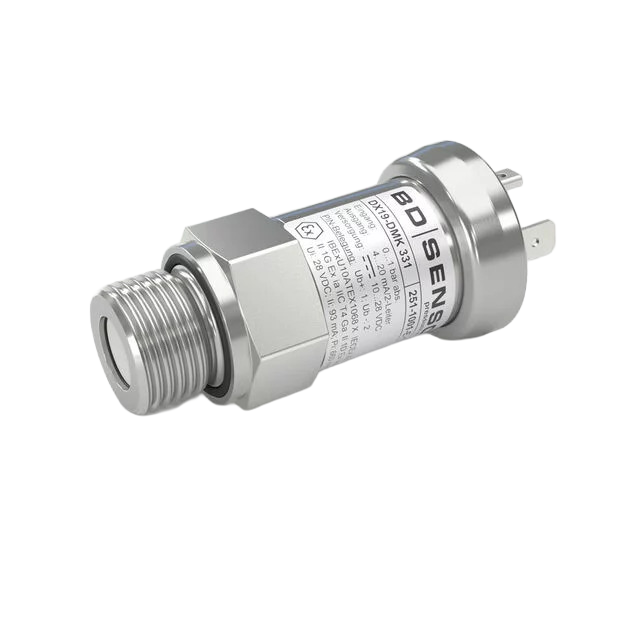
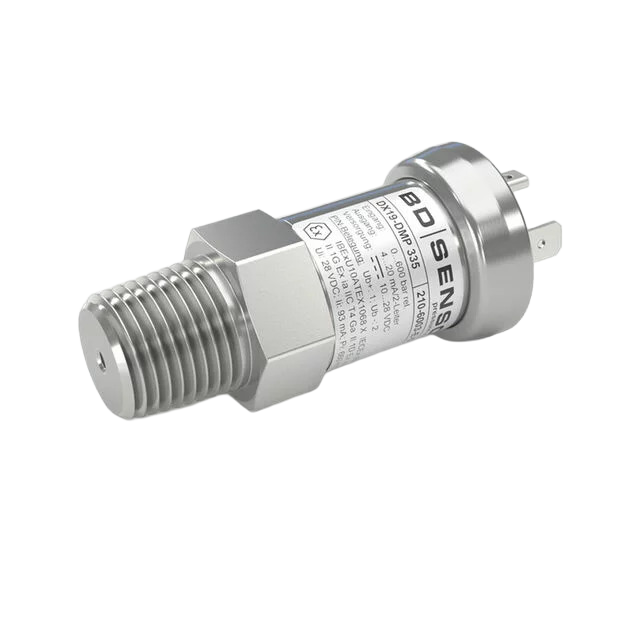
DMP 335 Industrial Pressure Transmitter — Welded stainless steel sensor, 10–600 bar, no silicone oil, no elastomeric seals, ATEX Ex ia option. The oil-free, seal-free construction is essential for oxygen-enriched atmospheres in chemical tanker cargo systems and for refrigerant compressor monitoring on gas carriers.
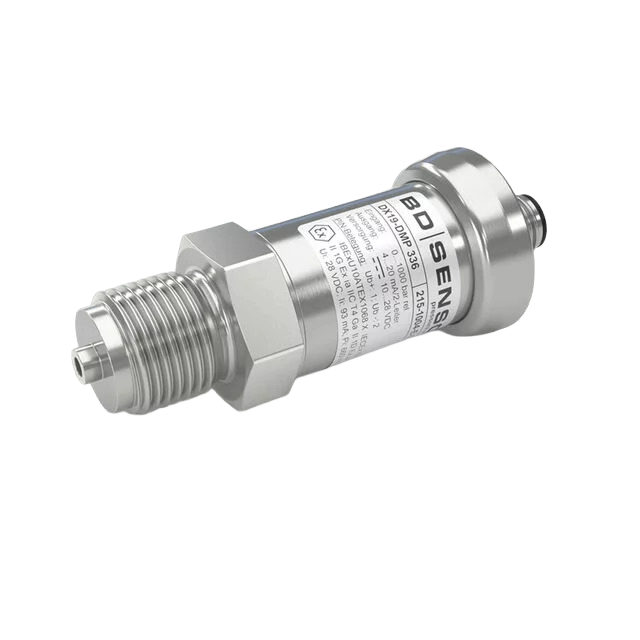
DMP 336 Pressure Transmitter for Technical Gases and H₂ Applications — 316L alloy, oil-free to ISO 15001, ATEX Zone 0/20, SIL 2, 16–1,000 bar. For hydrogen carriers and vessels transporting technical gases where material compatibility and Zone 0 certification are mandatory.
Differential Pressure Transmitters for Cargo System Monitoring
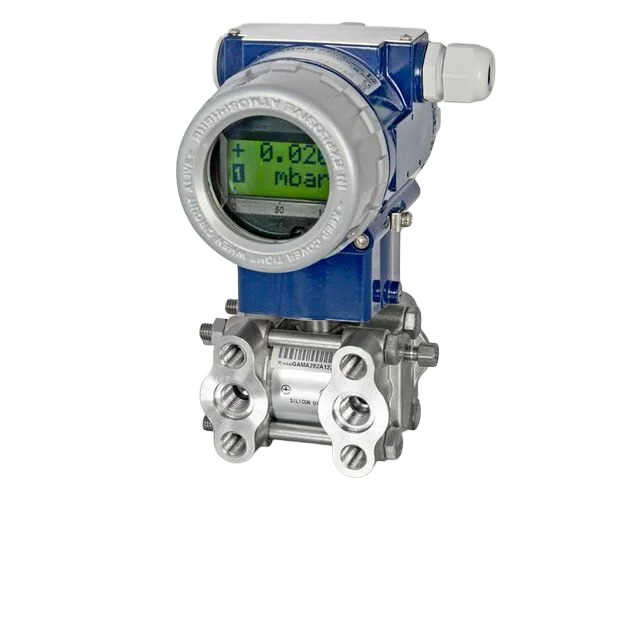
Differential pressure measurement across cargo strainers, filters, heat exchangers, and for tank level measurement by ΔP method.
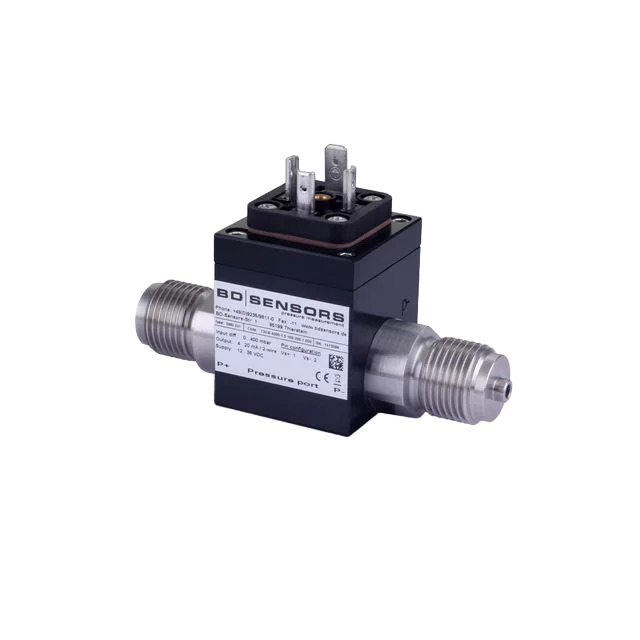
DMD 331 Differential Pressure Transmitter — 20 mbar–16 bar differential, ATEX Ex ia, withstands static pressure to 30× range. Cargo strainer/filter ΔP monitoring, cargo heater/cooler ΔP, and differential level measurement across cargo tank vapour barriers.
DPT 200 Differential Pressure Transmitter with HART® — HART® communication, static pressure to 400 bar, ATEX certified. Integration with cargo control system DCS for automated filter changeover, flow measurement across cargo lines via orifice plate, and cargo heating steam ΔP.
Electronic Pressure Switches for Cargo Safety Systems
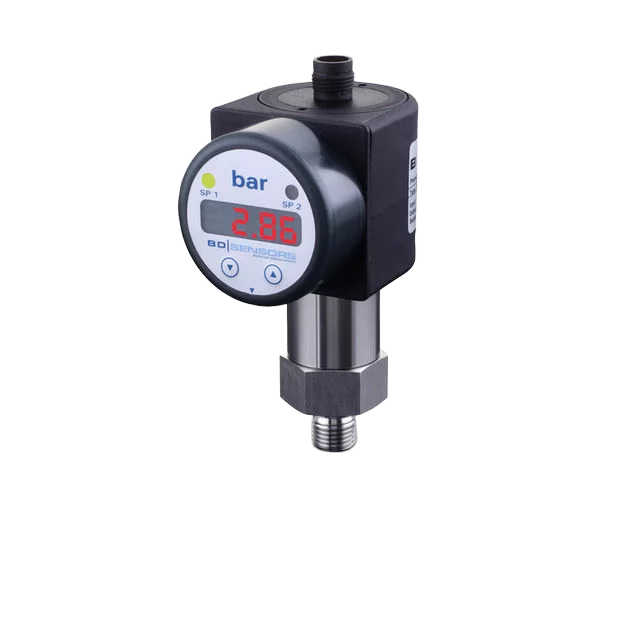
Independent pressure switching for cargo pump trip, overpressure protection, inert gas system pressure, and low-pressure alarms.
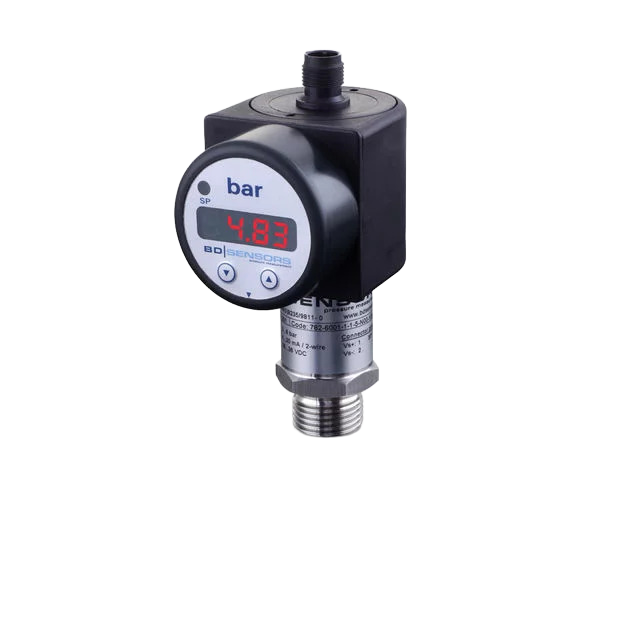
DS 200 Electronic Pressure Switch — 100 mbar–600 bar, up to 4 PNP contacts, 4–20 mA output, LED display, ATEX Ex ia. Configurable for cargo pump high-discharge-pressure trip, inert gas system low-pressure alarm, and manifold overpressure protection.
DS 201 Electronic Pressure Switch — 400 mbar–600 bar, ceramic sensor, ATEX Ex ia, PVDF pressure port option. Ceramic sensor and optional flush port resist fouling from viscous cargo residues (crude oil, heavy fuel, chemicals).
Subsea Pressure Monitoring for Offshore Cargo Transfer
Offshore loading operations (FPSO offloading via subsea hoses, SBM/SPM tanker loading) require pressure monitoring of subsea cargo transfer equipment.
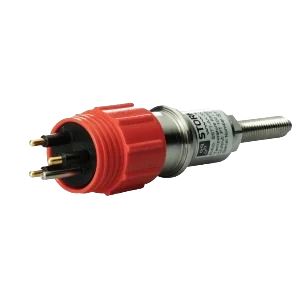
SSPT Subsea Pressure Transmitter — Ceramic piezo-resistive sensor, 1–400 bar, depth rated to 3,000 m, Duplex stainless steel (Marine Bronze and Titanium options), 3/4-pin wet-mateable subsea connectors, output mV/V, 4–20 mA, or Volts. Ideal for monitoring subsea hose pressure during FPSO tanker-to-tanker and ship-to-shore cargo transfer operations.
Digital Integration for Cargo Control Systems
Modern vessels integrate pressure and level data into cargo control systems (CCS), vessel management systems (VMS), and integrated bridge systems.
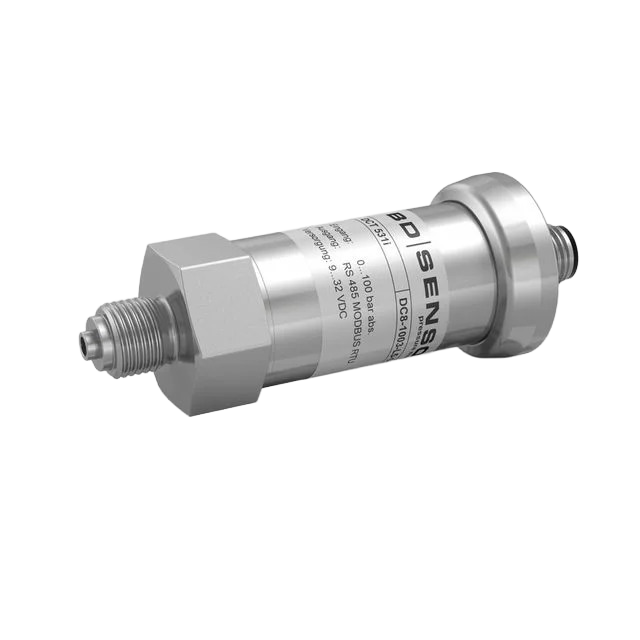
DCT 531 i Precision Pressure Transmitter with RS485 Modbus RTU — 100 mbar–400 bar, RS485 Modbus RTU, ±0.10% FSO, IP67. Multi-drop Modbus bus allows a single comms trunk to serve multiple cargo tank pressure points, reducing cabling weight and cost on newbuilds.
LMK 458 H Level Transmitter with HART® — (also listed above) HART® enables remote configuration, diagnostics, and tank level data transmission to the cargo control room without manual sounding.
Wireless Monitoring for Temporary & Retrofit Cargo Operations
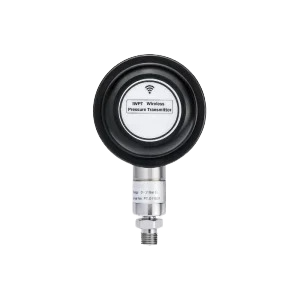
IWPT Wireless Pressure Transmitter — Battery-powered wireless pressure data transmission to single or multi-channel receivers. Ideal for temporary cargo manifold monitoring during ship-to-ship (STS) transfer operations, retrofit cargo pressure monitoring on older tonnage, and portable deck test points during cargo system commissioning.