

When you are measuring level in clean water, most submersible level probes will behave well. The real challenge starts when the liquid contains impurities, suspended solids, sediment, grease, or abrasive particles like sand and silt. In those environments, many level sensors fail in predictable ways: blocked diaphragms, unstable readings, drift, and repeated maintenance visits.
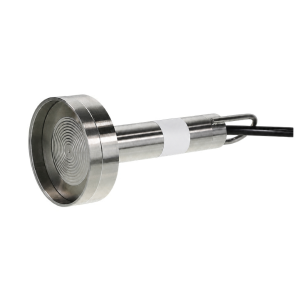
That is exactly the problem the CPA-325S hydrostatic level transmitter is built to solve. It is a heavy-duty hydrostatic level probe designed specifically for contaminated liquids, with construction choices that reduce clogging and make maintenance simpler.
How hydrostatic level measurement works (and why contaminated liquids make it harder)
Hydrostatic level measurement uses pressure to infer liquid height. The deeper the probe, the higher the pressure created by the liquid column above it. Convert that pressure into a level reading and you have a continuous level signal that integrates cleanly into PLCs and SCADA.
In contaminated media, the challenge is not the measurement principle. It is what builds up on the sensing surface over time. Sediment and solids can create an insulating layer, or physically obstruct the sensing area, leading to:
- slow response or “sticky” readings
- drift over time
- false high readings caused by trapped material
- more frequent cleaning and re-calibration
A probe engineered to resist build-up will usually outperform a standard probe, even if the spec sheet looks similar on paper.
What makes the CPA-325S suited to harsh, dirty media
The CPA-325S is designed around a robust sensing interface and a structure that reduces clogging and mechanical damage.
Key design features include:
- Enlarged Ø76 mm separator to reduce the influence of sediment build-up
- Thickened Ø48 mm stainless steel diaphragm to resist mechanical damage and maintain stable readings
- Stainless steel construction (316L diaphragm and probe body) for corrosion resistance in aggressive environments
- IP68 fully submersible protection, designed for continuous immersion
- Wide medium temperature range of –40 °C to +125 °C, useful in outdoor and process environments where temperatures vary
From an operational perspective, one of the most useful details is maintainability. The diaphragm is designed to be easy to restore with a simple rinse, helping reduce downtime in sites where access is awkward or safety controlled.
If you are comparing sensors for level measurement in difficult media, it is worth starting with the application reality, not the ideal case.
Where the CPA-325S fits best
This type of probe is a strong match when you need stable, continuous level measurement and the liquid is hostile to delicate sensing elements.
Typical applications include:
- municipal sewers and stormwater systems
- sewage treatment plants
- pumping stations and lift stations
- water recycling and reclamation facilities
- settling tanks and basins
- fermentation chambers
- liquid waste collection points
- industrial process tanks containing dirty or abrasive media
If your current sensor works for a few weeks and then starts to drift, clog, or become unreliable, that is the exact pain point this design targets.
Ranges, outputs, and integration options (what engineers care about)
The CPA-325S covers a broad measurement range, from 0…1 mH₂O up to 0…250 mH₂O, which helps it span everything from shallow pits to deep wells and reservoirs.
For integration, you get:
- Standard 2-wire 4–20 mA
- Optional 3-wire configurations including 4–20 mA, 0–20 mA, 0–5 V, or 0–10 V
That flexibility matters when you are retrofitting onto older panels, integrating with a remote I/O rack, or standardising signals across multiple sites.
Cable selection is also a real-world constraint, especially in wastewater and outdoor installations. The CPA-325S offers cable options including PVC, PUR, FEP, and TPE-U, which lets you align the cable jacket to chemical exposure and mechanical wear.
Deployment tip: combine level sensing with remote monitoring (when you need fewer site visits)
A lot of level measurement projects fail at the “so what?” stage. You have the signal, but nobody sees it until a pump trips or an overflow happens.
If you are monitoring remote pumping stations, sumps, or treatment assets and want visibility and alerting offsite, consider the monitoring layer as part of the design. A 4–20 mA level transmitter can be brought into a remote telemetry setup using a gateway that accepts analogue inputs. For example, the ECHO-IoT remote monitoring gateway supports analogue 4–20 mA inputs and is designed for cellular-connected remote monitoring, dashboards, and alarms.
That kind of architecture can turn a level signal into proactive maintenance rather than reactive callouts.
