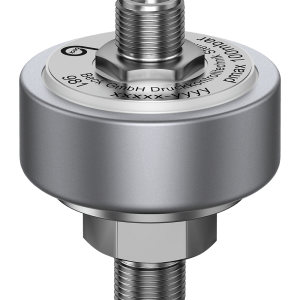
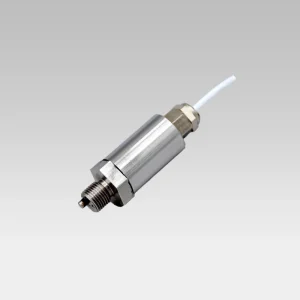
Pressure transmitters are used to measure the pressure and level of liquids and gases. They are similar in operation to pressure transducers, however, they additionally amplify the electrical signal to ensure it can be transmitted to a remote receiver.
View our full range of pressure transmitters below or contact us with your bespoke project requirements.
A pressure transmitter consists of a pressure sensor and signal processing circuitry housed within a robust enclosure. The pressure sensor detects the force exerted by the fluid and produces an electrical signal proportional to the pressure. This raw signal is then processed by the transmitter’s electronics to:
Amplify the signal for better transmission over long distances.
Linearize the output to ensure accuracy across the entire pressure range.
Compensate for temperature variations that might affect the measurement.
Standardize the signal to common industrial formats like 4-20 mA current loops or digital protocols (e.g., HART, Profibus).
Key Features of Pressure Transmitters
Standardized Output Signals: Unlike basic sensors, pressure transmitters provide outputs that are compatible with a wide range of control systems, facilitating easy integration and interoperability.
Robust Construction: They are built to withstand harsh environmental conditions, including exposure to chemicals, extreme temperatures, and mechanical vibrations.
Accuracy and Reliability: Advanced electronics and compensation techniques ensure precise measurements essential for critical applications.
Safety Compliance: Many pressure transmitters are designed to meet industry-specific safety standards, making them suitable for use in hazardous areas.
Pressure Transmitter Applications
Pressure transmitters are used across various sectors:
Oil and Gas: Monitoring wellhead pressures, pipeline integrity, and process control in refineries.
Chemical and Petrochemical: Controlling reaction pressures, ensuring safe storage conditions, and managing feedstock flows.
Water and Wastewater Management: Regulating pump pressures, monitoring filtration systems, and managing distribution networks.
Power Generation: Overseeing boiler pressures, steam systems, and cooling circuits.
Food and Beverage: Maintaining process pressures in brewing, bottling, and pasteurization.
Pressure Transmitters vs. Pressure Transducers
While both devices measure pressure, the main difference lies in their output:
Pressure Transducers: Typically produce a low-level electrical signal (e.g., millivolts or volts) proportional to the pressure. This signal often requires additional amplification and conditioning.
Pressure Transmitters: Incorporate built-in electronics to amplify and condition the sensor signal, providing a high-level, standardized output suitable for direct use by control systems without the need for external signal conditioning.
✕
Sign Up For Our Newsletter!
Send through your product enquiry
Thank you for visiting Stork Solutions.
Please fill in the form and send through your enquiry. If you are interested in multiple products then please add the details into the message section.