

Level sensors are instruments that detect and communicate the height of liquids, slurries, powders or interfaces within tanks, sumps and silos, enabling safe control, inventory and compliance. Our team of experts design and build devices that deliver either continuous level measurement or point level switching, with outputs you can integrate into PLCs, SCADA and simple alarms. We provide clear guidance on what level sensors are in practical terms by focusing on signal type, media, vessel geometry and process conditions such as foam, turbulence and pressure. Our specialists prioritise accuracy, repeatability and hygiene when you need sterile CIP vessels monitored or diesel storage guarded against overfill. We can support you from specification to commissioning and lifetime maintenance.
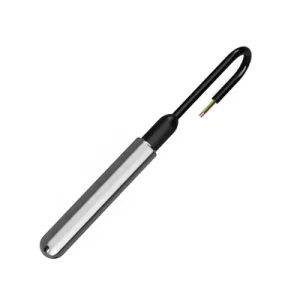
What Are Level Sensors?
Level sensors are critical components that ensure accurate measurement of liquid and solid levels in countless industrial processes. We at our company design devices that detect a point level or continuously measure it, converting level into signals for control, alarms, and inventory. They tell your system where the product is located.
Reliable measurement in harsh conditions requires a good understanding of the underlying physics. Hydrostatic devices infer level from pressure head, capacitive probes detect changes in dielectric between media, ultrasonic and radar instruments time the flight of waves to the surface, magnetostrictive sensors read a float position via torsional pulses, and optical sensors reliably detect liquid by light refraction. Also, according to NAMUR NE 43:2013, 4-20 mA outputs reserve 3.6-3.8 mA and 21-22 mA for diagnostics, so most industrial automation sensors stick to those limits.
In industry, level devices do three things: automate filling and emptying, warn of overflow or run-dry, and provide inventory data. It’s worth noting that point level sensors switch at a set threshold, while continuous liquid level measurement provides a proportional sensor signal output for trending and control. Environmental factors matter too, including temperature stratification, foam, dust, turbulence, and vapor layers that can interfere with acoustic or optical paths. Beyond this, in hazardous areas, equipment selection follows ATEX Directive 2014/34/EU, and functional safety applications reference IEC 61511:2016; electromagnetic compatibility is assessed to IEC 61326-1:2020.
So, how do you choose technologies for a given medium and vessel? Our experience in 2025 shows magnetostrictive is reliable for clean fuels in tall storage tanks, while optical level sensors excel in small skids where space is tight and switching is needed. We validate our choices through a sensor calibration process and, when necessary, environmental chamber testing to check performance across temperature and humidity. For completeness, bulk solids level detection often benefits from radar or vibrating fork switches, whereas viscous liquids may be better suited to guided wave radar.
Industrial Applications of Level Sensors
Level sensors play a vital role across industries, ensuring safety, efficiency, and accuracy in process control. Typical level sensor uses include monitoring liquids and bulk solids in chemical plants, food and beverage lines, and water treatment, from tank level monitoring to silo fill control, feeding PLCs over 4-20 mA or digital outputs.
In hazardous chemical storage, continuous magnetostrictive transmitters provide precise inventory data, while point level sensors deliver independent high-high alarms. According to API 2350 (4th ed.), separate overfill alarms are required for atmospheric petroleum tanks. As we look ahead to 2025, IECEx and ATEX compliance will still be essential. We specify IECEx or ATEX certified devices and SIL 2 diagnostics under IEC 61508 when the risk justifies it.
Food and beverage industrial applications demand hygienic design. EHEDG and 3-A approvals, flush process connections, and IP69K enclosures support washdown. Per EHEDG guidance, CIP runs at 80-90°C and SIP around 121°C steam. Optical level sensors are great for clear media in small vessels, while guided wave radar avoids false echoes from foam during liquid level measurement on fillers and mix tanks.
Water and wastewater plants rely on non-contact ultrasonic and 80 GHz radar for open sumps and covered tanks. For potable water, materials must meet Drinking Water Inspectorate Regulation 31 in England and Wales. We integrate sensor signal output with SCADA via 4-20 mA, HART, or Modbus, which gives us stable trends for capacity planning.
Powder handling needs reliable bulk solids level detection despite dust, ratholing, and surface angle changes. The key consideration is that fMCW radar and vibrating fork point switches address silos, hoppers, and filters. To maintain accuracy over time, we document the sensor calibration process and use environmental chamber testing to confirm performance across temperature and humidity. Our engineers model nozzle geometry and dead zones in 3D CAD, and rapid prototyping technology helps us validate brackets in skids.
Installation and Maintenance Best Practices for Level Sensors
Correct installation and maintenance are key to maximising the performance and lifespan of level sensors. To reduce turbulence, dead zones, and electrical noise, make sure to install them properly, verify the sensor calibration process in situ, and keep them maintained by cleaning and checking signal integrity. Be sure to follow IEC 61326-1:2020 for EMC wiring and NAMUR NE 43 diagnostics.
- Mounting for accuracy: Place continuous sensors away from inlets, use stilling wells, align magnetostrictive probes vertically with the right float clearance, and keep point sensors for solids out of the filling stream.
- Process connections: Match gaskets to media, torque to manufacturer values, use 3-A or EHEDG fittings on hygienic tanks, and confirm IP to IEC 60529.
- Electrical practice: Separate signal and power, use shielded twisted pair for sensor signal output, earth one end, maintain gland seals, and apply ATEX 2014/34/EU in hazardous zones.
- Commissioning checks: Confirm supply, simulate empty and full, map outputs, set damping and fail-safe according to NAMUR NE 43, and record as-found/as-left values.
- Sensor maintenance: Clean optical faces, inspect floats and guides, clear vents on hydrostatic transmitters, and replace O-rings at service intervals.
- Calibration intervals: Set based on risk and drift history, verify zero and span with portable references, and document to ISO/IEC 17025 where required.
- Environmental factors: Heat, vibration, and coating can affect readings; fit baffles or purge air on dusty silos, and verify limits during environmental chamber testing.
- Level sensor troubleshooting: If readings jump, check for turbulence or air; if outputs sit at 3.6 mA or 21 mA, apply NE 43; also, check dielectric constant for radar and lens fouling on optical devices.
Our engineers have configured automation sensors across UK water and food sites. Our analysis shows design validation helps, but field factors tend to dominate. We use 3D CAD sensor design and rapid prototyping technology to replicate vessels, then refine level sensor installation, maintenance, and troubleshooting on-site.
Comparing Level Sensors with Other Sensor Types
While pressure and temperature sensors measure different parameters, level sensors provide unique insights critical for process control. Level devices detect the presence or height of liquids and bulk solids, while pressure and temperature instruments infer fluid force or thermal state. This distinction impacts failure modes, calibration, signal output choices, and integration in industrial automation sensors.
Our engineers have configured both point level sensor and continuous level sensor solutions where direct height or presence matters, like sump tanks, silos for bulk solids level detection, and separator vessels. In a comparison of level sensors versus pressure sensors, pressure transmitters can infer head from hydrostatic pressure, but density changes, foam, and agitation often skew readings. That’s why guided-wave radar or magnetostrictive level sensors provide more accurate liquid level measurements. For utilities, optical level sensors excel in sight-glass retrofits. Temperature devices, defined by IEC 60751 for Pt100 RTDs, indicate heat rather than fill height.
| Sensor type | What it measures | Typical principles | Signal outputs | Preferred applications | Calibration focus | Notes |
|---|---|---|---|---|---|---|
| Level | Fill height or presence of liquids and solids | Radar, ultrasonic, magnetostrictive, optical, capacitive | 4 to 20 mA, HART, Modbus, relays per IEC 60381-1/NAMUR NE 43 | Tanks, sumps, silos, interface layers | Span/empty-full, dielectric or SG compensation | Unaffected by density shifts when non-contact radar is used |
| Pressure | Process or hydrostatic pressure | Piezoresistive, capacitive, strain gauge | 4 to 20 mA, HART, CANOpen | Pumps, filters, hydraulic lines, inferred level | Zero/span per IEC 61298 | Level inference varies with density and temperature |
| Temperature | Thermal state | RTD Pt100, thermocouple | 4 to 20 mA, RTD ohms, mV | Heat exchangers, sterilisation, ambient monitoring | Per IEC 60751 tolerance classes | doesn’t indicate volume or interface position |
High-pressure duties may need both instruments, and sensor integration ties level and pressure to interlocks. Notably, we match sensor signal output to PLC ranges, then verify to IEC 60068 and document calibration.
Certifications and Industry Standards for Level Sensors
Certified level sensors ensure safety, reliability, and regulatory compliance across industries. For UK and EU deployments, you should specify UKCA/UKEX or CE with ATEX for explosive atmospheres, IECEx for global acceptance, EMC to EN 61326-1, electrical safety to EN 61010-1, RoHS, and where applicable, SIL to IEC 61508 and WRAS for potable water.
Explosive atmospheres in distilleries, wastewater plants, and fuel storage are regulated by DSEAR in the UK, which requires compliant equipment in zoned areas. According to HSE’s DSEAR guidance L138 (HSE, 2015, updated 2021), ATEX or UKEX level sensor certifications are expected; IECEx helps with cross-border acceptance (IECEx System, IEC, 2024). It’s worth noting that bSI’s BS EN 61326-1:2021 defines emission and immunity requirements for measurement equipment used in industrial locations. Ignition risk isn’t theoretical.
Our design and manufacturing comply with ISO 9001:2015, and our calibration rigs are verified to ISO/IEC 17025 procedures. For liquid level measurement on hydrocarbons, our magnetostrictive models carry Ex ia IIC T4 Ga approvals under ATEX, IECEx, and UKEX. For potable water, selected optical level sensors are WRAS approved and RoHS compliant. To demonstrate sensor compliance, we document material traceability to EC 1935/2004 for food contact applications and provide detailed test reports for each batch.
Reliability depends on broader industry standards. EMC testing to EN 61326-1 and environmental chamber testing per IEC 60068 protect sensor signal output against noise, vibration, and temperature cycling. Where functional safety is required, we offer SIL 2 assessments to IEC 61508, which were independently reviewed in 2024 by TÜV-certified partners. Safe by design.
Integration matters in industrial automation sensors. We provide 4–20 mA, HART, and IO-Link outputs tested to IEC 61000 series immunity, with ingress protection to IEC 60529 up to IP68 for submersion, supporting bulk solids level detection and continuous duties. Our rapid prototyping technology and 3D CAD sensor design help shorten compliance cycles without cutting validation steps.
Contact Us for Custom Level Sensor Solutions
Need a level sensor tailored to your unique requirements? Our expert team is ready to help. To get custom level sensors manufactured, just send your specifications and drawings. We’ll review feasibility within 2 working days, propose a 3D CAD sensor design, and then move on to sensor prototyping and validation per IEC 60529 and ATEX 2014/34/EU.
Customisation covers the sensing principle, mechanical envelope, and interface. For continuous liquid level measurement in fuels or water, magnetostrictive probes typically offer ±0.1% span accuracy on many datasheets, while optical point level sensor designs are great for sumps. We configure sensor signal output options like 4-20 mA, Modbus RTU, and IO-Link to fit industrial automation sensors. Thanks to 3D CAD sensor design and rapid prototyping technology, we can machine housings, print fixtures, and assemble samples. Environmental chamber testing to IEC 60068 verifies performance from -40°C to +85°C, because tough conditions demand proof.
If you’d like to request a consultation or quote, just share your application summary and critical parameters. Describe the medium, range, tank geometry, temperature, pressure, mounting, cable or connector, and any required approvals like ATEX or IECEx. Building on this, include your preferred outputs and PLC integration details. We’ll get back to you within two working days with feasibility, outline drawings, and a sensor prototyping plan. And while sample builds typically ship in 10 working days in 2025, based on our project logs, if bulk solids level detection is involved, we’ll also advise on suitable continuous or point techniques and any calibration steps.
