

Why Is My Pressure Transmitter Reading a Negative Value?
A negative pressure reading is not automatically a fault. In some applications, it is the correct measurement. In others, however, it can point to an issue with transmitter selection, installation, wiring, scaling or commissioning.
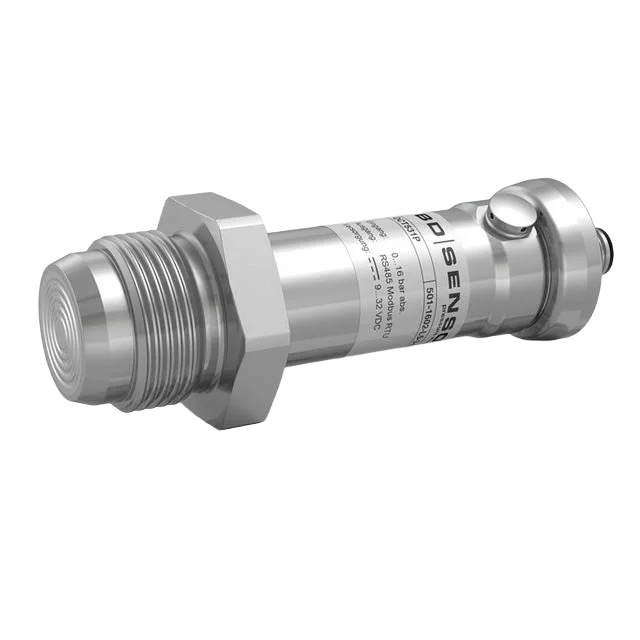
For maintenance engineers, process engineers and OEMs, the first step is to establish whether the transmitter is detecting a genuine process condition or whether the value is being introduced elsewhere in the measurement chain.
Pressure measurement can be influenced by the pressure reference used, the selected measurement range, the transmitter’s output configuration and the way the signal is interpreted by a control system. Understanding these factors helps prevent unnecessary sensor replacement and supports faster fault-finding.
Stork Solutions supplies a broad range of pressure measurement products, including sensors, transmitters, transducers and instrumentation for industrial applications. This guide outlines the common reasons a pressure transmitter may read a negative value and the practical checks to make.
First, is the negative pressure reading real?
A negative reading can be entirely normal when the measured pressure is below the chosen reference point.
For example, a gauge pressure transmitter measures pressure relative to atmospheric pressure. If the pressure within a system falls below atmospheric pressure, the transmitter can show a negative gauge pressure. This is common in applications involving:
- Vacuum pumps
- Suction lines
- Filtration systems
- Extraction equipment
- Tank evacuation
- Process vessels operating below atmospheric pressure
- Pump inlet monitoring
In these situations, the reading may indicate a genuine vacuum or suction condition rather than a problem with the transmitter.
However, if the process should not be operating below atmospheric pressure, the negative value needs further investigation.
Check whether the correct pressure reference has been selected
One of the most common causes of confusion is the difference between gauge and absolute pressure measurement.
Gauge pressure
Gauge pressure is measured in relation to local atmospheric pressure. At atmospheric pressure, a gauge transmitter should normally read close to zero. A value below zero indicates that the process pressure is lower than the surrounding atmosphere.
Absolute pressure
Absolute pressure is measured against a fixed vacuum reference. Atmospheric pressure therefore has a positive absolute value rather than being treated as zero.
This distinction matters when specifying a replacement transmitter. A gauge transmitter and an absolute transmitter may have similar-looking pressure ranges, but they interpret the same physical conditions differently.
If a transmitter has been replaced recently, confirm that the pressure reference matches the original requirement. The Stork Solutions pressure transmitter range includes options for different pressure-measurement requirements, so the application, operating conditions and reference type should be considered before selection.
Review the transmitter range and scaling
A negative displayed value may be caused by signal scaling rather than by the pressure transmitter itself.
Many industrial transmitters provide a proportional output signal that is scaled within a PLC, controller, indicator or data-acquisition system. If that scaling is incorrect, the receiving equipment may display a negative engineering value even when the transmitter output is behaving normally.
Common scaling issues include:
- An incorrect lower-range value entered into the controller
- A transmitter range that does not match the programmed range
- A configuration copied from an earlier instrument
- Incorrect conversion between pressure units
- A signal range configured for a different application
- A zero point that has not been correctly accounted for during commissioning
For example, a transmitter configured for a compound range, covering both vacuum and positive pressure, may be correctly designed to produce a negative reading below atmospheric pressure. If the control system is configured as though the transmitter only measures positive pressure, the displayed result may be misleading.
Before removing the sensor, compare the transmitter label, configuration information and control-system scaling.
Check the zero point under known conditions
A useful diagnostic step is to check the reading when the transmitter is exposed to a known reference condition.
For a gauge-pressure transmitter, this may involve safely venting the pressure connection to atmosphere, where the application and site procedures allow. The reading should then be close to the expected zero point.
If the reading remains negative when the transmitter should be at zero gauge pressure, possible causes include:
- A zero offset
- An incorrect configuration
- A restricted or blocked pressure connection
- Mechanical stress from installation
- An issue within the signal loop
- An actual pressure difference still acting on the sensing element
It is important not to assume that every deviation from zero means a failed transmitter. The existing pressure sensor accuracy guide explains that zero and span tolerances, as well as non-linearity and hysteresis, must be understood in the context of the overall application.
Inspect the process connection
A pressure transmitter can only measure the pressure that reaches its sensing element. Problems at the process connection can therefore cause unexpected readings.
Check for:
- Blocked impulse lines or pressure ports
- Contamination or residue in the process connection
- A valve that is closed, partially closed or incorrectly positioned
- Trapped pressure in the line
- A leaking seal or connection
- A connection installed at an unsuitable measurement point
- Process conditions that differ from those expected
A blockage can prevent the transmitter from seeing the current process pressure. In some cases, the sensor may continue to indicate a previous condition or respond slowly as pressure changes.
For installations using threaded connections, ensure the fitting method matches the transmitter and process connection. Stork Solutions has guidance on whether NPT pressure-transmitter threads require thread seal tape, but the product documentation should always be followed for the specific device and installation.
Check wiring and loop power
Electrical issues can also result in unexpected pressure values, particularly where the transmitter output is being interpreted by a PLC, display or remote monitoring system.
Check the following:
- Supply voltage at the transmitter terminals
- Polarity of the power and signal connections
- Continuity of cabling and terminals
- Loose, corroded or damaged connections
- Correct connection of cable screening where required
- Compatibility between the transmitter output and receiving device
- Whether the control system is reading the correct input channel
A transmitter may be functioning correctly while a wiring issue or input configuration causes the displayed value to be incorrect.
Electrical noise is another consideration, particularly in installations near motors, pumps, drives or other high-power equipment. Route instrument cabling appropriately and follow the installation guidance for the specific transmitter.
Where conventional wired installation is difficult, wireless pressure transmitters may be considered for suitable monitoring applications, subject to an assessment of the site environment, signal path and system requirements.
Consider temperature and environmental effects
Pressure transmitters are often installed in demanding environments, including outdoor process plant, washdown areas, machinery, hydraulic systems and chemical handling applications.
Ambient and process temperature changes can influence the wider measurement system. They can also affect pipework, seals and process media, causing a genuine pressure change that may not be immediately obvious.
When investigating a negative reading, consider:
- Whether the process temperature has changed
- Whether the transmitter is exposed to heat or cold outside its intended installation conditions
- Whether the pressure medium is condensing, freezing, expanding or contracting
- Whether a pressure connection is subject to vibration or mechanical loading
- Whether the process media is compatible with the selected wetted materials
This broader application review is especially important where the measured media is aggressive, highly pure or otherwise demanding. Material compatibility and operating conditions should be considered together, rather than treating the pressure range as the only selection factor.
Could the system be experiencing a real pressure drop?
A negative reading can provide valuable early warning of a process issue.
Depending on the application, it may indicate:
- A pump inlet restriction
- A blocked filter
- A partially closed valve
- A suction-side leak
- An unexpected vacuum condition
- A vessel or line being drawn down too quickly
- Changes in flow demand
- A process operating outside its normal sequence
Rather than immediately replacing the transmitter, compare the reading with other available process information. This may include pump status, valve position, flow data, local pressure indication and recent changes to operating conditions.
If the system has a fast-changing pressure profile, the response characteristics of the selected instrument may also matter. For high-speed applications, it is important to select a device suited to the dynamics of the process. Stork Solutions’ article on the frequency response of a pressure transducer provides an example of why response requirements should be considered during specification.
When should you replace the pressure transmitter?
Replacement may be appropriate if checks confirm that:
- The transmitter does not respond correctly to a known pressure reference
- The output signal is inconsistent with the applied pressure
- The sensing element or connection is damaged
- The pressure range or reference type is unsuitable
- The instrument is incompatible with the process media or environment
- The replacement requirement has changed since the original installation
Before selecting a new device, record the existing application details, including pressure range, pressure reference, output requirement, process connection, media, temperature, electrical connection and installation environment.
For applications requiring compact integration into machinery or bespoke equipment, OEM pressure solutions can help ensure that the pressure measurement arrangement fits the wider design requirement.
Conclusion
A pressure transmitter reading a negative value may be perfectly correct, particularly where the system is operating under vacuum or below atmospheric pressure. But if that reading is unexpected, the cause may sit in the pressure reference, transmitter range, control-system scaling, process connection, wiring or the process itself.
A methodical check of the whole measurement chain is usually more effective than replacing the transmitter immediately. Confirm the actual process condition, verify the transmitter type and range, inspect the installation, and check how the signal is being interpreted.
If you are diagnosing an unexpected pressure reading or need help selecting a replacement sensor or transmitter, contact Stork Solutions to discuss the right pressure measurement solution for your application.

Sam Drury
On this page
- First, is the negative pressure reading real?
- Check whether the correct pressure reference has been selected
- Review the transmitter range and scaling
- Check the zero point under known conditions
- Inspect the process connection
- Check wiring and loop power
- Consider temperature and environmental effects
- Could the system be experiencing a real pressure drop?
- When should you replace the pressure transmitter?
- Conclusion
Share
More from the blog

Choosing a Pressure Transmitter for Low-Pressure Biogas Applications
Biogas digesters typically operate at only a few millibars of pressure, so choosing a low-pressure biogas pressure transmitter means getting accurate measurement at a very

Why Is My Pressure Transmitter Reading a Negative Value?
A negative pressure reading is not automatically a fault. In some applications, it is the correct measurement. In others, however, it can point to an

BSP vs NPT Threads: What Is the Difference?
When replacing a pressure sensor, transmitter, gauge or fitting, the thread connection is often treated as a small detail. In reality, it is a critical

Standard vs Bespoke Sensors: OEM Selection Guide
For Original Equipment Manufacturers (OEMs), machine builders and product design engineers, selecting the right sensor package is a critical engineering decision. Instrumentation provides the fundamental

Replacing Legacy Industrial Sensors: What to Consider
Industrial sensors provide the measurement data needed to run equipment safely, consistently and efficiently. Whether they measure pressure, level, temperature or another process variable, these

Analogue vs. Digital Level Sensors: Which to Choose?
When specifying a level sensor, one of the first decisions you’ll face is output type: analogue or digital? Both do the same fundamental job —
