Product Highlights
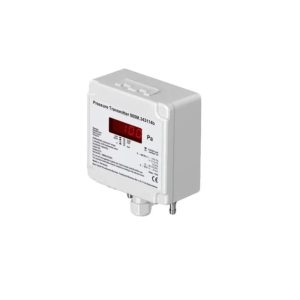
The DMP304 Pressure Transmitter is a versatile and reliable instrument designed for measuring pressure in various applications. It offers a wide range of nominal pressure options, ranging from 0 to 2,000 bar up to 0 to 6,000 bar, making it suitable for high-pressure environments. The transmitter provides two output signal options: a 2-wire configuration with a range of 4 to 20 mA and a 3-wire configuration with a range of 0 to 10 V.
One of its special characteristics is the adjustability of offset and span, which can be easily modified using front-sided potentiometers. The pressure port is compatible with 9/16″ UNF connections, ensuring easy installation. Additionally, the DMP 304 offers optional versions such as the IS-version for Ex ia applications, ensuring safety in hazardous environments.
It boasts an impressive accuracy of 0.25% FSO according to IEC 60770 standards. For added flexibility, optional pressure ports include M20x1.5 and M16x1.5. Overall, the DMP304 Pressure Transmitter combines precision, adjustability, and compatibility to provide reliable pressure measurements in demanding industrial settings.
Applications
The DMP 304 Pressure Transmitter is particularly well-suited for high pressure hydraulic circuits, where precise and reliable pressure measurement is essential for the safe and efficient operation of hydraulic systems. In these environments, the transmitter’s robust construction and ability to withstand extremely high pressures ensure that it can monitor and control hydraulic processes, helping to prevent system failures and maintain optimal performance.
Another key application is in water jet cutting, a process that relies on ultra-high-pressure water streams to cut through a variety of materials. The DMP 304’s capability to accurately measure and withstand the intense pressures generated in water jet cutting systems makes it an indispensable component, ensuring both the quality of the cut and the safety of the operation.
The transmitter is also ideal for high pressure applications in the chemical and petrochemical industry, where it is used to monitor and control processes involving aggressive or hazardous media under extreme pressure conditions. Its high resistance to pressure and compatibility with a range of process media make it suitable for use in reactors, pipelines, and other critical points within chemical and petrochemical plants, supporting both process efficiency and safety compliance.