

If you have ever ordered a pressure sensor, valve, gauge, manifold, or hydraulic fitting, you have probably seen 1/4 NPT, 1/2 NPT, or similar on a datasheet. NPT threads are one of the most common connection standards used in pipework and instrumentation, especially in North America, and they still show up frequently in UK projects via imported equipment and global suppliers.
This guide explains what NPT threads are, how they seal, what commonly gets confused with NPT, and how to choose the right option for your application.
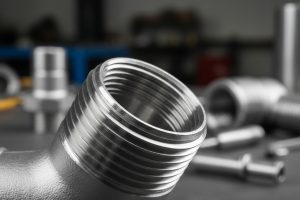
NPT meaning (and what it is used for)
NPT stands for National Pipe Taper (often written as National Pipe Tapered). It is a standardised screw thread used on pipes and fittings to connect components in fluid and gas systems. You will find it across plumbing, pneumatics, hydraulics, process instrumentation, and general industrial pipework.
A key feature of NPT is that it is tapered, not parallel, which is central to how it seals. As a reference point, NPT is defined by the ANSI/ASME B1.20.1 standard and includes a taper rate that creates a wedging action as the fitting is tightened.
Tapered vs parallel: the defining feature
NPT threads are conical. The diameter gradually changes along the length of the thread, so when a male NPT fitting screws into a female NPT port, the threads progressively bind.
Many explain it like this:
- NPT = tapered thread (diameter changes along the thread)
- Straight or parallel threads = diameter stays constant (often seal using an O-ring, gasket, or a bonded seal rather than the thread itself)
A tapered thread can create a pressure-tight joint when correctly assembled, but the seal is typically improved by using a sealant (more on that below). The taper is a core part of the design, and it is one reason NPT is popular for general-purpose sealing connections.
How do NPT threads seal?
NPT threads mainly seal through mechanical interference: as you tighten the joint, the tapered flanks compress against each other. This reduces clearances and helps block leak paths. In practice, many applications still use a thread sealant to improve reliability.
Common options are:
- PTFE tape
- Thread sealant paste (often called “pipe dope”)
These help fill micro-gaps, reduce the chance of spiral leakage, and can make assembly smoother. (You should always follow your component manufacturer’s installation guidance, especially for pressure or safety-critical systems.)
NPT vs NPS vs NPTF (common mix-ups)
It is easy to order the wrong thing because several thread types look similar at a glance.
NPT vs NPS
- NPT is tapered
- NPS is straight (parallel)
- They may share the same thread angle, but they are not the same connection and do not behave the same way in sealing applications.
H5: NPT vs NPTF
- NPTF (National Pipe Taper Fuel), sometimes called “Dryseal”, is designed to seal more effectively via metal-to-metal contact, reducing the need for sealant in some use cases.
- In real-world installations, many technicians still use sealant depending on pressure, vibration, and system requirements.
NPT vs BSP (especially relevant in the UK)
In the UK and across many international systems you will also encounter BSP threads. BSP and NPT can look similar but they use different thread forms and are generally not interchangeable, which can cause leaks or thread damage if forced.
Why NPT sizing can be confusing
NPT sizes are usually given in inches (for example 1/4 NPT), but that size is a nominal pipe size, not a direct measurement of the thread’s outside diameter. In other words, 1/4 NPT does not mean the thread measures 0.25 inches across.
Because of that, identifying an unknown thread properly often requires:
- checking whether it is tapered or parallel
- measuring diameter and pitch using proper tools
- referencing a thread chart
(If you are dealing with instrumentation ports on sensors and transmitters, this is a common source of ordering mistakes.)
Quick checklist: when NPT is likely the right choice
NPT is often a good fit when:
- you have a tapered threaded port specified as NPT on the datasheet
- you need a robust, common, widely-supported connection standard
- your sealing method is acceptable using thread interference plus an appropriate sealant
You might need an alternative when:
- your system requires repeatable assembly with a defined seal (for example, an O-ring face seal)
- you are working in a region or plant standard that primarily uses BSP or metric threads
- you need a connection designed for very high pressure or critical sealing performance where another standard is preferred
Need help choosing the right thread for a sensor or fitting?
If you are selecting threads for pressure, level, or temperature instrumentation, it helps to match the connection type to your process conditions, installation constraints, and site standards.
