

Level Transmitters for Groundwater Well Monitoring
Reliable groundwater well monitoring starts with an accurate, stable water level record. Boreholes are often deep, narrow and remote, so whether you are tracking drawdown in an abstraction borehole, following seasonal change in an observation well or logging level and temperature in a monitoring well, the transmitter must fit the casing, stay submerged for long periods and keep its calibration without frequent visits.
Stork Solutions supplies submersible level transmitters for groundwater wells, from a 19 mm slimline probe for narrow bores and 26.5 mm stainless steel probes with DVGW and KTW drinking water certification, to level and temperature transmitters and low-power SDI-12 and Modbus RTU probes that connect directly to dataloggers and telemetry units.
Product Spotlight for Groundwater Well Monitoring


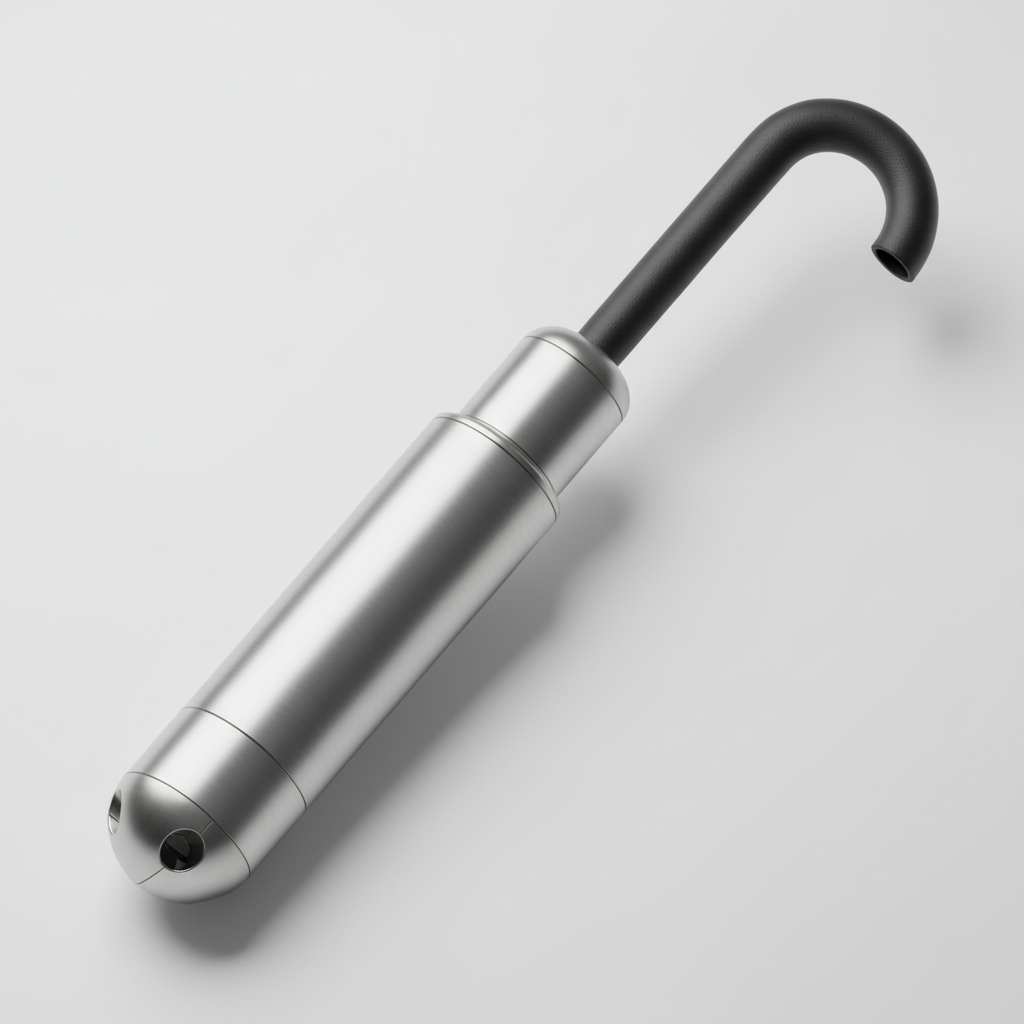


Why Groundwater Well Monitoring Matters
Groundwater is a primary source of drinking water and a shared resource that needs to be managed carefully. Continuous level measurement in boreholes and monitoring wells gives operators and hydrogeologists the data to:
Track drawdown and recovery — see how water level responds to pumping and rest periods in abstraction boreholes and during pumping tests
Follow aquifer trends — build long-term level records that reveal seasonal variation and gradual change in storage
Protect drinking water sources — choose transmitters available with DVGW and KTW drinking water certification for supply boreholes
Add temperature context — record groundwater temperature alongside level from a single probe
Reduce site visits — feed digital SDI-12 or Modbus RTU data into dataloggers and telemetry at remote, battery or solar-powered sites
Level Transmitters for Every Groundwater Well Application
Narrow Boreholes and Standard Monitoring Wells (Analogue Level)
For boreholes and monitoring wells where a 4–20 mA or voltage signal is read by a PLC, RTU or logger, these stainless steel submersible transmitters cover narrow casings through to standard 26.5 mm installations:
LMP 305 Slimline Level Transmitter
19 mm diameter with ranges from 0–1 mH₂O to 0–250 mH₂O and a 2-wire 4–20 mA output. Designed for confined spaces such as 1″ pipes, and listed for groundwater monitoring and depth measurement in wells.
LMP 307 i Stainless Steel Level Transmitter
26.5 mm diameter with ranges from 0–4 mH₂O to 0–200 mH₂O and 2-wire 4–20 mA or 3-wire 0–10 V outputs. DVGW and KTW drinking water certified, with a minimal thermal effect. A sound choice for supply boreholes and groundwater level tracking.
LMP 307 Stainless Steel Level Transmitter
26.5 mm diameter with ranges from 0–1 mH₂O up to 0–250 mH₂O, suitable for shallow observation wells through to deep boreholes. Outputs include 2-wire 4–20 mA and 3-wire 0–20 mA or 0–10 V, with DVGW and KTW drinking water approval and a choice of cable and elastomer options.
Level and Temperature in One Probe
Groundwater temperature helps interpret level changes and supports water quality records. These transmitters provide separate outputs for level and temperature, so one borehole entry and one cable serve both measurements:
LMK 307 T Level and Temperature Transmitter
26.5 mm diameter with level ranges from 0–4 mH₂O up to 0–250 mH₂O and temperature ranges from 0–30 °C up to 0–70 °C. Both signals are 2-wire 4–20 mA, and the flush ceramic sensor is built for continuous level and temperature measurement in groundwater and drinking water systems.
LMP 307 T Level and Temperature Transmitter
26.5 mm diameter with level ranges from 0–1 mH₂O up to 0–250 mH₂O and the same 0–30 °C to 0–70 °C temperature options. Separate 4–20 mA signals for pressure and temperature, customisable cable, and a DVGW and KTW drinking water certificate available.
Low-Power SDI-12 for Dataloggers and Telemetry
Many monitoring boreholes have no mains supply, so a low idle current extends battery and solar life. These SDI-12 devices are built for that kind of hydrological network:
SLS-SD Submersible Level Sensor with Digital Output
SDI-12 version 1.4 output with level and temperature as standard, ranges from 0.5 to 100 mWG and accuracy options of <±0.25%, <±0.15% or <±0.1%. Consumption is below 250 µA idle and below 4 mA active. 316 stainless steel housing, PUR submersible cable and IP68 rating for submersion to 100 m. It replaces the SLS-D, and the ceramic-element SLS-CD is available for applications that suit a ceramic sensor.
TPT-SDI Pressure Transmitter with SDI-12
Gauge, sealed gauge and absolute ranges from 0.5 to 600 bar, with ±0.25% FS accuracy as standard or ±0.10% FS optional. SDI-12 v1.4 output, 6–36 V dc supply and under 250 µA idle current, aimed at battery and solar-powered environmental and hydrological monitoring.
Modbus RTU Digital Probes
Where a site already uses RS485 and Modbus RTU, digital probes avoid analogue signal conversion and let the level reading go straight to the controller or gateway:
DCL 531 Stainless Steel Probe with RS485 Modbus RTU
26.5 mm diameter with level ranges from 1 to 250 mH₂O, accuracy of ≤±0.25% FSO, a 9–32 VDC supply and IP 68 protection. A drinking water certificate (DVGW and KTW) is available as an option.
DCL 571 Stainless Steel Probe with RS485 Modbus RTU
Compact 22 mm diameter with a flush ceramic diaphragm, 0.1–10 bar gauge ranges and ≤±0.35% FSO accuracy (≤±0.25% FSO optional). 9–32 VDC supply, IP 68 and DVGW and KTW drinking water certification, for wells, reservoirs and tanks.
Certifications & Compliance
The submersible transmitters featured on this page carry or offer the following approvals and ratings. Check the individual product page for the option that applies to your model:
DVGW and KTW — drinking water certification on the LMP 307 i, LMP 307 and DCL 571, available on the LMP 307 T and as an option on the DCL 531
SDI-12 version 1.4 — compliant digital output on the SLS-SD and TPT-SDI for datalogger and telemetry networks
IP68 ingress protection on the SLS-SD and DCL Modbus probes, with the SLS range rated for submersion to 100 m
WRAS-approved cable options — available across the SLS submersible range for potable water applications