

Pressure Transmitters for Hydrogen Pipeline Transport Pressure Sensing
Moving hydrogen through transmission and distribution pipelines, or blending it into an existing gas network, puts pressure sensing at the centre of safe operation. Compressor stations, pressure-reduction stations, injection and offtake points and valve stations all depend on trustworthy line-pressure data, and hydrogen’s small molecule and tendency to migrate through materials make instrument selection more demanding than for conventional gases.
Stork Solutions supplies pressure transmitters with hydrogen-specific materials, hazardous-area approvals, Modbus RTU output for SCADA and RTU integration, and wireless and remote monitoring options for unmanned sites. Our engineers can help you match each point on the line to the right instrument.
Product Spotlight for Hydrogen Pipeline Transport Pressure Sensing


Why Hydrogen Pipeline Pressure Sensing Matters
Line pressure is the primary indicator of how a hydrogen pipeline is behaving, and accurate measurement along the route supports safe, efficient transport:
Station control — compressor and pressure-reduction stations rely on stable inlet and outlet readings to hold the line within its operating window.
Blending and injection — where hydrogen enters a gas network, pressure data at injection and offtake points helps operators keep flows balanced.
Material compatibility — hydrogen can diffuse into metals and cause embrittlement, so wetted parts must be chosen for hydrogen service rather than assumed suitable.
Unmanned sites — valve stations and offtakes are often remote, so instruments need dependable signals and low-maintenance communications back to the control room.
Leak awareness — fittings, valves and joints are potential leak paths, so verifying their integrity before they enter service matters as much as monitoring them afterwards.
Pressure Transmitters for Every Hydrogen Pipeline Application
Hydrogen-Specific Line Pressure Transmitters
For transmission and distribution lines, compressor discharge and pressure-reduction stations, start with transmitters built for hydrogen service. Material choice and diaphragm design both affect long-term accuracy, as explained in our guide to measuring hydrogen pressure and the effects of hydrogen migration.
DMP 336 Pressure Transmitter for Technical Gases and H2 Applications
Nominal gauge ranges from 16 to 1000 bar with accuracy of ≤ ±0.5 % FSO. Housing and wetted parts are 316L stainless steel, with material selection and manufacturing procedures aimed at preventing hydrogen embrittlement of media-wetted components. ATEX/IECEx approved with an optional zone 0 Ex ia version, and designed to SIL 2 (IEC 61508 / IEC 61511). A strong choice for mainline measurement and station instrumentation.
DMP 333P Pressure Transmitter for Hydrogen Applications
Gauge ranges of 60 and 100 bar, and absolute ranges from 60 to 600 bar, with accuracy of 0.35 % FSO (0.25 % optional) and long-term stability of ≤ ±0.1 % FSO per year. An optional gold-plated process connection and diaphragm are available for hydrogen service. ATEX/IECEx certified, with an optional intrinsically safe 4–20 mA version. Suited to hydrogen distribution and compression duties.
Digital Output for SCADA and RTU Integration
Where station instruments report to an RTU or SCADA system over a serial bus, a transmitter with a digital output removes the need for separate signal conversion:
DCT 541 Pressure Transmitter for Technical Gases and H2 Applications
Nominal pressure from 0–16 bar up to 0–1000 bar with 0.5 % FSO accuracy. RS485 output with Modbus RTU in a master-slave arrangement supporting up to 247 slave devices, so several transmitters can share one bus along a station. Developed for hydrogen, with construction materials chosen to prevent hydrogen permeation and leakage, and insensitive to pressure peaks. ATEX/IECEx listed.
Wireless and Remote Monitoring for Unmanned Stations
Offtakes, injection points and remote valve stations often have no power or cabling to hand. Wireless transmitters and telemetry gateways bring their pressure data back without trenching new cable. Check the wetted materials against your medium with Stork before specifying wireless transmitters on hydrogen lines, as their product pages do not state hydrogen suitability.
IWPT Wireless Pressure Transmitter
Measures −1 to +400 bar gauge in a 316 stainless steel housing rated IP68. Battery life is five years at a 10-second transmission update rate, with up to 500 metres line-of-sight range depending on the receiver. Receivers offer analogue, digital, RS-232/485, Ethernet and USB outputs.
ECHO-IoT Remote Monitoring Gateway
Supports up to 128 wireless transmitters plus four 4–20 mA or 0–10 V analogue inputs, with 2G/3G or 4G cellular connectivity. Modbus RTU/TCP/IP and MQTT are supported, with a web-based SCADA dashboard and alerts by email or SMS. IP67 enclosure.
ECHO4 Remote Monitoring System
Self-contained IP67 telemetry unit with four analogue inputs (4–20 mA and 0–10 V), RS232/RS485 interfaces and two relay outputs. Can be powered by mains conversion, solar panel or battery, and reports over GSM/GPRS to the cloud-based ECHOVIEW platform.
Leak Detection for Valves, Fittings and Components
Pressure transmitters show how the line behaves in service, but components also need checking before installation:
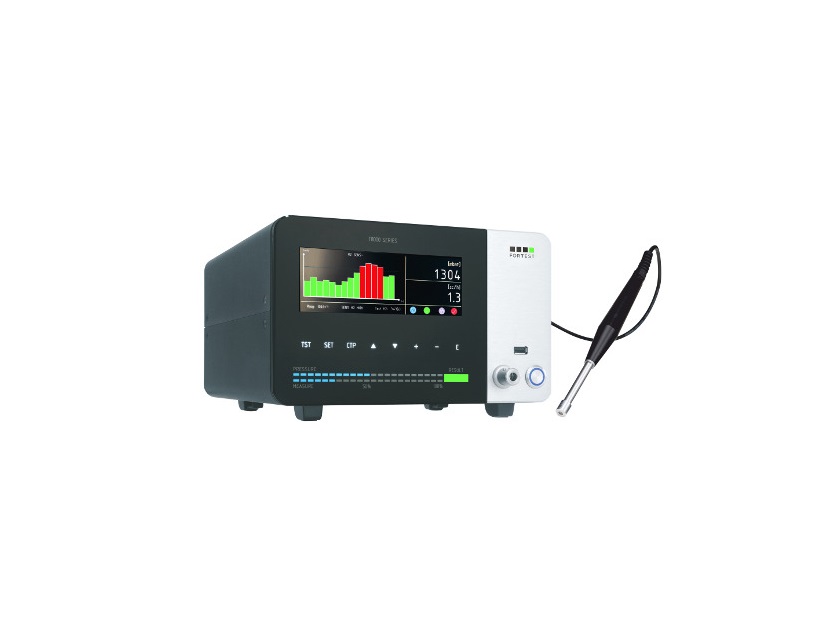
T8999 Hydrogen Leak Detector
Combines an absolute decay leak test with leak location, using a probe with a 30° arm to reach awkward points. The probe sensitivity is 1 cc/h, independent of the pressure and volume tested. It uses a 5 % hydrogen mixture, which is not explosive, and signals leaks with an indicator LED and warning buzzer.
Certifications & Compliance
Hydrogen pipeline stations are typically classified as hazardous areas. The approvals below are those stated on the individual product pages; please confirm the certification you need for your specific zone and model.
ATEX / IECEx — DMP 336, DMP 333P and DCT 541 are ATEX/IECEx approved or certified, with intrinsically safe versions available on the DMP 336 (zone 0 Ex ia) and DMP 333P.
SIL 2 — the DMP 336 is designed to SIL 2 in line with IEC 61508 / IEC 61511.
ISO 15001 — the DMP 336 and DCT 541 are oil and grease free in accordance with ISO 15001.
Modbus RTU — the DCT 541 and ECHO-IoT gateway support Modbus communication for SCADA and RTU integration.
Ingress protection — the IWPT is rated IP68, and the ECHO-IoT and ECHO4 enclosures are rated IP67.