

Pressure Transmitters for Hydrogen Storage Monitoring
Hydrogen is stored in pressure vessels, tube trailers, cylinder banks and buffer or cascade storage, and in every case the stored pressure is the quickest indication of how much gas is on site and whether the system is behaving normally. Reliable pressure measurement on these assets supports inventory tracking, delivery planning and early warning of slow leaks or abnormal pressure changes.
Stork Solutions supplies pressure transmitters with hydrogen-specific construction options, digital gauges for local read-out, and wireless and cellular telemetry for storage sites that are not permanently staffed. This page groups those products by where they sit in a hydrogen storage installation, so you can specify the sensing, local indication and remote reporting together.
Product Spotlight for Hydrogen Storage Monitoring


Why Hydrogen Storage Monitoring Matters
Stored hydrogen is a high-value, high-consequence inventory, and continuous pressure measurement gives operators a simple, dependable picture of the storage system. Good monitoring lets you:
Track stored inventory — follow vessel, trailer or bank pressure over time to see how much gas is available and plan refills or collections
Spot slow leaks early — a pressure decay that does not match demand is often the first sign of a leaking joint, valve or fitting
Manage cascade and buffer storage — compare pressure across banks to control which store is filled or drawn on first
Protect the measurement itself — hydrogen’s small molecules can migrate into some sensor constructions, so material choice and long-term stability matter; our technical article on measuring hydrogen pressure and the effects of hydrogen migration compares stainless steel, ceramic, oil-filled and gold-plated diaphragms
Reduce site visits — wireless and cellular reporting brings storage pressure to a screen or phone instead of a technician with a clipboard
Pressure Transmitters for Every Hydrogen Storage Application
High-Pressure Hydrogen Vessels, Tube Trailers and Cylinder Banks
For the stored-pressure measurement itself, these transmitters are described by their product pages as suitable for hydrogen service:
DMP 333P Pressure Transmitter for Hydrogen Applications
Gauge ranges of 60 and 100 bar, absolute ranges from 60 to 600 bar, with overpressure protection up to 1000 bar. Stainless steel 316L housing, with a gold-plated diaphragm available as the hydrogen option. Accuracy of ≤±0.35% FSO (≤±0.25% FSO optional) with 4–20 mA or 0–10 V output and an operating range of −40 to 125°C. A good fit for buffer vessels and cylinder banks at moderate pressures.
DMP 336 Pressure Transmitter for Technical Gases and H2 Applications
Nominal gauge ranges from 16 to 1000 bar with overpressure up to 1500 bar. Housing and wetted parts in 316L stainless steel, with a 316L-based alloy that prevents hydrogen embrittlement. Long-term stability of ≤±0.2% FSO per year, which suits storage assets that are monitored for years between service visits. 4–20 mA output as standard.
DCT 541 Pressure Transmitter for Technical Gases and H2 Applications
Ranges from 0–16 bar up to 0–1000 bar, with 0.5% FSO accuracy. Developed for hydrogen, with materials and sealing chosen to prevent permeation and leakage. RS485 digital output with Modbus RTU supports up to 247 slave devices, so a whole bank of vessels or trailers can share one bus.
Local Read-Out and Wireless Monitoring at the Storage Point
Where an operator needs to read pressure at the vessel, or where cabling to a distant storage compound is impractical, these options complement the hydrogen-rated transmitters above. Their pages do not make hydrogen claims, so please confirm your medium with Stork before specifying them on hydrogen lines.
DM 10 Battery Powered Digital Pressure Gauge
Nominal ranges from 0–1.6 bar up to 0–250 bar with a 4.5-digit display and selectable units (bar, mbar, psi, MPa, mH₂O). Min/max tracking, auto-zero and a rotatable housing make it practical for local read-out. CR 2450 battery with over 1,500 hours of operation.
IWPT Wireless Pressure Transmitter
Measures −1 to +400 bar gauge with 316 stainless steel housing, ceramic diaphragm and Viton seals. Up to 500 m line-of-sight radio range to the IWR receiver range, with a battery life of five years at a 10-second update rate. Useful for lower-pressure storage and auxiliary lines; the diaphragm material should be reviewed against your hydrogen duty.
Remote Telemetry for Unmanned Storage Sites
Storage compounds are often visited only for deliveries and maintenance. Telemetry gateways collect pressure signals and report them without a site visit.
ECHO-IoT Remote Monitoring Gateway
Accepts up to 128 IWT wireless transmitters plus four analogue inputs (4–20 mA or 0–10 V), eight digital inputs and Modbus instruments. 2G/3G/4G modem with MQTT, web-based SCADA, email and SMS alarms, four relay outputs and IP67 enclosure. Suited to larger storage sites with several vessels.
ECHO4 Remote Monitoring System
Four analogue inputs (4–20 mA and 0–10 V) with GSM/GPRS telemetry to the ECHOVIEW cloud platform, email alerts on threshold breach or loss of communication, and two relay outputs. Mains or solar charging options and an IP67 enclosure for locations with limited power. Pair it with a 4–20 mA hydrogen transmitter for a simple stand-alone storage monitor.
Leak Detection for Storage Components and Connections
Pressure trend monitoring shows that gas is being lost; leak testing helps prove that components and assemblies are tight.
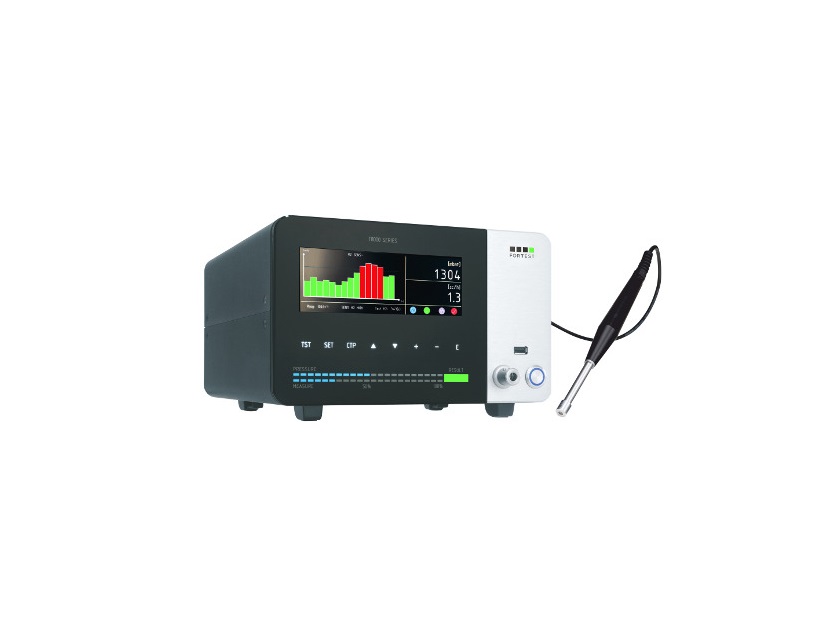
T8999 Hydrogen Leak Detector
Uses a non-explosive 5% hydrogen mix with a stated sensitivity of 1 cc/h, independent of pressure and volume. Adjustable 30° aluminium probe for hard-to-reach points, warning LED and buzzer, and RS232, RS485, Profinet, EtherNet IP and EtherCAT connectivity. Supports both absolute decay testing and leak identification.
Certifications & Compliance
The approvals below are those stated on the individual product pages used here. Please confirm the exact approval for your chosen version and zone when ordering.
ATEX / IECEx — listed for the DMP 333P, DMP 336 and DCT 541; the DMP 336 also offers an optional intrinsically safe Zone 0/20 Ex ia version
SIL 2 — the DMP 336 is compliant with IEC 61508 / IEC 61511
ISO 15001 — the DMP 336 and DCT 541 are oil and grease free
IP67 — enclosure rating of the ECHO-IoT and ECHO4 telemetry units