

Pressure Transmitters for Hydrogen Cooled Generator Monitoring
Hydrogen is used as a coolant in large turbo-generators because it carries heat away efficiently. That only works while the gas in the casing is held at the right pressure, topped up as it is lost and kept separate from the seal system around the shaft. Pressure measurement is how operators see all of that happening.
Hydrogen is also a difficult gas to measure. Its small molecules can migrate into sensor materials, so transmitter construction matters as much as the pressure range. Stork Solutions supplies pressure transmitters for hydrogen service, differential pressure transmitters for gas and seal circuits, and a hydrogen leak detector for checking components and joints.
Product Spotlight for Hydrogen Cooled Generator Monitoring


Why Hydrogen Cooled Generator Monitoring Matters
A hydrogen-cooled generator relies on a sealed gas circuit. Reliable pressure data from that circuit lets operators and maintenance teams:
Hold casing gas pressure steady — track the gas pressure inside the generator so it stays within the range the machine is operated at
Control make-up and purge supply — monitor the hydrogen feed and purge lines so gas is added or displaced in a controlled way
Watch gas and seal systems — use differential pressure to see how gas pressure and seal supply pressure sit relative to each other
Find leaks early — a falling trend or an unexplained offset can point to a leak path before it becomes a safety concern
Feed plant control systems — pass pressure data to DCS or PLC platforms over analogue or digital Modbus outputs
Pressure Transmitters for Every Hydrogen Cooled Generator Application
Casing and Supply Gas Pressure
For the generator casing, the make-up supply and the purge lines, choose a transmitter built and specified for hydrogen:
DMP 333P Pressure Transmitter for Hydrogen Applications
Gauge ranges of 60 and 100 bar and absolute ranges from 60 to 600 bar. A gold-plated process connection and diaphragm are available for hydrogen service. Accuracy is ≤ ±0.35 % FSO (≤ ±0.25 % FSO optional), with 4–20 mA or 0–10 V outputs and a stainless steel 316L housing. A suitable choice where the gas side needs a barrier against hydrogen migration.
DMP 336 Pressure Transmitter for Technical Gases and H2 Applications
Nominal gauge ranges from 16 to 1000 bar, with long-term stability of ≤ ±0.2 % FSO per year and accuracy of ≤ ±0.5 % FSO. Materials are selected to prevent hydrogen embrittlement, and the 2-wire 4–20 mA output suits supply and purge manifolds that run continuously for long periods.
Differential Pressure for Gas and Seal Systems
Differential pressure shows how two parts of the circuit relate, such as gas pressure against seal supply pressure, or the pressure drop across a filter or dryer:
DMD 331 Differential Pressure Transmitter for Liquids and Gases
Differential ranges from 0–20 mbar to 0–16 bar, with 2-wire 4–20 mA or 3-wire 0–10 V outputs. It withstands static pressure up to 30 times its differential range and uses a piezoresistive stainless steel sensor. An intrinsically safe Ex ia version is available for gases and dust. Check media compatibility for hydrogen with Stork before specifying it.
DMD 831 Differential Pressure Transmitter with Display and Contact
Features a rotatable 4-digit LED display and programmable switching contacts, with a 4–20 mA output and a temperature range of −40 to 125 °C. Useful for local indication and alarm points on seal and gas circuits.
DPT 200 Differential Pressure Transmitter with HART® Communication
Differential ranges from 1 mbar to 20 bar with static pressure up to 400 bar, a 2-wire 4–20 mA output and HART® communication. Rangeability reaches 100:1, and Ex versions and an LC display are available.
Digital Modbus Output for Plant Control
Where several measuring points share one cable run back to the control room, an RS485 Modbus RTU output keeps wiring simple and the data digital:
DCT 541 Pressure Transmitter for Technical Gases and H2 Applications
Nominal ranges from 0–16 bar up to 0–1000 bar, accuracy of 0.5 % FSO and an RS485 output with Modbus RTU. Built to prevent hydrogen permeation and leakage, with a piezo-resistive silicon sensor that is insensitive to pressure peaks and offers high overpressure capability. ATEX/IECEx certified.
DPT 100 Differential Pressure Transmitter for Process Industry
Differential ranges from 10 mbar to 20 bar with static pressure up to 400 bar. Choose a 2-wire 4–20 mA or an RS485 Modbus RTU output, with support for up to 247 Modbus slaves and zero adjustment by button.
Leak Detection and Hydrogen Migration
Because hydrogen diffuses into many materials, leak checking and sensor selection go together. Stork’s guide to hydrogen pressure measurement and hydrogen migration compares diaphragm materials, including 316 stainless steel, ceramic and gold plating, and explains the trade-offs for each.
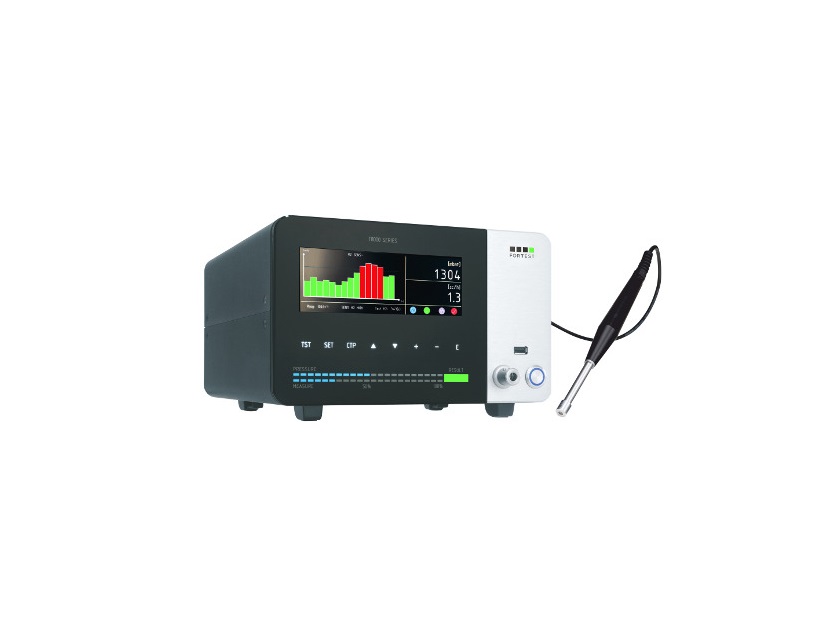
T8999 Hydrogen Leak Detectors
Uses a 5 % hydrogen mix, which is non-explosive, with a leak detection sensitivity of 1 cc/h independent of pressure and volume. It combines absolute decay testing with leak identification, using a 30° articulated aluminium probe with LED and audible warnings. USB, RS232, RS485, Profinet, EtherNet IP and EtherCAT connectivity is available. It is a test instrument for checking components and joints rather than a fixed in-service monitor.
Certifications & Compliance
Approvals depend on the product and version, so confirm the exact variant for your installation. The transmitters featured on this page are supported by the following:
ATEX / IECEx — DMP 336 and DCT 541 are ATEX/IECEx approved; an intrinsically safe version of the DMP 336 is available for Zone 0/20
Intrinsic safety (Ex ia) — available on the DMD 331 for gases and dust; the DMP 333P offers an optional intrinsically safe 4–20 mA version
SIL 2 — the DMP 336 is compliant with IEC 61508 / IEC 61511
ISO 15001 cleanliness — the DMP 336 and DCT 541 are supplied oil and grease-free to ISO 15001
Ex versions for the DPT 200 — mining (Group I) and flameproof (Group II) options