

Level Transmitters for Groundwater Level Monitoring
A groundwater level record is only as useful as its continuity. Aquifer observation networks, hydrogeological investigations, abstraction licence returns and landfill or contaminated land compliance all rely on years of readings from boreholes that may be visited a few times a year. Every gap, drift or uncorrected atmospheric swing weakens the trend that regulators, consultants and researchers are trying to read.
Stork supplies the parts of a complete groundwater monitoring point: slim submersible level probes for narrow piezometers, SDI-12 sensors with built-in temperature for low-power loggers, level and temperature transmitters with analogue outputs, barometric pressure sensing and vented junction boxes for atmospheric compensation, and cellular telemetry to bring the data home. It is part of our wider range for environmental monitoring and meteorology.
Product Spotlight for Groundwater Level Monitoring
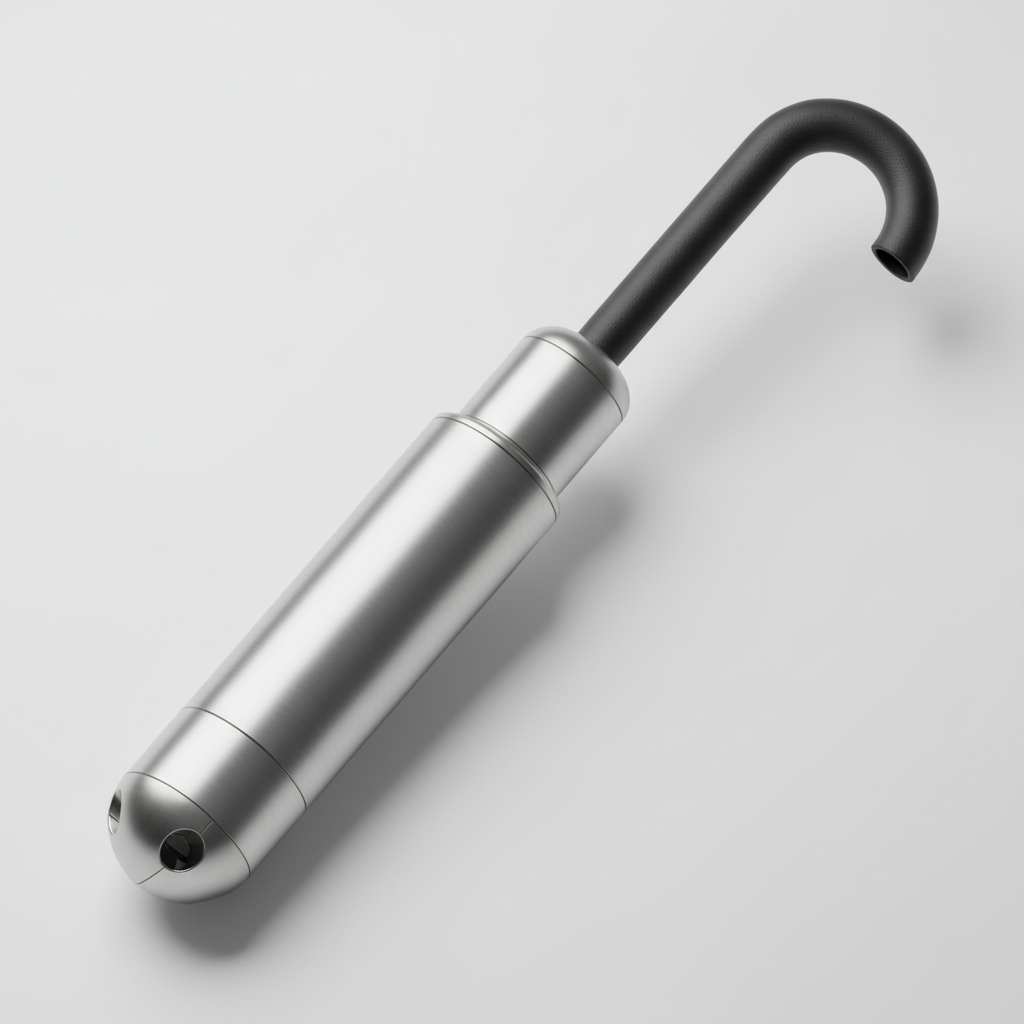


Why Groundwater Level Monitoring Matters
Groundwater moves slowly, so the signals that matter, such as seasonal recharge, the drawdown cone around an abstraction or a gradual rise in leachate, are often a few centimetres over many months. Picking those out of the record depends on sensors that stay stable, loggers that run unattended and data that has been corrected for atmospheric pressure and tied to a known datum.
Aquifer observation networks — long, consistent records from many boreholes underpin resource assessments, drought reporting and recharge studies.
Hydrogeological investigations — pumping tests and site characterisation need closely spaced readings from observation wells, often alongside groundwater temperature.
Abstraction licence compliance — licence conditions frequently call for level records from production and observation boreholes to show the effect of pumping on the aquifer.
Landfill and contaminated land monitoring — perimeter boreholes and leachate wells track water levels and gradients as part of permit and remediation reporting.
Fewer site visits — low-power SDI-12 sensors, logged data and cellular telemetry cut the cost of travelling to remote or rural boreholes.
Level Transmitters for Every Groundwater Monitoring Application
SDI-12 Level Sensors for Logger-Based Observation Networks
Most groundwater networks run on battery or solar powered dataloggers, where a sensor’s standby current decides how long a site can be left. SDI-12 keeps power use low and lets several sensors share one logger channel, which suits nested piezometers or clusters of boreholes.
SLS-SD Submersible Level Sensor – Digital Output
Level ranges from 0.5 mWG up to 100 mWG with an SDI-12 Version 1.4 output carrying level and temperature as standard. Current draw is under 250 µA idle and under 4 mA active, and up to 9 sensors can share one SDI-12 bus. The 316 stainless steel body, PUR submersible cable and IP68 rating for full submersion to 100 m depth suit long-term installation, and the integrated temperature sensor is used for density correction.
USB-SDI12-PRO USB-Powered SDI-12 Interface
Powers SDI-12 sensors from a laptop and connects up to 10 SDI-12 devices to a PC. The free Stork DCT software handles density correction, zero adjustment to a Local Datum or Ordnance Datum (maOD Newlyn), output units, filter and sample rate settings, PC data logging and an annual calibration mode, so each sensor can be configured and checked before it goes down the borehole.
Slim Analogue Probes for Narrow Piezometers and Dip Tubes
Many monitoring boreholes and piezometers have small internal diameters, and an analogue probe is often the simplest way to connect to an existing logger, outstation or telemetry unit. Probe diameter, output type and power budget are the main selection points.
LMP 305 Slimline Level Transmitter
A 19 mm diameter probe designed for 1″ pipes and confined spaces, with ranges from 0…1 mH₂O up to 0…250 mH₂O and a 2-wire 4…20 mA output (others on request). Stork lists groundwater monitoring and depth measurement in wells and open waters among its applications, and various cable options are available.
SLS-SA Submersible Level Sensor – Analogue Output
Level ranges from 0.5 mWG up to 100 mWG with a choice of 4…20 mA (2-wire), 0…5 V or 0…10 V (3-wire), 0.5 to 4.5 V ratiometric or a low-power millivolt signal, plus an optional temperature output. Built in 316 stainless steel with PUR submersible cable and rated IP68 for full submersion to 100 m depth.
Level and Temperature for Hydrogeological and Landfill Studies
Groundwater temperature helps hydrogeologists trace recharge, identify flow paths and interpret pumping tests, and it is a useful extra parameter in landfill perimeter and leachate monitoring. Measuring both from one probe avoids a second cable down the borehole.
LMP 307 T Level and Temperature Transmitter
A 26.5 mm stainless steel probe with level ranges from 0…1 mH₂O up to 0…250 mH₂O and temperature ranges from 0…30 °C up to 0…70 °C, each on its own 2-wire 4…20 mA output. Custom ranges, cable and elastomer variants are available, along with optional DVGW and KTW drinking water certificates. For leachate or contaminated groundwater, confirm media compatibility with Stork.
Where an SDI-12 logger is used, the SLS-SD reports temperature alongside level as standard.
Vented Cable, Barometric Compensation and Telemetry
A submersible pressure sensor sees the water column plus the atmosphere above it. Vented cable references the sensor to air at the wellhead, while a separate barometric record lets readings from non-vented sensors be corrected in post-processing. Either way, the wellhead also needs a dry termination point and a route for the data to reach the office.
XSYS-0013 Vented Junction Box
An IP67 ABS enclosure for outdoor use that lets a submersible sensor’s vent tube breathe to atmosphere while keeping moisture out. It has 2 × PG9 cable glands, AKZ-4 DIN rail screw terminals and a fast-closure lid, and lets the sensor cable join a lower-cost extension cable for long runs to a logger.
SBPT Barometric Pressure & Temperature Transmitter
A low-power barometric transmitter in a die-cast aluminium housing, listed with a 750…1250 mbar range, SDI-12 V1.4 output, pressure accuracy of ≤±0.25 % FSBFSL and temperature accuracy of ≤±0.2 °C. One unit per site gives a local barometric record for compensating level data. Confirm the output and range options for your logger with Stork.
ECHO-IoT Remote Monitoring Gateway
A cellular gateway with 4 analogue 4…20 mA/0…10 V inputs, 8 volt-free digital inputs, Modbus RTU and TCP/IP and a 2G/3G/4G modem sending data by MQTT. It runs from a 12…36 V dc supply, is rated IP67 and feeds web dashboards with email and SMS alarms, making it a good partner for analogue borehole probes.
Certifications & Compliance
Approvals and protection ratings vary by model and version, so confirm the options you need on the relevant product page or with our team. The products above offer the following:
IP68, full submersion to 100 m — SLS-SD and SLS-SA.
SDI-12 Version 1.4 — SLS-SD (stated as fully verified and compliant) and SBPT.
Drinking water certificates (optional) — DVGW and KTW on the LMP 307 T.
IP67 — XSYS-0013 Vented Junction Box and ECHO-IoT Remote Monitoring Gateway.