

Sensors for Climate Change Research and Studies
Climate signals emerge slowly. A lake warming by fractions of a degree per decade, a falling water table or a shifting tidal envelope only becomes visible when a record runs unbroken for years, and when the instrument itself moves less than the signal being studied. For research groups, environmental agencies and long-term observatory networks, the sensor is the foundation of the dataset: a drifting probe, an undocumented configuration change or a gap through a winter storm can undermine years of fieldwork.
Stork Solutions supplies submersible level and temperature sensors, SDI-12 shaft encoders, barometric pressure and temperature transmitters, and the telemetry and configuration tools that keep unattended stations reporting. Much of the range speaks SDI-12, the low-power digital standard used by many hydrological and meteorological loggers, so new sensors can join established networks. These products form part of our wider environmental monitoring and meteorology range.
Product Spotlight for Climate Change Research and Studies


Why Climate Change Research and Studies Matter
Climate research asks different questions from operational monitoring. An operational network needs to know whether a river is rising tonight; a research record needs to show whether an annual mean has shifted over twenty years. That moves the priority away from alarm speed and towards consistency, traceability and endurance, because the value of a long-term series grows with every year it stays unbroken and comparable.
Stability over decades — a trend is only as trustworthy as the instrument behind it. Stable sensing elements and onboard compensation reduce the risk of reading instrument drift as environmental change.
Consistent methods across sites — comparing lakes, catchments or coastlines calls for the same sensor type, protocol and configuration at every station. Addressable SDI-12 sensors and a common configuration tool make like-for-like deployment simpler.
Paired measurements — a water level series means far more with water temperature and atmospheric pressure recorded alongside it, helping researchers separate genuine hydrological change from density and barometric effects.
Unattended, low-power operation — upland catchments, remote lakes and coastal outposts may be visited only once or twice a year, so low idle current and battery-friendly digital interfaces stretch solar and battery budgets between visits.
Data integrity and recalibration — documented zero adjustments, datum offsets and periodic calibration checks keep a record defensible when it is published, archived or shared between research groups.
Sensors for Every Climate Change Research Application
Decadal Water Level Records in Lakes, Rivers and Boreholes
Long-term level series underpin studies of drought frequency, aquifer recharge, lake water balance and changing flood regimes. A submersible sensor hung in a stilling well or borehole has no moving parts to wear and can log continuously for long periods between site visits.
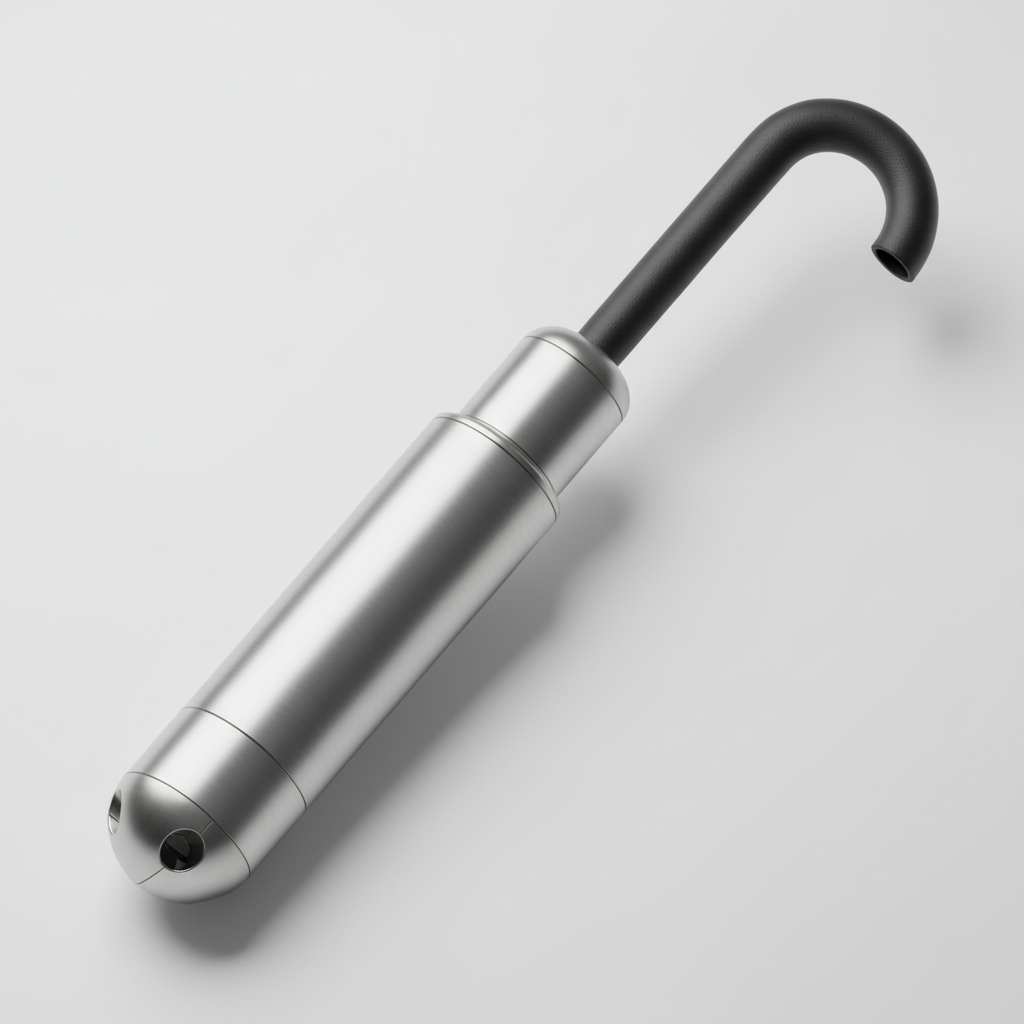
SLS-SD Submersible Level Sensor – Digital Output
Level ranges from 0.5 mWG up to 100 mWG with an SDI-12 Version 1.4 output and an integrated temperature sensor used for density correction. An onboard 16-bit microprocessor handles linearisation, temperature compensation and calibration, and the 316 stainless steel, IP68 sensor draws less than 250 µA when idle and less than 4 mA when active. Up to 9 sensors can share a single SDI-12 bus, and Stork lists academic research in hydrology and environmental science among its applications.
SLS-SA Submersible Level Sensor – Analogue Output
The analogue counterpart, with the same 0.5 mWG to 100 mWG level ranges and 316 stainless steel, IP68 construction. Outputs include 4-20 mA (2-wire), 0-5 V/0-10 V (3-wire) and 0.5 to 4.5 V (3-wire ratiometric), with a low-power millivolt option and optional temperature output, making it a straightforward fit for loggers with existing analogue inputs.
LMK 307 T Level and Temperature Transmitter
Records level and temperature simultaneously through separate 2-wire 4-20 mA outputs, with pressure ranges from 0…4 mH₂O up to 0…250 mH₂O and temperature ranges from 0…30 °C up to 0…70 °C. The 26.5 mm stainless steel probe uses a flush ceramic sensor, and groundwater monitoring is among its listed applications.
Tidal Records and Remote Telemetry
Sea level and tidal range are among the most closely watched climate indicators, and many coastal and estuarine records still come from float-and-pulley systems in stilling wells. Coastal, island and upland stations rarely have wired communications, so telemetry is often what keeps a record flowing home between maintenance visits.
E24R-155 SDI-12 Digital Rotary Encoder Level Sensor
Linked to a float or pulley that follows the water surface, it delivers an SDI-12 Version 1.4 output with accuracy of 0.01% of FS (for example 1 mm over a 10 m range). The lightweight anodised aluminium body and 8 mm steel shaft fit many types of pulley, and internal battery backup retains position through power loss so the encoder does not need resetting. Stork names tidal monitoring and academic and hydrological research among its uses.
ECHO-IoT Remote Monitoring Gateway
Brings remote sensors online over GPRS 2G/3G/4G with MQTT and Modbus RTU/TCP/IP support. It offers 4 analogue 4-20 mA/0-10 V inputs, 8 volt-free digital contacts and 4 relay outputs, runs from 12-36 Vdc and carries an IP67 rating. Data is accessed through a web-based SCADA project, with email or SMS alarms and an optional GPS module. Confirm sensor compatibility and power arrangements for off-grid sites with Stork.
Water Temperature and Thermal Profiles
Warming lakes, estuaries and coastal waters change stratification, ice cover, dissolved oxygen and ecology. Dedicated submersible temperature transmitters can be suspended at fixed depths to build a thermal profile, or installed beside a level sensor to extend an existing station.
STT-28 SDI-12 Submersible Temperature Transmitter
An NTC thermistor, selected for its accuracy and stability, is paired with low-power, low-drift electronics and an SDI-12 output supporting standard and bespoke data commands. The fully submersible IP68 housing is available in stainless steel or marine bronze, with a standard probe or a 10 mm thin-walled probe for faster response. Rescaling is carried out with the USB-SDI12-PRO and free software, and Stork lists estuary temperature analysis, environmental monitoring and marine biology studies among its applications.
STT-26 Submersible Temperature Transmitter
A PT100 class B resistance thermometer with a 2-wire 4-20 mA analogue output, powered from 10-30 V dc and scaled over a chosen temperature range using the USB Config MKII kit. Housings are offered in 316 stainless steel, CA104 marine bronze or Monel alloy 400, with the bronze and Monel versions intended for seawater, and the transmitter is IP68 rated. Confirm the depth and cable options for your deployment with Stork.
Atmospheric Pressure, Venting and Data Integrity
Barometric pressure is both a climate variable in its own right and the reference that separates atmospheric effects from true water level change. Over a multi-year deployment, careful cable venting and documented configuration matter as much as the sensors themselves.
SBPT Barometric Pressure & Temperature Transmitter
Combines a piezo-resistive silicon pressure sensor with an NTC 10 kΩ thermistor, so atmospheric pressure and temperature come from a single low-power transmitter. Stork quotes temperature accuracy of ≤±0.2 °C and pressure stability of ≤±0.1% FSBFSL, in a robust die-cast aluminium housing. Confirm the pressure range and output signal for your logger with Stork.
XSYS-0013 Vented Junction Box
Terminates a submersible level sensor’s vent tube so the sensor can breathe to atmosphere while moisture is kept out of the cable, and lets standard industrial cable replace costly vented submersible cable on longer runs. The ABS enclosure is IP67 rated for outdoor use, with AKZ-4 DIN rail terminals and 2 x PG9 cable glands.
USB-SDI12-PRO USB Powered SDI-12 Interface
Connects up to 10 SDI-12 devices to a PC or laptop and comes with the free Stork DCT software. Researchers can set units, filter settings and sample rates, switch density correction on or off, apply a zero adjustment to a local datum such as Ordnance Datum (Newlyn), log connected sensors and use a calibration mode for annual checks. It also allows a site set-up to be tested before a battery or solar powered system is deployed.
Certifications & Compliance
Approvals and protection ratings vary by model and version, so confirm the options you need on the relevant product page or with our team. The products above offer the following:
IP68 submersible protection — SLS-SD and SLS-SA level sensors, STT-28 and STT-26 temperature transmitters.
IP67 outdoor protection — ECHO-IoT remote monitoring gateway and XSYS-0013 vented junction box.
SDI-12 Version 1.4 — SLS-SD (stated as fully verified and compliant) and E24R-155 rotary encoder.
WRAS approved granules — used in the PUR cable of the STT-26 stainless steel (SP) version.