

Sensors for Research Aquarium Instrumentation
In a research aquarium, a mesocosm or a test tank, the measurement is often the experiment itself. A drift of a few tenths of a degree or a few millimetres of water level can blur a thermal tolerance trial, an exposure study or a long-term husbandry record, so research facilities need sensors that are accurate, stable and logged without gaps.
Stork supplies submersible level and temperature sensors with SDI-12 digital output, a USB interface that brings an SDI-12 bus straight onto a laboratory PC, multichannel data loggers, cellular telemetry and precision digital pressure transmitters. Together they let a public aquarium, university marine station or test facility build a monitoring system for a single experimental tank or a whole building of life support systems. For fish farm and wider aquatics applications, see our aquaculture and aquatics page.
Product Spotlight for Research Aquarium Instrumentation
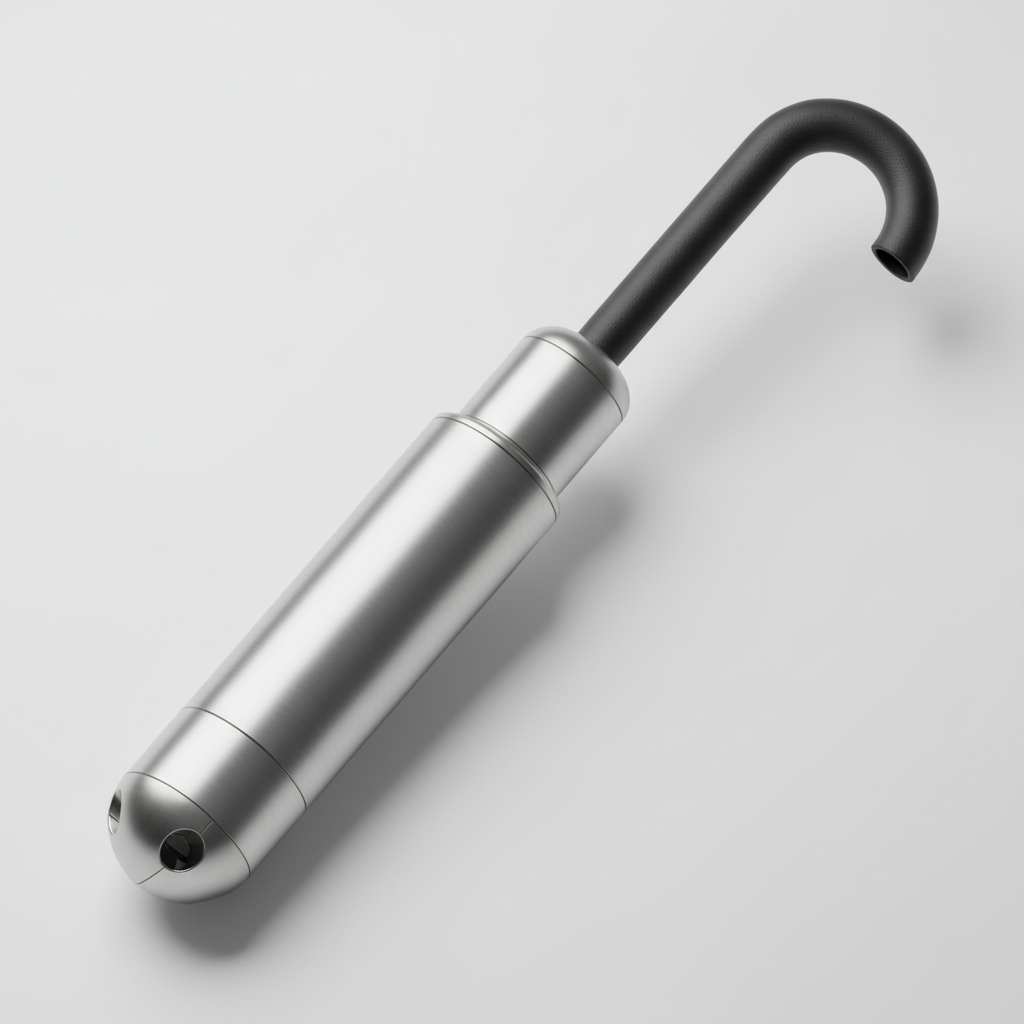


Why Research Aquarium Instrumentation Matters
Research systems are judged on the quality of their data as much as the health of their animals. A production tank can tolerate a rough reading; a controlled experiment, a replicated mesocosm trial or a published husbandry dataset cannot. Instrumentation for this work has to deliver:
Accuracy and stability — small changes in temperature or level are often the variable being studied, so low-drift sensors with stated accuracy matter more than in commercial systems
Unbroken, time-stamped records — trials and welfare audits rely on continuous logs over weeks or months, and gaps from a failed logger or a missed manual reading weaken the dataset
Many tanks, fewer cables — replicate tanks multiply sensor counts, and a digital bus such as SDI-12 lets several addressed sensors share one cable and one logger input
Low-power and remote operation — outdoor mesocosms, seawater intakes and field enclosures often run from batteries or solar with no wired network
Materials suited to the water — seawater, brackish holding systems and humid plant rooms are hard on instruments, so housing materials and ingress ratings need checking for every location
Sensors for Every Research Aquarium Application
SDI-12 Level and Temperature on One Bus
For replicate tanks, header tanks and sumps, SDI-12 sensors can share a single bus, each with its own address, and report digital values without analogue scaling errors. Both sensors below are fully submersible and hang from their cable.
SLS-SD Submersible Level Sensor, Digital Output
Ranges from 0.5 mWG to 100 mWG with accuracy options down to <±0.1%. SDI-12 version 1.4 output provides level and temperature as standard, the built-in temperature sensor is used for density correction, and up to 9 sensors can run on one bus. Idle current is under 250 µA and active current under 4 mA, which suits battery-powered stations. 316 stainless steel housing, PUR cable, FKM, EPDM or NBR seals and IP68 for permanent submersion. For seawater systems, confirm suitability with Stork.
STT-28 SDI-12 Submersible Temperature Transmitter
An NTC thermistor sensor with corrections applied in the electronics, giving low-drift temperature readings over SDI-12 with standard and bespoke data commands. It is available in stainless steel or marine bronze, with harbour seawater monitoring and marine biology studies among its listed applications, and with a standard probe for long-term trends or a 10 mm thin-walled probe for faster response. Low-powered and IP68.
Connecting SDI-12 Sensors to a Laboratory PC
Not every experiment needs a field logger. In a wet lab, SDI-12 sensors can be configured, checked and logged directly from a PC or laptop, and a vented junction box keeps a level sensor’s reference vent dry where the cable run is extended to a plant room.
USB-SDI12-PRO USB-Powered SDI-12 Interface
Connects up to 10 SDI-12 devices to a PC and is powered from the USB port, which also powers the connected sensor. The free Stork DCT software offers density correction on or off, auto-zero and zero-adjust including local datum, selectable pressure, level and temperature units, adjustable filter settings and sample rates, and data logging of up to 10 sensors at once. A calibration mode supports annual calibration by experienced users.
XSYS-0013 Vented Junction Box
Terminates the vent tube of a vented submersible level transmitter such as the SLS-D range, so the sensor can breathe to atmosphere without moisture entering the vent, and allows standard industrial cable to be used for the rest of the run. ABS body with fast-closure lid, 2 x PG9 cable glands, internal DIN rail screw terminals and an IP67 rating for outdoor use.
Analogue Sensors and Multichannel Data Logging
Where a facility already logs analogue signals, or needs local display, alarms and control alongside the record, an analogue level sensor and a multichannel logger give one central view of many tanks and life support loops.
SLS-SA Submersible Level Sensor, Analogue Output
Ranges from 0.5 mWG to 100 mWG with accuracy options down to <±0.1%, and a choice of 4-20 mA (2-wire), 0-5 V or 0-10 V (3-wire), 0.5 to 4.5 V ratiometric or low-power millivolt output, plus an optional temperature output. 316 stainless steel housing, PUR cable, FKM, EPDM or NBR seals and IP68. Academic research is among its listed applications; confirm seawater suitability with Stork.
CMC-141 Multicon Multi Channel Data Logger & Controller
A data logger, indicator, controller and HMI in one unit, with up to 72 inputs from 27 selectable input and output card types and logging of 1 to 60 channels at rates from 0.1 s (10 Hz). 1.5 GB of internal memory holds around 125 million data points. RS485 Modbus is standard, with optional Modbus TCP/IP over Ethernet, an embedded web server for live readings in a browser, SMTP email alerts and PID control with autotune. Data logging requires a one-time licence key.
Remote Telemetry and Precision Digital Pressure
Outdoor mesocosms, seawater intakes and off-site holding facilities benefit from cellular telemetry and alarms, while pressurised test rigs and filtration loops call for a high-accuracy digital pressure reading.
ECHO-IoT Remote Monitoring Gateway
Accepts 4 x 4-20 mA or 0-10 V analogue inputs at <0.1% FS accuracy, 8 volt-free digital inputs and Modbus instruments over RS-232, RS-485 or Ethernet, with 4 relay outputs. A built-in 2G/3G or 4G modem sends data via MQTT to web-based SCADA dashboards, with email or SMS alarms and automated reports. Powered from 12-36 Vdc, IP67, with optional GPS and local display.
DCT 531 i Precision Pressure Transmitter with RS485 Modbus RTU
Ranges from 0…100 mbar to 0…400 bar, gauge or absolute, with accuracy of ±0.10% FSO for ranges of 0.25 bar and above (±0.25% FSO below). The RS485 Modbus RTU output transfers both pressure and temperature values from a 9-32 VDC supply, and the housing is rated IP67. It is suited to non-aggressive gases and liquids, so confirm suitability with Stork for seawater lines.
Certifications & Compliance
Approvals and protection ratings vary by model and version, so confirm the options you need on the relevant product page or with our team. The products above offer the following:
IP68 ingress protection — SLS-SD, SLS-SA and STT-28 for permanent submersion in tanks and sumps
IP67 ingress protection — XSYS-0013, ECHO-IoT and DCT 531 i
SDI-12 version 1.4 compliance — SLS-SD, stated as fully verified and compliant