

If you’ve ever wondered what does a pressure sensor do, the short answer is this: a pressure sensor measures the pressure of a liquid or gas and converts that measurement into an electrical signal a control system can read and act on. That single job, turning invisible force into usable data, is what keeps water networks flowing, bioreactors safe, hydraulic systems running, and subsea equipment operating kilometres below the surface.
This guide explains how a pressure sensor works, the different types of pressure sensors, where they’re used, and how to choose the right one for your application. Every product referenced is drawn from the Stork Solutions range, so you can move straight from theory to specifiable hardware.
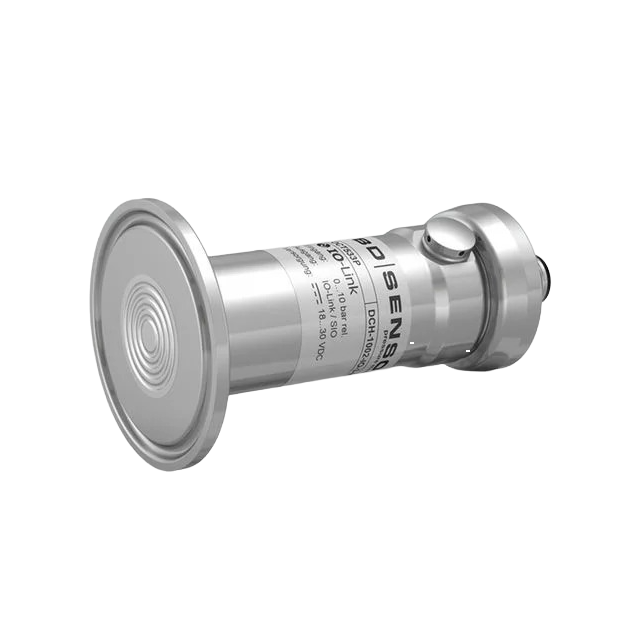
What Does a Pressure Sensor Do? (The Short Answer)
A pressure sensor, sometimes called a pressure transmitter, pressure transducer or pressure gauge sensor, is a device that:
- Measures the pressure of a fluid (liquid or gas)
- Converts that pressure into a proportional electrical output signal
- Sends that signal to a PLC, SCADA system, data logger, controller or display
Typical output signals include 4–20 mA, 0–10 V, HART, IO-Link, Modbus RTU, SDI-12 and digital protocols for smart networks.
That output is then used to:
- Control a process, such as opening a valve, starting a pump or holding a setpoint
- Protect equipment, tripping on overpressure or alarming on low suction
- Measure something else indirectly, like tank level, flow rate or water depth
- Record and report for batch records, telemetry and compliance data
In short, a pressure sensor is the bridge between physical force and digital control.
How Does a Pressure Sensor Work?
Almost every industrial pressure sensor works on the same core principle:
- A diaphragm (a thin flexible membrane) is exposed to the process fluid.
- Pressure deflects the diaphragm by a tiny, measurable amount.
- A sensing element detects that deflection, typically a strain gauge, piezoresistive silicon chip, or capacitive ceramic cell.
- Onboard electronics convert the deflection into a calibrated, temperature-compensated electrical output.
The sensing technology determines how the sensor performs in the real world:
- Piezoresistive stainless steel sensors are robust, accurate, cost-effective, and the workhorse of general industrial pressure measurement. See the DMP 331i / DMP 333i precision transmitters.
- Ceramic capacitive sensors resist thermal shock and aggressive media, making them ideal for hygienic and CIP/SIP duties. See the DMK 351 for example.
- Thin-film sensors are excellent for high-pressure hydraulics and high-cycle applications. See the DMP 334 for example.
- Silicon-on-sapphire and specialist cells are used in extreme environments like subsea and high-temperature service. See the UPS-HSR for example.
Types of Pressure Sensors (and What They Actually Measure)
Not all pressure sensors measure pressure the same way. The reference point matters, and getting it wrong is one of the most common specification mistakes.
1. Gauge Pressure Sensors
Measure pressure relative to atmospheric pressure. Used for tank pressure, pump discharge, compressed air, and most day-to-day process pressure measurement. The Stork TPTa pressure transmitter and the TPTd digital transmitter are typical examples. Change examples to the TPTa and TPTd
2. Absolute Pressure Sensors
Measure pressure relative to a perfect vacuum. Essential for barometric measurement, vacuum processes, altitude and vapour pressure applications.
3. Sealed Gauge Pressure Sensors
Measure relative to a sealed reference (usually 1 bar). Used where venting to atmosphere isn’t practical, including high-pressure hydraulics, subsea equipment and deep boreholes. Stork’s SSPT subsea pressure transmitter is a classic sealed-gauge design.
4. Differential Pressure Sensors
Measure the difference between two pressures. Used for filter monitoring, flow measurement across orifice plates, and level in pressurised vessels. DMD 331 is an example.
5. Hydrostatic (Submersible) Level Sensors
A specialised pressure sensor that measures the weight of a liquid column to infer level. Stork’s submersible range, including the SLS-D digital submersible level sensor and the LMK series hydrostatic level probes, is built specifically for boreholes, wet wells, tanks and reservoirs.
Where Are Pressure Sensors Used?
Pressure measurement underpins almost every industrial sector. A few of the most common:
- Water and wastewater: pump control, network pressure monitoring, reservoir level and borehole depth. See the Stork level range.
- Oil, gas and subsea: wellhead pressure, ROV systems and permanent seabed monitoring. Explore the Stork subsea range.
- Pharmaceutical and hygienic processing: bioreactors, filling lines, CIP/SIP loops and cleanroom utilities.
- HVAC and building services: chilled water, compressed air, pump control and filter monitoring.
- Hydraulics and mobile machinery: high-pressure circuits, load sensing and shock-prone duties.
- Energy and power generation: steam systems, cooling loops, hydrogen and process safety.
- High-pressure and high-temperature process: extreme-duty measurement handled by instruments like the STT-27 high-pressure temperature sensor alongside matched pressure transmitters from the Stork pressure range.
Key Specifications to Look For
When specifying a pressure sensor, focus on the fundamentals:
- Pressure range and expected overpressure
- Reference type (gauge, absolute, sealed gauge, differential)
- Accuracy (typically 0.1% to 0.5% of span for industrial duty)
- Output signal (4–20 mA, HART, IO-Link, SDI-12, Modbus)
- Process connection and wetted materials
- Temperature range of both process and ambient
- Ingress protection (IP67, IP68 for submersion)
- Hazardous area certification (ATEX, IECEx, UKEX) where required
- EMC and surge protection, especially for outdoor and telemetry sites
Getting these right at specification stage is far cheaper than finding out on site.
How to Choose the Right Pressure Sensor
A simple decision path:
- What are you measuring? Process pressure, level, vacuum, or differential.
- What reference do you need? Gauge, absolute or sealed gauge.
- What’s the environment? Hygienic, submerged, hazardous, subsea or general industrial.
- What signal does your system need? Analogue, HART, IO-Link, SDI-12 or Modbus.
- What’s the lifecycle cost? Cheap sensors that fail annually cost more than robust ones that last a decade.
If in doubt, the Stork Solutions team can help match a sensor to the duty rather than guessing from a datasheet.
