

Water and wastewater is one of the most demanding environments in process instrumentation. Sensors sit in boreholes, wet wells, chemical dosing lines, digesters and open channels, often for years, often unattended, often in conditions that quietly destroy anything not specified properly. Getting the instrumentation right the first time saves budget, downtime and a lot of ladder work.
This guide walks through the four measurements that matter most on a typical water or wastewater site, level, pressure, flow-related pressure, and temperature, and what to look for when you’re specifying kit.
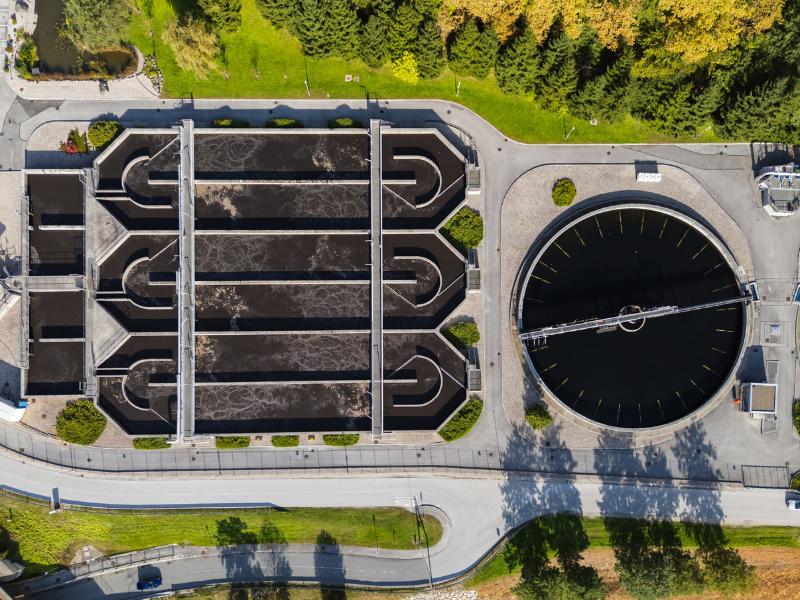
Level Measurement — The Workhorse of Water & Wastewater
Level is the single most-measured variable on a water site: reservoirs, boreholes, wet wells, break tanks, digesters, chemical storage, and lift stations all depend on reliable level data.
What to look for:
- Hydrostatic submersible transmitters are the default for boreholes, wet wells and opentanks. They’re simple, robust, and unaffected by foam, vapour or surface turbulence — problems that regularly trip up radar and ultrasonic sensors on wastewater sites.
- Cable quality matters more than most people think. Polyurethane (PUR) jackets resist hydrocarbons and abrasion; PE is fine for clean water. Make sure the cable is properly vented so atmospheric pressure compensation actually works.
- Material com patibility. For raw sewage, digester liquors, or chemical dosing, look for 316L stainless steel, Hastelloy or titanium wetted parts. Don’t put a standard probe in ferric chloride and hope for the best.
- Lightning and surge protection is essential on any outdoor or borehole install — one strike on an unprotected loop can take out a whole telemetry cabinet.
Stork options worth knowing:
- SLS-D digital submersible level sensor — SDI-12 output, ideal for telemetry, boreholes and environmental monitoring.
- SLS-A analogue submersible level sensor — classic 4–20 mA workhorse for tanks, wet wells and reservoirs.
- SLS-LC low-cost submersible sensor — good for high-volume, non-critical applications.
- LMK 382, LMK 806 and LMK 458 H — heavier-duty probes for sewage, sludge and aggressive media.
Browse the full range on the submersible level sensors category page.
Pressure Measurement — Mains, Pumps and Distribution
Pressure transmitters are everywhere on a water site: pump discharge lines, PRV skids, distribution mains, filter differentials, and hydrant test points.
What to look for:
- Gauge vs sealed gauge. For most water applications, gauge (vented) is fine. On buried or long-cable installs, sealed gauge avoids issues with moisture in the vent tube.
- Digital output for telemetry. SDI-12 and Modbus transmitters slot straight into RTUs and loggers without extra signal converters — a big win for smart networks and DMA (district metered area) monitoring.
- Turndown and accuracy. A ±0.1% transmitter across a wide turndown will outperform a nominally “better” sensor calibrated at a single point.
- IP68 as standard, ATEX where relevant (digesters, biogas, chemical dosing rooms).
Stork options worth knowing:
- TPT-SDI digital pressure transmitter with SDI-12 — purpose-built for smart water telemetry.
- DMP331i / DMP333i — precision industrial transmitters for pumps and mains.
- SBPT submersible pressure transmitter — pressure measurement where the sensor sits in the medium.
- XMP i and X act i — high-accuracy options for critical loops.
Temperature Measurement — Often Overlooked, Always Useful
Temperature isn’t just a process variable — it’s a diagnostic one. Bearing temperature on pumps, motor windings, digester temperature, sludge heat exchangers, and even ambient measurement in kiosk cabinets all benefit from proper temperature instrumentation.
What to look for:
- PT100 Class A or AA for most process work. Thermocouples only where you genuinely need the temperature range.
- Hygienic or sanitary fittings for potable water sites; welded thermowells for raw water and sludge.
- Transmitter-in-head vs remote transmitter — head-mounted keeps the loop clean and reduces cabinet clutter.
- For high-pressure or high-integrity applications (e.g. borehole monitoring, geothermal, or pump seal water), look at purpose-built high-pressure temperature sensors like the STT-27 high pressure temperature sensor.
Explore the full range on the temperature transmitters category page.
Signal, Power and Installation — The Bits That Kill Projects
Even the best sensor fails if the install is wrong. A few practical rules:
- Match the signal to the system. 4–20 mA for legacy PLCs; SDI-12 or Modbus RTU for modern telemetry and battery-powered loggers.
- Power budgets matter on solar or battery telemetry sites — digital sensors that sleep between reads (like SDI-12 devices) can extend battery life by an order of magnitude
- Cable glands and terminations are where 90% of ingress failures happen. Spend the extra £10.
- Calibration and traceability — insist on a UKAS or equivalent certificate at delivery, and plan for periodic verification.
A Quick Buyer's Checklist
Before you place the order, tick these off:
- Correct measurement range with sensible turndown
- Wetted material compatible with the medium (check chemical dosing lines especially)
- Correct pressure reference (gauge / absolute / sealed gauge)
- Output signal matches your PLC, RTU or logger
- IP rating and hazardous area certification where needed
- Cable length, jacket material and venting suitable for the install
- Surge and lightning protection on outdoor and borehole loops
- Calibration certificate and traceability included
Final Thought
Water and wastewater doesn’t reward flashy specs — it rewards reliability, corrosion resistance, and instruments that keep reading accurately five winters from now. Specify for the environment, not the datasheet headline, and pick a supplier who understands where these sensors actually live.
If you’d like help matching instrumentation to a specific application — borehole monitoring, DMA pressure logging, digester level, or pump condition — the team at Stork Solutions can spec the right kit end to end.
