

Process control is rarely static. In many industrial systems, heating and cooling phases need to be managed with equal precision, often under changing load conditions and with minimal tolerance for instability. That is where controller capability becomes critical.
A basic controller may handle straightforward regulation, but more demanding applications often require a more advanced approach. Dual-loop PID control is particularly valuable because it allows heating and cooling to be managed more effectively as part of the same control strategy, helping operators maintain tighter process stability and reduce manual intervention.
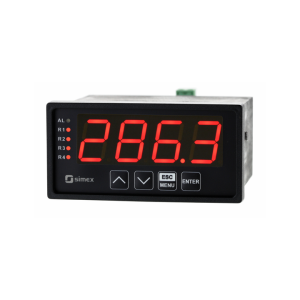
The PUR-94 Advanced PID Controller is designed for this type of task. With dual control loops, auto-tuning, Fuzzy Logic and flexible input and output options, it supports more precise and adaptable process management across a range of industrial applications.
The challenge of managing both heating and cooling
Many industrial processes move through changing thermal conditions. A system may need to heat rapidly, hold a target temperature accurately and then cool in a controlled way. If the controller is not capable of managing both sides of that cycle effectively, operators can run into overshoot, instability or inconsistent product quality.
This is one of the reasons dual-loop PID control is so useful. Rather than relying on a one-dimensional approach, it allows the controller to handle heating and cooling requirements more intelligently, improving response across the full process.
For applications where thermal balance is central to performance, that can translate into better consistency, better efficiency and fewer process deviations.
What dual-loop PID control adds
PID control remains one of the most widely used control methods in industry because it is effective at managing process variables such as temperature, pressure and flow. But not all PID implementations offer the same flexibility.
A dual-loop PID controller extends capability by supporting both heating and cooling control within the same instrument. This is especially valuable where a process is subject to changing thermal demand and where maintaining the setpoint accurately matters.
In practice, the advantages can include:
- more stable heating and cooling transitions
- reduced overshoot and undershoot
- improved control over changing loads
- less manual adjustment by operators
- better overall process consistency
For industries that rely on repeatable thermal control, these benefits are highly relevant.
Auto-tuning reduces setup time
One of the biggest frustrations with PID control can be tuning. Getting the best performance often depends on setting proportional, integral and derivative values correctly, but manual tuning can be time-consuming and may require repeated trial and error.
The PUR-94 addresses this with an auto-tuning function, helping users achieve effective controller setup more quickly. That makes it easier to commission the system and can also reduce the burden on operators or engineers who would otherwise need to optimise loop performance manually.
For facilities managing multiple processes or changing applications, that time saving can be significant.
Fuzzy Logic helps optimise control performance
In real-world process environments, conditions do not always behave in a perfectly predictable way. Load changes, thermal lag and system variation can all affect controller response. This is where Fuzzy Logic can add value.
The PUR-94 uses a Fuzzy Logic algorithm to support optimal performance. In broad terms, this helps the controller respond more effectively to changing process conditions rather than relying on a rigid control behaviour alone.
For users, the outcome is typically smoother regulation and better stability, especially in applications where standard control approaches may struggle with variation.
A strong fit for diverse input signals
Industrial facilities often need controllers that can work across a wide range of sensor types and signal formats. That flexibility is particularly useful when standardising instrumentation across different machines, lines or process areas.
The PUR-94 offers a universal input that supports:
- 0/4-20 mA
- 0-10 V
- 0-150 mV
- Pt 100, Pt 500, Pt 1000
- thermocouples including K, S, J, T, N, R, B and E
It also provides automatic cold junction compensation for thermocouple inputs and linearised characteristics for RTD and TC sensors. This makes it easier to integrate into different systems without the need for highly specialised controller variants.
More than temperature control alone
Although heating and cooling are a strong application fit, the PUR-94 is not limited to simple temperature tasks. Its range of characteristic curves, including linear, square root, quadratic, user-defined and volume characteristic for cylindrical tanks, makes it suitable for broader process control requirements.
That means it can support a range of systems where accurate signal handling and reliable loop control are important. For users looking for one controller platform that can cover multiple duties, this flexibility is a major advantage.
Connectivity matters in modern process control
Controllers are increasingly expected to do more than act locally. Many industrial users also want visibility into the process through plant networks or supervisory systems.
The PUR-94 includes RS-485 communication with Modbus RTU as standard, which supports integration into wider monitoring and production systems. It can also be configured using the free S-Config software through the RS-485 communication port.
This matters because process performance is easier to manage when operators can access data, configure devices efficiently and integrate control information into the wider plant environment.
Output flexibility for different applications
The PUR-94 also offers flexibility in outputs, depending on customer preference. Available options include:
- REL outputs
- OC (SSR) outputs
- analogue outputs
- active current output
- passive isolated current output
- active voltage output
It also includes a 24 V DC / 100 mA output to power measuring transducers. This adds further convenience when integrating the controller into practical industrial systems.
Where advanced PID control adds the most value
A controller like the PUR-94 is particularly useful in processes where thermal conditions change, stability matters and users want to reduce time spent on manual adjustment.
Typical value areas include:
- heating and cooling process control
- thermal process stabilisation
- systems with multiple sensor types
- applications that benefit from auto-tuning
- installations requiring RS-485 / Modbus integration
- processes where operator visibility and configuration flexibility matter
In these cases, dual-loop PID control can improve both day-to-day operation and long-term process consistency.
